The Hidden Biological Power of Your Bulbs
Most people view their home’s illumination strictly as an interior design choice. However, through the lens of ethnographic research and the study of daily routines, lighting proves to be a highly effective biological instrument.
Picking the wrong bulb does far more than leave a space feeling dim. It actively contributes to disrupted circadian cycles and ongoing physical exhaustion.
Avoiding the Harsh Blue Spectrum Trap
Placing cool white bulbs—specifically those rated over 5000 K—in sleeping areas is a major environmental blunder. This specific light spectrum directly halts your body’s natural melatonin creation, keeping you wide awake.
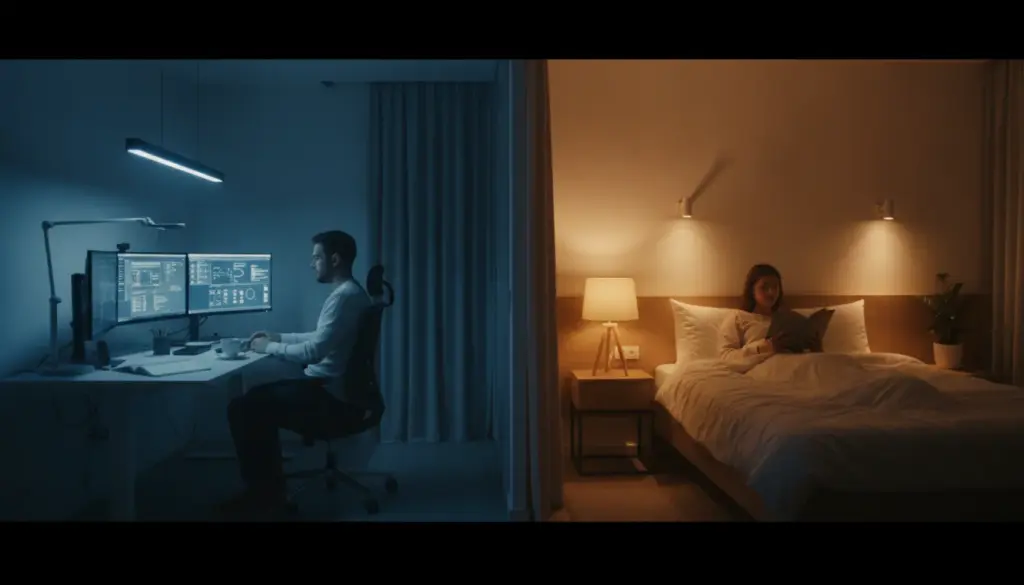
Consider this professional guideline: reserve 4000 K for mental tasks and 2700 K for relaxation. Your workspace thrives on neutral white tones, whereas your lounging areas desperately need warm, amber glows to help you wind down.
Why Low CRI Makes Your Meals Look Drab
Have you ever wondered why a dish looks picture-perfect at a fine dining spot but appears dull and gray on your own kitchen table? The culprit is the Color Rendering Index.
For residential environments, this metric needs to sit safely above 80 Ra. When this number drops too low, your brain experiences visual fatigue from constantly trying to mentally “correct” the inaccurate shades of the objects in front of you.
The Professional Strategy of Layered Illumination
Relying on a single overhead fixture in the center of the room is a fast track to poor spatial dynamics. A truly effective layout utilizes a three-tiered method.
- Ambient base: Providing an even, diffused glow across the entire room.
- Task focus: Directed beams pointed straight at your desk or kitchen prep stations.
- Accent details: Specialized spotlights aimed at artwork or indoor greenery.
Think back to our potted lemons with corks. By aiming a narrow 3000K beam upward from their base, that simple arrangement instantly transforms into a striking sculptural element.
The Primal Pull of Bright Spots
Human beings possess an innate, ethnographic drive to move toward sources of brightness. If you want visitors to naturally congregate around your dining area, simply ensure the fixture above the table shines slightly more intensely than the surrounding space.
This subtle contrast mimics the ancient draw of a crackling campfire, effortlessly bringing individuals closer together.
The Final Verdict on Ambient Energy
Ultimately, the fixtures you install offer much more than basic electricity—they literally dictate the chemistry of your mood. Take a moment to inspect your bulb labels this evening, and you might just secure a much more restorative morning tomorrow.