
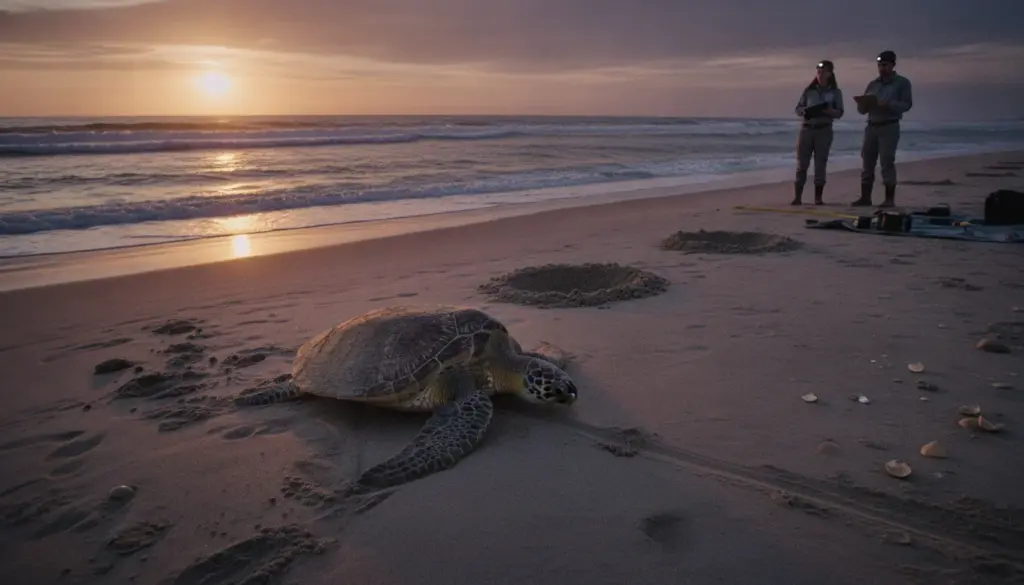
Shifting Ocean Dynamics Threaten Marine Life
Shifting ecosystems across the globe are sending out stark warning signs, and marine life is bearing the brunt of these transformations. An extensive international research initiative has uncovered a highly concerning trend among sea turtles. While these majestic creatures are reaching sexual maturity and mating at a younger age, their overall reproductive frequency has plummeted, resulting in significantly smaller egg clutches.
At first glance, arriving sooner at nesting sites might seem like a positive evolutionary adjustment. However, nearly two decades of rigorous individual tracking reveals a very different reality. Scientists have documented a consistent, dangerous drop in reproductive capacity that could severely undermine future population stability.
The Hidden Energy Crisis in Marine Breeding
Experts from Queen Mary University of London teamed up with conservation specialists from Associação Projeto Biodiversidade to conduct this exhaustive 17-year observation. Their work centered on Cape Verde, a critical eastern Atlantic nesting sanctuary for these vulnerable marine reptiles. Because the International Union for Conservation of Nature (IUCN) officially lists this specific species as threatened, any shifts in their biological habits carry massive implications for global preservation initiatives.
Throughout the study, researchers noted that expecting females hit the shores earlier than usual, yet they arrived with heavily depleted physical reserves. Biologists classify sea turtles as “capital breeders,” meaning their ability to reproduce depends entirely on the calories stored while feeding far out in the open ocean. When those vital energy savings run dry, both the total number of nests built and eggs laid experience a dramatic plunge.
Declining Marine Productivity Disrupts Spawning
To understand exactly what was happening in the water, investigators analyzed satellite data tracking chlorophyll levels—a key marker of primary biological production—near West African foraging territories. The findings were grim, illustrating a severe downturn in oceanic productivity that directly stripped the turtles of their primary food sources.
This widespread nutritional deficit triggered several unmistakable consequences for the species:
- Extended recovery periods: The natural resting phase between breeding cycles for individual females doubled, jumping from roughly two years to four years.
- Fewer seasonal nests: Mothers are constructing significantly fewer nests during their active breeding windows.
- Shrinking egg counts: Each individual clutch now holds noticeably fewer eggs compared to historical data.
Even though these reptiles are beginning their reproductive journeys younger, their lifetime breeding output has substantially decreased. This critical data point proves that a bustling, active nesting beach doesn’t automatically equate to a thriving, secure turtle population.
Why Protecting the Shoreline Is No Longer Enough
Kirsten Fairweather, the scientific coordinator at Associação Projeto Biodiversidade and co-author of the study, notes that surface-level observations can be incredibly deceptive. If conservationists only monitor the sand, the influx of younger turtles and early mating behaviors might mimic a spectacular conservation victory. Yet, the long-term data paints a more desperate picture, showing these females are expending massive amounts of effort for significantly diminished returns.
Safeguarding coastal nesting habitats remains a vital piece of the puzzle, but it falls short if the expansive open-sea feeding grounds are left unprotected. When marine food webs collapse, the reproductive engine of the colony stalls, regardless of how pristine the beaches are.
The final takeaway from this exhaustive study serves as a stark wake-up call. Without holistic, wide-reaching environmental strategies that manage both marine resources and deep-water habitats, dwindling egg production will inevitably trigger a slow, irreversible population collapse. The true danger might remain hidden beneath the waves, but 17 years of undeniable evidence proves that the future of these ancient mariners hangs in the balance.