How Moisture Steals Your Bathroom’s Shine
Over time, daily showers and lingering humidity can silently drain the crisp, fresh look right out of your bathroom. We rarely notice the gradual darkening of the porous spaces between our tiles day by day, but after a few months, the entire room can feel a bit dingy. Think of grout lines as the visual framing for your tilework—when they are bright, the whole space feels impeccably clean.
Naturally, the zones getting splashed the most are the first to suffer. Areas around the bathtub, the bathroom sink, and inside the shower cabin take the brunt of the damage. Soap scum, hard water deposits, and constant dampness inevitably penetrate the material, causing those once-light shades to turn a dull, murky gray.
The Harmful Habit of Hard Scrubbing
Many homeowners instinctively grab a stiff brush and scrub furiously to banish the grime. From a professional maintenance standpoint, this is actually a highly counterproductive strategy. Applying excessive pressure can permanently damage the grout’s delicate surface layer.
Once that protective top texture is compromised, future dirt will settle in much faster and deeper than before. Rather than relying on brute physical force, the real secret to restoring your bathroom lies in selecting the correct chemical formulation.
How Active Oxygen Melts Away Grime
Today, cleaning solutions powered by active oxygen are gaining immense popularity for a very good reason. These clever products work through a chemical reaction that actively breaks apart stubborn mineral and soap buildups, allowing you to skip the aggressive friction entirely. The formula simply seeps into the caked-on dirt, softening the hardened matrix so it can be effortlessly wiped away.
The 10-Minute Brightening Routine
To safely restore the original color of your tile joints, follow this simple method:
- Apply your chosen active oxygen cleaner generously and evenly across the discolored lines.
- Let the solution sit undisturbed for roughly 10 minutes—do not rush to rinse it off.
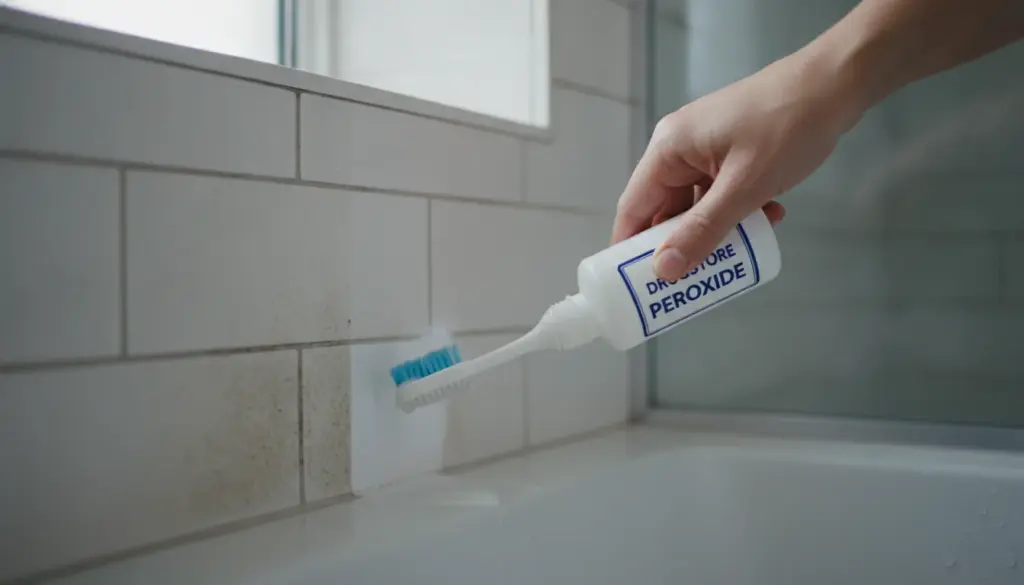
- After the dwell time, lightly agitate the area using a small, soft tool like an old toothbrush.
- Rinse the entire surface thoroughly with warm water and wipe it dry.
Patience plays a crucial role in this process. Giving the active ingredients ample time to operate makes a world of difference, often yielding an instantly brighter, revitalized bathroom.
Gentle Techniques and Stubborn Stains
Once the cleaner has done the heavy lifting, you won’t need to put your back into the scrubbing phase. A few relaxed strokes with a standard toothbrush are usually all it takes to lift away the loosened residue and reveal the lighter layer underneath.
Occasionally, you might find that despite a thorough wash, the stark white color refuses to return. This doesn’t necessarily mean your bathroom is dirty. Years of heavy water exposure can cause a permanent pigment shift in the material, which standard washing simply cannot reverse.
What to Do When Washing Isn’t Enough
If your tile joints remain stubbornly dark after a deep clean, it might be time to look into specialized grout markers or dedicated grout paints. These handy applicators are designed to be drawn directly over completely clean and dry lines.
Just a single pass along the joint can dramatically lighten the surface. It is a highly effective, budget-friendly trick to visually revamp your bathroom without enduring the steep costs of a full renovation. Those crisp borders will pop once more, giving your interior that highly sought-after pristine finish with minimal effort.