The Hidden Struggle of Perfect Eggs
Using the phrase “they can’t even fry an egg” to insult someone’s cooking abilities is actually quite unfair. Anyone who spends time in the kitchen knows that achieving a perfectly fried egg with a runny yolk and set whites requires genuine skill. Hard-boiled eggs might seem much simpler, but they carry a hidden trap right at the finish line: the peeling process.
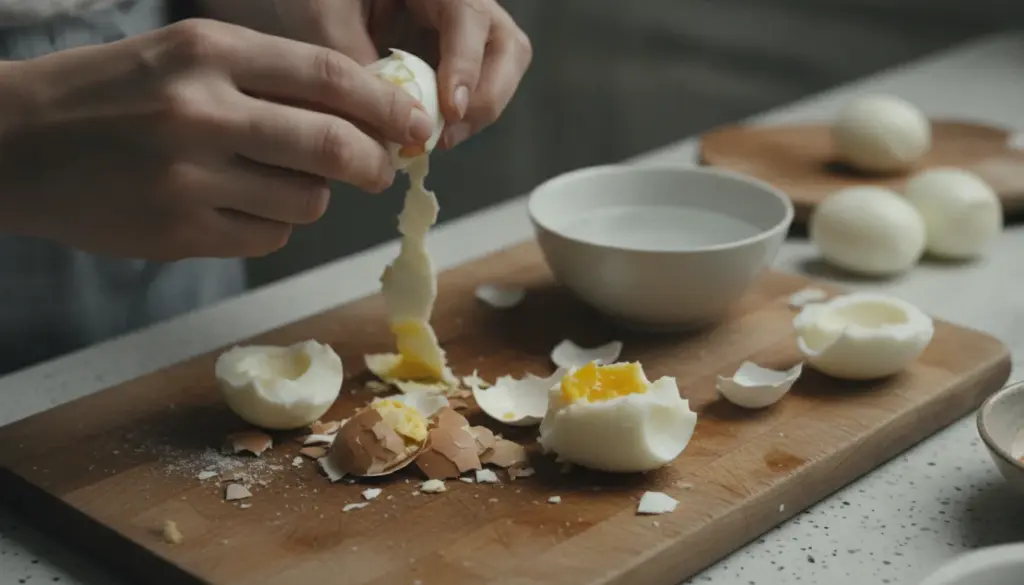
Even if your timing is flawless, removing that stubborn shell can quickly ruin your culinary masterpiece. Instead of a beautifully smooth ingredient for deviled eggs or a fresh salad, you often end up with a torn, crater-filled mess. This happens because the egg white stubbornly clings to the inner membrane, peeling away in frustrating chunks.
Interestingly, the freshness of your ingredients plays a major role here. Farm-fresh eggs are notoriously difficult to peel because their internal membranes adhere tightly to the shell. For the smoothest results, slightly older eggs that have been sitting in your fridge for a few days are actually the superior choice.
A Simple Chemistry Hack: Salt and Vinegar
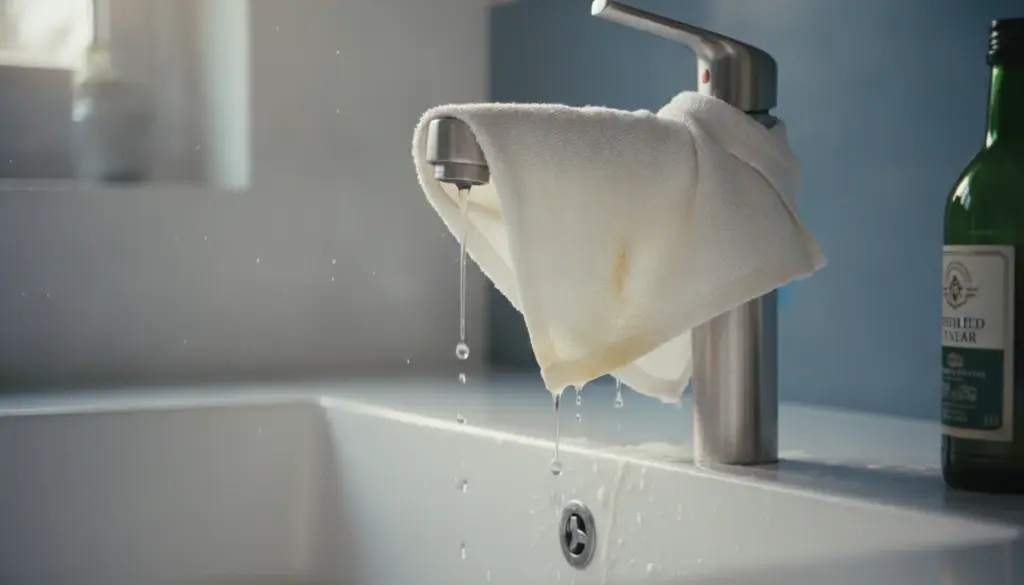
Fortunately, there is a practically foolproof method to prevent your egg whites from tearing, and it relies on two basic pantry staples. Adding just one tablespoon of white vinegar and one tablespoon of salt to your cooking water makes a massive difference. From there, basic kitchen chemistry takes over the heavy lifting.
The vinegar acts as a rapid coagulant. If your eggshell has microscopic stress fractures, the acidic water instantly seals the leak, preventing those messy white wisps from escaping into the pot. Meanwhile, salt slightly alters the density of the water, which promotes a better surface texture as the protein cooks.
More importantly, this salty environment encourages the inner membrane to detach from the cooked protein. When it is time to remove the exterior, the shell will glide off with significantly less resistance.
The Importance of a Sudden Thermal Shock
Once your timer goes off, you must abruptly halt the cooking process. The most effective technique is to transfer your hot eggs directly from the boiling pot into an ice-water bath. If you don’t have ice handy, running them under the coldest possible tap water is a solid alternative.
This drastic temperature change creates a sudden thermal shock inside the egg. The rapid cooling forces the egg white to contract and shrink away from the protective membrane just beneath the shell. Because of this microscopic separation, you can usually peel the entire shell away in one satisfying piece rather than picking off tiny fragments.
Where Should You Actually Start Peeling?
Your peeling technique matters just as much as your boiling method. The wider, flatter base of every egg contains a small, built-in air pocket. Starting your peeling process from this blunt end gives you a distinct advantage.
- Tap the egg gently against a hard countertop to create initial cracks.
- Roll the egg lightly under your palm to loosen the entire outer structure.
- Begin peeling at the bottom air pocket to easily slide your thumb beneath the membrane.
By breaking into that empty pocket first, you can effortlessly lift the protective film away from the delicate white. This guarantees a perfectly pristine, beautifully smooth egg every single time.