For decades, outdoor grilling stations and covered gazebos have been synonymous with rigid materials like cold ceramics, heavy metal, brick, and raw concrete. While undeniably practical for hosting, these hardscapes often lack a welcoming, cozy atmosphere. Today, landscape design shifts toward creating lush, botanical retreats right in our backyards. Introducing thoughtful greenery softens harsh architectural lines, naturally enhances acoustics, and elevates the overall comfort of your outdoor gatherings.
The secret lies not in haphazardly placing potted plants, but in strategically weaving foliage into the structure to craft a cohesive mood.
1. Start With the Periphery: Creating “Breathing” Walls
The structural boundaries of a patio or outdoor kitchen are typically rigid and visually dominant. Giving these surfaces a botanical makeover instantly alters the entire vibe of your space.
Consider incorporating these structural greenery options:
- Modular vertical gardens that introduce lush foliage without sacrificing precious floor space.
- Climbing vines trained elegantly along wooden trellises or sleek steel cables.
- Open shelving displays that seamlessly blend decorative outdoor accents with trailing potted plants.
- Wooden slat panels featuring cascading greenery to infuse the area with organic warmth.
Always intermingle varying leaf textures and plant heights. This prevents the arrangement from looking overly staged, resulting in a beautifully organic aesthetic.
2. Select Plants That Thrive in Semi-Outdoor Conditions
Not every houseplant can handle the fluctuating temperatures and shifting light of a semi-open structure. For the best results, prioritize resilient, low-maintenance species that can weather outdoor transitions.
Reliable favorites for these environments include:
- Pothos: Exceptionally durable and visually striking when suspended from above.
- Monstera deliciosa: Perfect for adding substantial volume and a distinctively tropical flair.
- Sansevieria (Snake Plant): Highly tolerant of low sunlight and sudden temperature dips.
- Ferns: An excellent choice if your outdoor retreat maintains consistent humidity levels.
If your shelter receives plenty of bright sunlight, try integrating large containers filled with fresh culinary herbs. Rosemary, fresh mint, and aromatic basil not only look beautiful but are incredibly convenient when you are cooking outside.
3. Design a Canopy of “Living” Shade
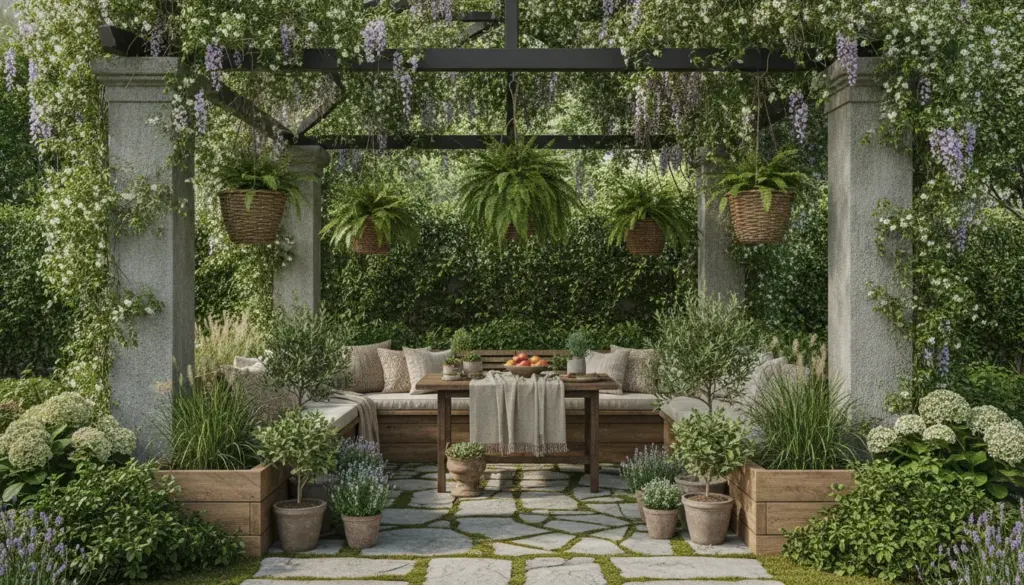
The ceiling is frequently the most overlooked canvas in outdoor design. Bringing foliage overhead visually lowers the roofline, fostering an intimate, sheltered ambiance.
Effective overhead strategies include:
- Vigorous climbers woven through the wooden rafters of a classic pergola.
- Suspended baskets overflowing with elegant, trailing stems.
- Fabric shade sails artfully combined with overlapping natural leaves.
- Lightweight green roofs installed safely on structurally sound canopies.
Beyond aesthetics, overhead vegetation provides a delightfully cool microclimate, significantly improving thermal comfort during sweltering summer afternoons.
4. Harmonize Nature With Tactile Materials
Foliage truly shines when juxtaposed with premium, organic textures. To give your backyard sanctuary a curated, designer feel, focus on the right material palette.
Elevate your space by adding:
- Natural or blonde wood finishes to introduce visual warmth.
- Woven textures, such as authentic wicker or durable rattan furniture.
- Washable, earth-toned textiles to replace the chill of bare, hard seating.
- Artisanal containers crafted from architectural concrete, timeless terracotta, or handmade ceramics.
It is precisely this deliberate contrast—the raw, mineral elements meeting vibrant, living plants—that establishes a true oasis atmosphere.
5. Lighting: The Detail That Changes Everything
Your botanical barbecue area should not lose its magic when the sun sets. Strategic, warm illumination transforms your plants into dramatic focal points long after twilight.
For a captivating nighttime glow, try:
- Warm-toned string lights draped effortlessly overhead.
- Directional spotlights angled specifically to highlight your vertical gardens.
- Floor-level lanterns casting a soft, welcoming glow around seating areas.
- Concealed LED strips glowing softly from beneath open shelving.
When light grazes foliage from the side, it casts gentle, intriguing shadows. This subtle illumination creates an enveloping, cozy mood that naturally encourages guests to linger well into the night.