The secret to a massive potato harvest
Do you envision harvesting huge bins of potatoes, only to dig up a disappointing, underwhelming yield? The foundation of a successful crop actually begins well before a shovel ever touches the dirt. Your ultimate success is decided the moment you choose when and how to get those tubers in the ground.
By aligning your planting schedule with the lunar calendar and maintaining strict spacing guidelines, you will cultivate an abundant harvest of robust, healthy tubers instead of a handful of tiny, underdeveloped vegetables.
When to plant based on your region
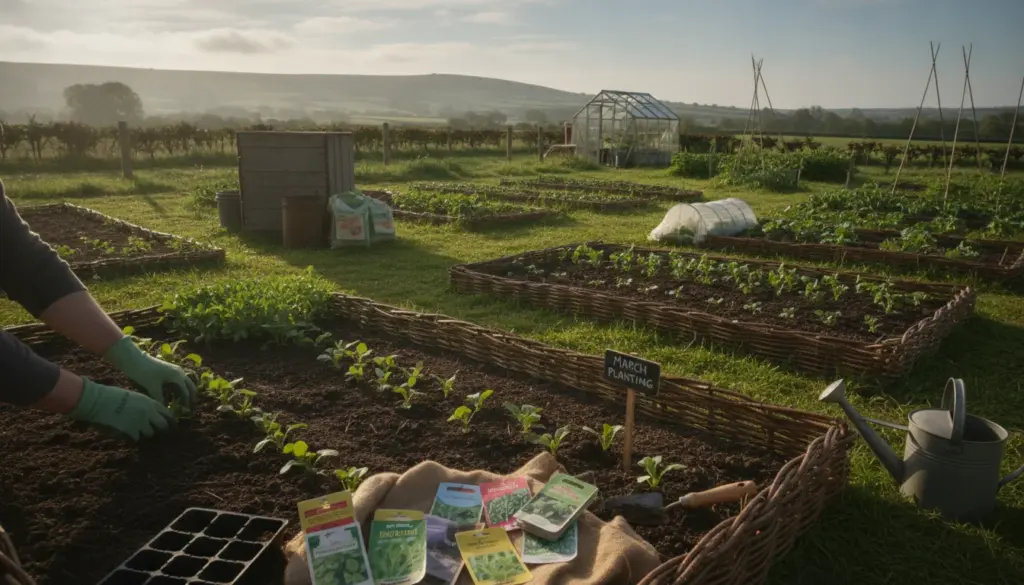
Potatoes genuinely despise harsh frosts, yet they also struggle with excessive early spring heat. Your goal is to find that sweet spot where the ground feels warm but still holds its natural moisture. Based on varying climates, spanning from cooler to warmer areas, these timeframes are absolutely essential:
- Cool and mountainous regions: Wait for mid-March to mid-April. You want the frost threat to subside and the soil to warm to 8–10 °C.
- Moderate regions: Plant anywhere from late February through the end of March.
- Warm regions: Get started between January and early March.
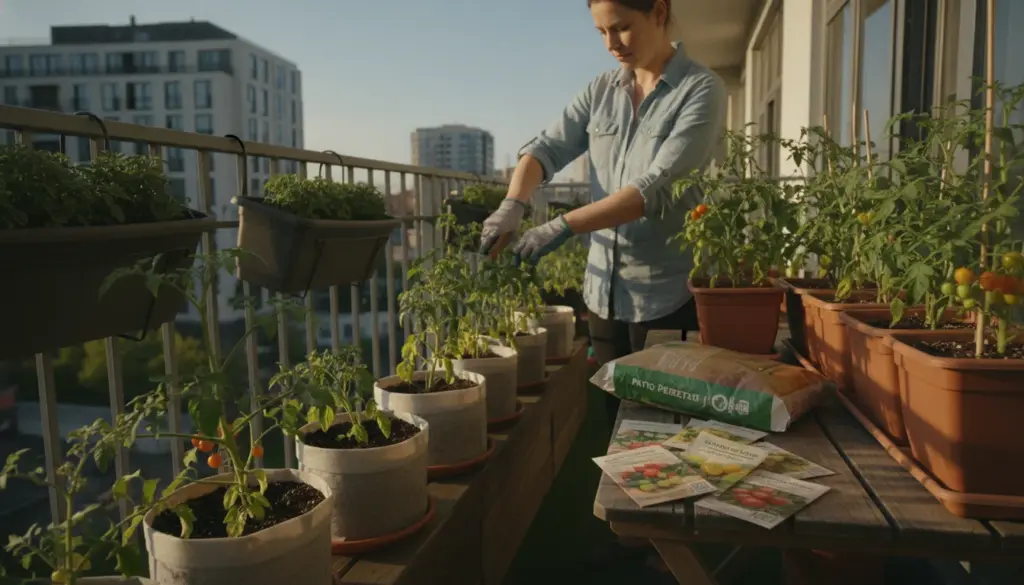
If you are growing your crop in containers or raised garden beds, you can actually kick things off a few weeks earlier. Why does this work? Raised soil absorbs heat much faster, though you will need to keep a closer eye on your daily watering routine.
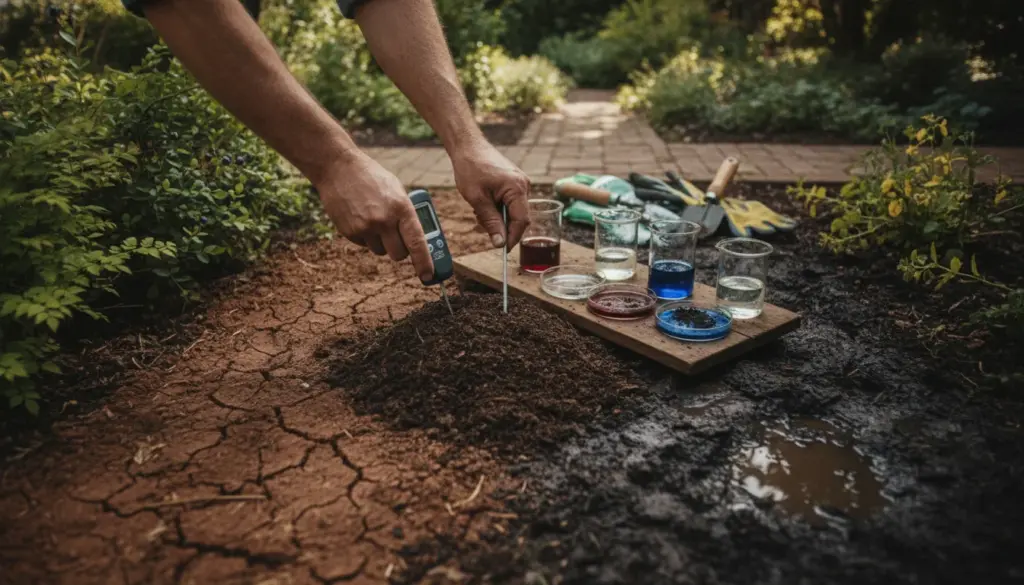
Expert tip: Before you start sowing, try a quick squeeze test. Grab a handful of garden dirt and squeeze it tight. If it forms a ball that crumbles effortlessly under your thumb, the moisture and texture are perfect. If it feels like thick mud, give it three to four days to dry out so your seed potatoes do not rot in the ground.
Spacing guidelines: a common mistake to avoid
Potatoes absolutely require ample room to develop properly. When packed too tightly, they immediately begin fighting over sunlight, hydration, and vital nutrients. The result? A frustrating yield of miniature potatoes that are barely large enough to peel.
For traditional in-ground gardens, these measurements consistently provide the best results:
- In-row spacing: Leave 25 to 35 cm between each tuber.
- Between-row spacing: Maintain a walking distance of 60 to 75 cm.
When working with large-tubered varieties, it is always best to stick to the maximum distance of 35 cm. Meanwhile, for containers measuring at least 35 to 40 cm deep, a strict rule applies: plant exactly 1 potato per 30-cm wide pot, or a maximum of 2 tubers in a 45-cm container.
Depth and orientation for perfect sprouting
Seed potatoes should be buried 8–10 cm deep in light, sandy environments, while heavy clay requires a slightly shallower depth of 6–8 cm. This detail matters greatly because burying them too deeply in dense soil severely restricts their ability to break through the surface.
Always position the tubers with their “eyes” pointing upward, as this is exactly where the new shoots will emerge. For exceptionally large seed potatoes, you can slice them into two or three pieces, ensuring each chunk has at least two buds.
Just remember to let the freshly cut pieces sit in a well-ventilated spot for a day to allow the wounds to dry and callus over. This simple trick drastically lowers the chances of underground rot.
Harnessing the lunar calendar for better growth
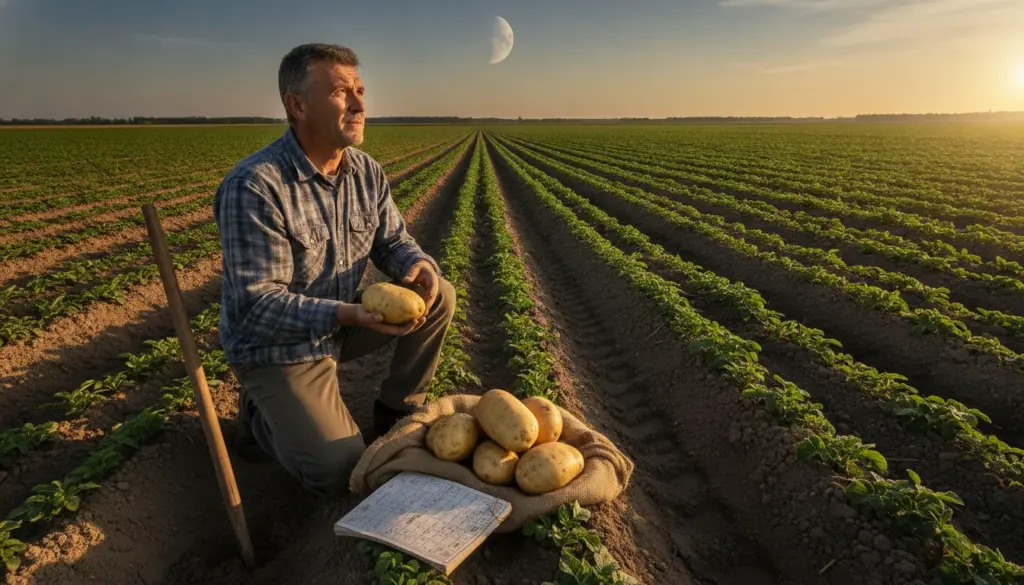
Horticultural traditions recognize the potato as a root crop that heavily relies on vibrant above-ground foliage to nourish its tubers. Because of this, seasoned growers often prefer planting during a waxing moon, which is the phase moving from a new to a full moon.
During this precise window, plant sap naturally tends to flow upward, encouraging uniform sprouting and the development of sturdy, thick stems. Conversely, it is incredibly smart to avoid planting on exact new or full moon days. Plants are highly sensitive to stress and sudden weather shifts during these lunar peaks.
While a stable, rain-free weather forecast always takes precedence over astrology, combining both of these elements creates the ultimate environment for gardening success.
Soil preparation to boost your yield
Thoroughly loosened dirt serves as the ultimate foundation for your vegetable patch. Potatoes thrive in soft ground that is loaded with organic matter and features a slightly acidic to neutral pH level.
Ideally, you should dig your garden beds down to a depth of 25–30 cm, seamlessly blending in fully mature compost. Stay away from fresh manure right before planting day. An overload of nitrogen will give you stunning, massive leaves, but unfortunately, incredibly tiny potatoes.
If you are dealing with heavy clay, mixing in a little coarse sand works wonders to boost drainage and prevent problematic waterlogging.
Hilling and watering routines
Once your green shoots reach a height of 15–20 cm, it is time for hilling, which simply means mounding loose dirt up around the base of the stems. This straightforward chore accomplishes three brilliant things:
- It protects the developing crop from sunlight, stopping them from turning green and becoming toxic.
- It encourages the buried stem to push out lateral shoots, resulting in more potatoes per plant.
- It significantly improves water drainage directly around the root zone.
Approach your watering schedule strategically. The absolute most critical period is the flowering phase. A lack of moisture here guarantees a small harvest. Water deeply but less frequently, allowing the top layer of dirt to dry out slightly before reaching for the hose again.
Bringing it all together
The perfect potato-growing strategy looks exactly like this: amend your soil over the winter with plenty of compost, plant early in the spring under a waxing moon, keep your spacing to exactly 30 x 70 cm, and never skip the hilling process.
In southern climates, harvests usually happen before the peak summer heat arrives, while cooler zones simply shift this entire timeline forward by a few weeks.
Mastering these three crucial elements—timing, spacing, and lunar phases—does not take much extra effort, yet it honestly creates a staggering difference in harvest quality. For backyard gardeners wanting to maximize every single square meter, this is the definitive path to success. Keep this advice handy for your next spring planting season.