
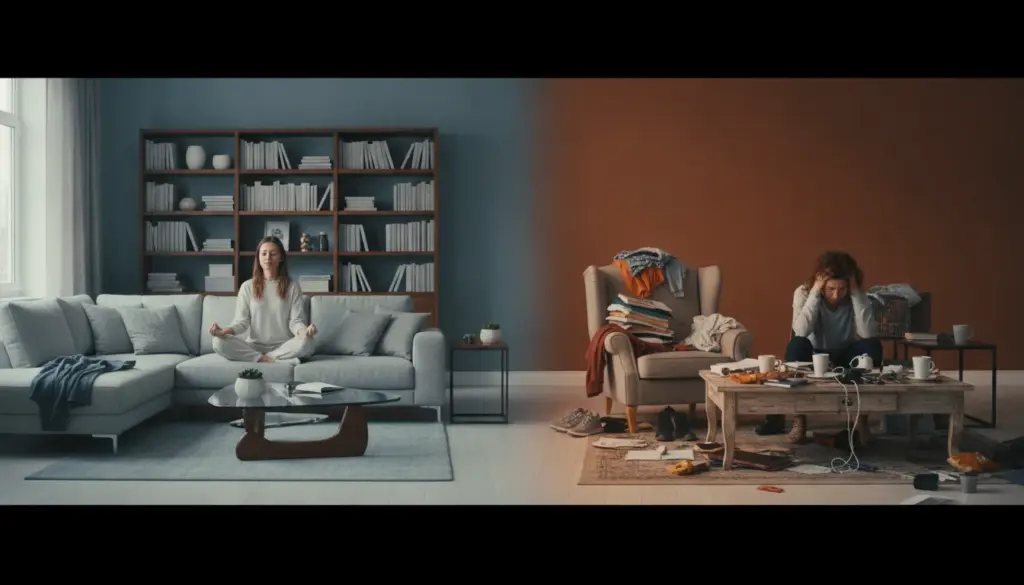
The arrangement of your personal belongings speaks volumes about your psychological well-being. Mental health professionals and organizing specialists have long understood that our living spaces are never simply a passive backdrop.
In reality, the level of tidiness or chaos surrounding you directly influences cognitive function, focus, and even hormonal balance. Conversely, your interior design choices and organizational habits give away quite a bit regarding your current emotional health.
Why the Human Brain Struggles with Clutter
Our minds naturally crave visual order and predictability. Every scattered document, discarded shirt on a chair, or random object on the kitchen counter acts as a tiny stimulus competing for your attention. Processing all these visual cues requires a significant amount of mental stamina.
As your environment becomes more disorganized, your cognitive reserves are depleted simply trying to filter out the excess information. Consequently, this leaves you with far less capacity for deep concentration and genuine relaxation.
Domestic chaos creates what is known as a “cumulative effect” on neurological function. This means the negative impacts actually compound over time. While a single unwashed coffee mug won’t cause much harm, navigating through towering piles of possessions for days on end will gradually deplete your psychological battery.
Rather than focusing on a single objective, your mind is bombarded with dozens of subconscious micro-chores. It constantly registers the need to put things away, organize items, or tackle lingering duties. You don’t even have to actively think about these tasks; the mere visual presence of a mess is enough to completely shatter your attention span.
A Messy Space: What It Indicates About Your Mental Well-being
A residence where objects are chronically left out of place often points to deeper, underlying factors. Persistent disorganization is frequently correlated with specific internal struggles.
Most notably, this behavioral pattern is linked to:
- Profound physical exhaustion or severe sensory overload.