Why Arachnids Migrate Toward Your Windows
As the weather shifts and outdoor temperatures begin dropping, your home quickly transforms into a cozy, food-rich sanctuary for creeping critters. Around your doors and windows, spiders discover their ideal environment. These structural gaps offer tiny crevices, sheltered nooks, and a steady supply of smaller insects drawn to indoor lighting.
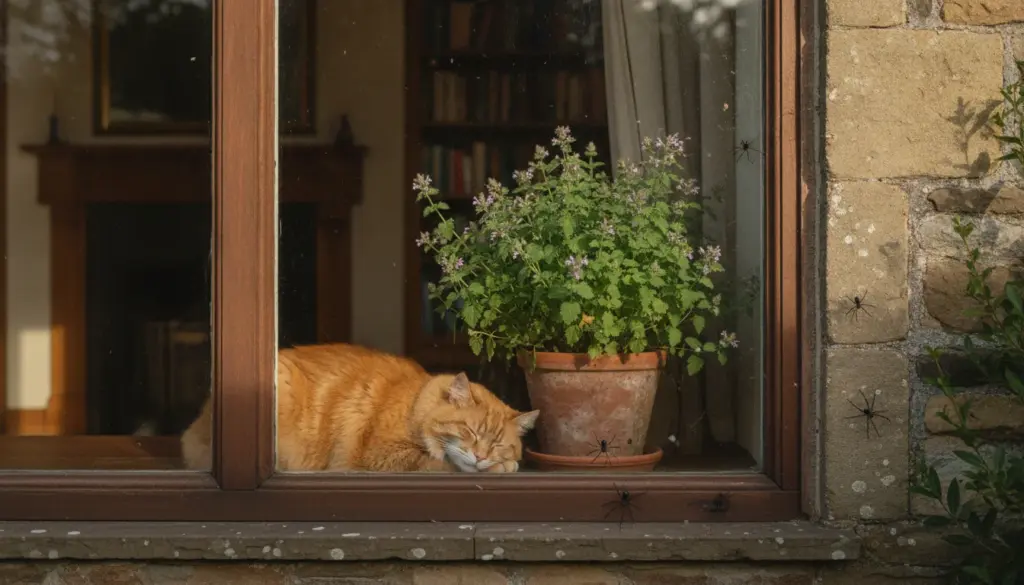
Their journey inside typically follows a highly predictable path. They scale the exterior masonry, navigate along the framing, squeeze through dried caulking, and march across the sill directly into your living space. Without any physical or sensory barriers in place, your open window acts as an uninterrupted spider highway.
However, modern botanical research reveals that potent plant aromas can significantly disrupt this typical travel route. While arachnids lack a traditional nose, they possess highly sensitive sensory hairs on their legs that constantly monitor airborne chemical compounds. By strategically placing fragrant greenery, you effectively build an invisible aromatic wall that forces wandering bugs to retreat.
The Feline Favorite That Repels Spiders
The secret behind this traditional household wisdom is catnip, scientifically classified as Nepeta cataria. Belonging to the exact same botanical family as mint and thyme, this robust herb boasts a long cultivation history stretching back to medieval monastery gardens.
While domestic felines frequently react to catnip with playful enthusiasm, arthropods have a drastically different response. The leaves and stems contain a powerful organic compound called nepetalactone, which serves as the primary active deterrent. This natural chemical operates as a highly effective repellent against various common household pests.
Horticultural and pest control studies show that catnip extracts successfully deter several nuisances, including:
- Various spider species, prominently including wolf spiders
- Ticks actively searching for hosts
- Specific types of biting mosquitoes and annoying houseflies
During controlled laboratory observations, a significant majority of spiders actively avoided zones treated with catnip aromas. In fact, certain clinical trials demonstrated that nepetalactone temporarily rivals the repelling power of DEET, a common synthetic ingredient dominating commercial bug sprays.
Strategic Placement for Pest Prevention
Replicating this generational gardening wisdom requires zero complicated procedures. The underlying concept relies entirely on positioning the vegetation exactly where these eight-legged intruders typically travel.
To maximize effectiveness, consider placing your protective pots in these vulnerable perimeter locations:
- Exterior window sills and concrete ledges
- Balcony railings and patio balustrades
- Next to sliding garden doors and rear entryways
- Surrounding ventilation grates and exterior air vents
- Near known structural gaps along roller shutters
Arranging several planters in a row creates a continuous, fragrant defensive corridor. As spiders climb up your exterior walls, their delicate leg sensors encounter the intense botanical aroma, immediately prompting them to detour. While a lineup of catnip planters isn’t a solid brick wall, it drastically minimizes the likelihood of arachnids casually strolling into your bedroom.
Cultivation Tips for Beginners
Fortunately, catnip is renowned across the gardening world for being an incredibly forgiving herb. It thrives wonderfully in patio containers, provided the excess moisture can easily escape through the bottom drainage holes.
Keep these fundamental care guidelines in mind for a healthy, robust crop:
- Lighting conditions: Position the pots in full sun or gentle partial shade.
- Soil requirements: Utilize a light, well-draining potting mix; strictly avoid heavy, waterlogged earth.
- Watering schedule: Hydrate the roots regularly, but always allow the top layer of dirt to dry slightly between sessions.
- Expected growth: Plants typically reach 15 to 28 inches in height, varying based on the specific variety and climate.
If you prefer starting straight from seed, plant them roughly an eighth of an inch deep into the soil. Maintain slight moisture and expect tiny sprouts within a week to ten days. Once the fragile seedlings develop their first few sets of true leaves, they are ready for relocation into permanent decorative pots.
Coexisting Safely With Arachnids
Despite their frequently frightening reputation, spiders remain some of the most beneficial creatures living around your property. They naturally manage local populations of mosquitoes, flies, and other genuinely bothersome flying insects. Furthermore, dangerously venomous species rarely ever infiltrate standard residential properties.
Nevertheless, a simple safety rule applies to all bug varieties: never attempt to handle them with your bare hands. Wildlife experts constantly emphasize that any arachnid will instinctively defend itself if it feels trapped or threatened. While a defensive nip can be momentarily surprising, the physical aftermath is usually limited to a mild, harmless red blemish.
Mixing Aromatics for a Stronger Barrier
While Nepeta cataria provides an excellent foundational defense, many patio gardening enthusiasts enjoy mixing various aromatic herbs within a single elongated planter. This creative approach generates a visually appealing display while simultaneously releasing a complex blend of fragrances that insects absolutely despise.
Consider integrating these popular, highly fragrant botanical companions:
- Lavender: Offers stunning purple blossoms, attracts friendly native pollinators, and emits a scent that deters creeping pests.
- Peppermint: Delivers a crisp, refreshing smell, though it must remain potted to prevent aggressive weed-like spreading.
- Lemon Balm: Releases a calming, citrus-infused aroma that humans generally find deeply relaxing.
- Rosemary: A hardy, woody culinary shrub perfectly suited for sun-drenched balconies and warm sills.
For a lengthy window box, try spacing your greenery roughly eight to ten inches apart. Alternating plant varieties—such as situating fragrant lavender directly between two catnip stalks—generates a diverse, uninterrupted defensive zone across your entire glass span.
Considerations for Pets and Allergies
Deploying this specific botanical deterrent often comes with an incredibly entertaining side effect: overly enthusiastic pets. Felines might playfully roll against the containers, gently nibble on the foliage, or simply nap beside the leaves all afternoon. This quirky behavior is perfectly safe for healthy cats, but you should monitor them to ensure they aren’t consuming massive quantities of the greenery in one sitting. If they become too obsessed, simply elevate the planter out of their jumping reach.
Individuals with remarkably sensitive skin or existing allergies to the mint family should always wear protective gardening gloves when pruning stems. Additionally, heavily scented window displays can subtly introduce local pollen and volatile essential oils closer to your immediate sleeping quarters. If anyone residing in the home suffers from severe respiratory allergies, it is incredibly wise to keep these aromatic varieties strictly out of the bedroom.
Ultimately, taking a thoughtful botanical approach offers a brilliant, eco-friendly alternative to toxic aerosol cans and messy sticky traps. Armed with some quality potting soil, a few vibrant seedlings, and clever placement around your entryways, you can cultivate a natural boundary that permanently keeps arachnids outside.