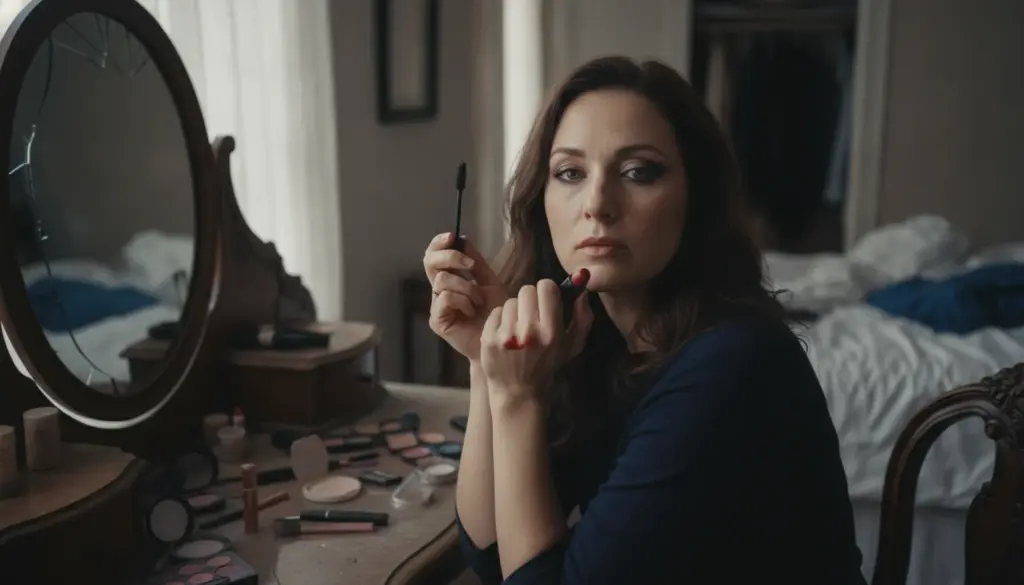
The Hidden Psychology of Your Morning Routine
Most people view cosmetics as a simple daily ritual—a quick swipe of mascara and some lipstick before heading out the door. However, psychological research suggests that your beauty habits actually provide a fascinating window into your inner self. The way you apply cosmetics is closely tied to specific behavioral traits, including some of the more complex, hidden aspects of human nature.
Beauty trends constantly evolve, but individual aesthetic habits often remain deeply ingrained. Whether you prefer a fresh-faced appearance or refuse to leave the house without heavy contouring and false lashes, these choices go far beyond mere fashion. Extensive psychological research analyzing over 1,400 women successfully linked specific beauty behaviors to distinct psychological profiles.
Experts focused heavily on three less flattering characteristics known as the “dark triad,” revealing that vanity routines can act as a subtle mirror reflecting impulsivity, emotional insecurity, and self-centered tendencies. Participants completed behavioral questionnaires based on the established Big Five model, measuring factors like extraversion and emotional stability, alongside assessments evaluating darker traits. Finally, the subjects detailed their cosmetic habits, documenting their financial investment, time spent, and how their looks shifted across various environments.
The Power of the Social Setting
The environment plays a massive role in cosmetic application. Unsurprisingly, the majority of women apply significantly fewer products when spending time alone. As social interactions increase, so does the complexity of the beauty routine.
- Relaxing at home: Generally translates to a completely bare face.
- Office environments: Typically call for a polished, moderate approach.
- Social events: Prompt a noticeable shift toward vibrant colors and heavier accents.
- First dates: Trigger the most intense and elaborate application processes.
During romantic encounters, individuals frequently utilize extra foundation and vibrant lip colors as a psychological shield, aiming to boost personal confidence and maximize external attractiveness.
When Cosmetics Become a Strategic Stage
A very distinct pattern emerged regarding those who crave constant admiration. Individuals driven by a strong desire for external validation approach their vanity cabinets quite differently than the average person.
- They dedicate significantly more time to their daily application.
- Their routines feature a much higher volume of different products.
- Financial investment in beauty items is remarkably elevated.
- They highly customize their appearance based on the specific social setting.
This strategic adaptation is incredibly telling. When aiming to impress new acquaintances, these individuals turn up the volume with dramatic eyes and sculpted features. For those with validation-seeking tendencies, cosmetics function as a calculated tool designed to command attention and project a highly curated image.
Vibrant Expression vs. Rigid Routines
Highly sociable and energetic individuals also showed a tendency to spend heavily on beauty products. However, their motivation stems from a desire for vibrant self-expression rather than calculated impression management. Unlike the validation-seeking group, highly extraverted women maintain a surprisingly consistent aesthetic across different environments.
Whether they are attending a lively party or sitting in a boardroom, their vibrant appearance remains steady. A bold lip color serves as a personal energizer rather than a manipulation tactic. It acts as a small confidence-boosting ritual that prepares them to comfortably engage with the world.
Conversely, the data revealed a contrasting profile for individuals scoring higher in traits associated with lower empathy and higher impulsivity. This demographic generally utilizes fewer cosmetic products overall. Their approach to beauty is notably rigid, rarely shifting to accommodate different social scenarios. They typically stick to a minimal, unchanging routine, or frequently skip cosmetics entirely, suggesting they place little value on conforming to societal beauty standards.
Using Beauty as Emotional Armor
Those prone to emotional fluctuations and stress utilize cosmetics in yet another unique way. Similar to the highly strategic group, individuals who struggle with inner turmoil frequently alter their appearance based on their surroundings. Yet, their underlying motivation is drastically different.
They tend to rely heavily on cosmetics whenever they enter public spaces, using their beauty routine as a protective mechanism. When experiencing internal anxiety, a perfectly executed look provides a comforting sense of control and emotional armor.
What Is Your Vanity Mirror Really Saying?
Does enjoying a glamorous aesthetic automatically indicate deep-seated psychological flaws? Absolutely not. Experts emphasize that these statistical averages should never replace nuanced understanding. Cultural background, personal health, and workplace norms heavily influence our daily aesthetic choices.
Still, it can be illuminating to ask yourself a few honest questions during your morning routine:
- Do I feel immense anxiety when others see my natural skin?
- Am I drastically altering my appearance just to please a specific person?
- Is this routine helping me appreciate myself, or am I desperately trying to impress a crowd?
- Does a slightly smudged eyeliner trigger genuine emotional distress?
Your responses might reveal far more about your emotional landscape than the contents of your makeup bag. For some, beauty is purely a creative outlet, while for others, it acts as a mandatory shield against the outside world.
Navigating Social Pressure and Self-Esteem
This research ultimately highlights the intense societal pressure surrounding physical appearance. Digital platforms and professional environments constantly broadcast rigid expectations, which easily bleed into our private habits. Individuals grappling with fragile self-esteem often use extra concealer to hide emotional vulnerabilities alongside physical blemishes.
To ensure your routine remains a positive force, consider adjusting your relationship with your vanity mirror. Schedule intentional makeup-free days to monitor your emotional response, and notice when you are applying heavy products just to cater to someone else’s gaze. Treat your cosmetics as playful tools rather than mandatory corrections.
Mental health professionals frequently observe how grooming rituals function as subtle coping mechanisms. While they offer temporary comfort, relying on them too heavily can indicate underlying insecurities. The ultimate goal is feeling entirely worthy of being seen, regardless of what is on your face.