Dusty window treatments can quickly drag down a room’s vibe, yet the thought of wrestling with hooks, washing machines, and ironing boards keeps many of us procrastinating. Fortunately, giving your drapes a thorough refresh doesn’t require removing them from the rod. By utilizing a few straightforward techniques, you can effectively eliminate built-up dust, lingering odors, and unsightly spots right where they hang. This surprisingly quick approach spares you a tremendous amount of heavy lifting.
The Hidden Grime in Your Window Dressings
While they might appear spotless at a glance, window fabrics actually operate like giant air filters in your living space. They constantly trap a variety of airborne particles, including:
- Pet dander and ordinary household dust
- Outdoor pollutants and seasonal pollen
- Cooking aromas, cigarette smoke, and animal scents
- Mildew spores and moisture in poorly aerated rooms
Individuals dealing with asthma or seasonal allergies often feel this buildup first through watery eyes or persistent sneezing. Despite these telltale signs, it is incredibly common to put off a massive curtain-washing project for months or even years. Waiting until the fabric looks visibly filthy means you have delayed the chore far too long. However, incorporating minimal routine upkeep easily bypasses the need for an exhausting deep clean.
Vacuuming as Your Weekly Defense
The absolute most crucial and effortless habit to adopt is drawing out surface debris with your vacuum. It may not sound glamorous, but this simple action drastically elevates your indoor air quality and overall home hygiene.
The Safe Way to Suction Fabric
Always attach a soft bristle brush tool to your vacuum hose before touching delicate materials. This specialized attachment stops the suction from aggressively pulling at the threads or getting stuck to the fabric. Try to integrate this quick sweep into your weekly chores, perhaps right after finishing your floors. Consistent vacuuming stops loose dirt from embedding itself permanently into the woven fibers.
Effortless Deep Cleaning with Steam
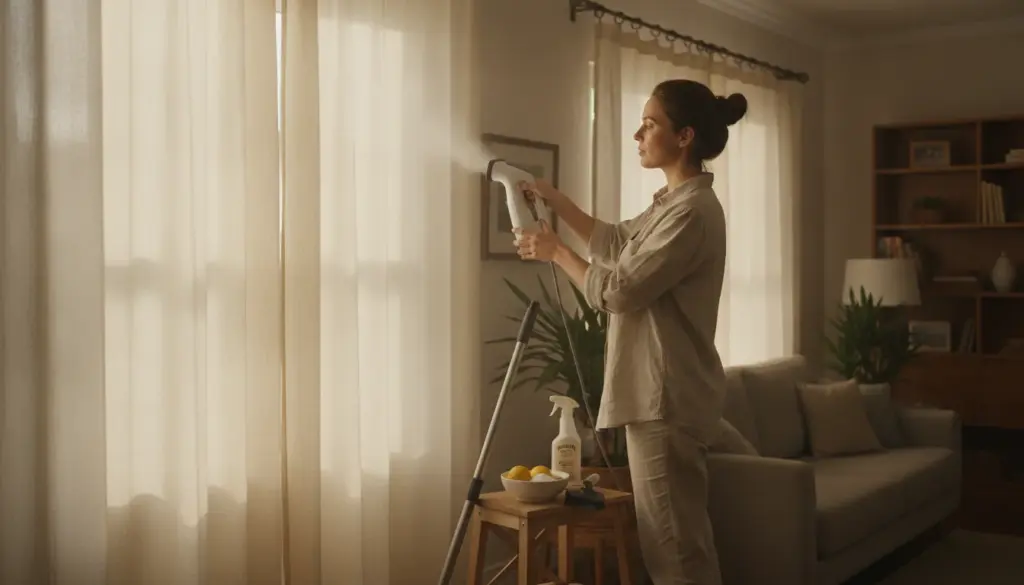
When your window coverings have been hanging untouched for a while or have absorbed stubborn household smells, a handheld garment steamer or dedicated steam cleaner works wonders. Intensely hot moisture pushes deep into the fabric matrix, easily dislodging grime that a standard vacuum leaves behind.
Ideal Materials for Steaming
This heat-based method yields phenomenal results on:
- Heavy, thick drapery
- Light-blocking blackout panels
- Synthetic material blends
- Fabrics that are strictly prohibited from washing machines
Hover the steamer nozzle just an inch or two away from the surface, gliding it smoothly in vertical strokes. Working consistently from top to bottom allows any microscopic water droplets to fall naturally along the drape. As a professional precaution, always test the hot mist on an invisible back hem first. Delicate textiles, like pure silk or coarse natural linen, can warp, shrink, or lose their color when exposed to sudden high temperatures.
Erasing Spots with Pantry Staples
Tackling isolated smudges rarely warrants dismantling your entire window setup. A fundamental mixture of water and standard white vinegar effortlessly breaks down everyday grime, from oily handprints to slight discoloration near the floorboards.
DIY Stain Remover Recipe
Grab any clean spray bottle and combine these basic ingredients:
- One measure of natural white vinegar
- Two measures of lukewarm water
Give the solution a gentle shake, aim directly at the soiled area, and let it penetrate for a few moments. Next, gently blot the moisture with a pristine, soft cloth. Aggressive rubbing is a major mistake, as it will likely push the blemish deeper or tear the delicate threads. If the mark persists, simply repeat the blotting process. For exceptionally fragile materials, verify colorfastness on a hidden corner before treating the main stain.
Restoring a Beautiful, Fresh Scent
Even pristine-looking fabrics hold onto stubborn aromas from open-plan kitchens or smoky environments. When this happens, a handcrafted deodorizing mist instantly revives the room’s ambiance.
Daily Aromatic Spritz
Fill a mister with plain water and introduce a few drops of high-quality essential oils. Excellent botanical options include:
- Lemon for a brilliantly crisp, clean finish
- Lavender to encourage a relaxing, cozy evening mood
- Eucalyptus for an invigorating, open-window sensation
Shake vigorously and mist a very light cloud over the fabric. Keep a generous distance to guarantee the material doesn’t become damp. Just two or three sprays per panel will do the trick.
Passive Deodorizing Sachets
If you prefer a continuous fragrance without daily effort, craft tiny fabric pouches filled with baking soda and dried botanicals, like crushed mint or lavender buds. Tuck these discreetly on the windowsill or loop them near the curtain rod. Baking soda actively absorbs bad smells rather than merely covering them up, while the dried herbs slowly release a gorgeous natural perfume.
Establishing a Manageable Routine
Window treatments maintain their pristine condition much longer when you swap out daunting, massive cleaning days for tiny, consistent habits. By addressing minor smells and tiny spots the moment you notice them, you stop grime from becoming permanently glued to the fibers. This proactive mindset ultimately saves you hours of exhausting labor, not to mention the hassle of waiting for wet panels to dry before re-hanging them.
When Complete Washing is Unavoidable
Naturally, not every drape can survive indefinitely on spot treatments and gentle steaming. Once you spot significant sun fading, distinct mold patches, or deeply saturated grease, a complete wash or a trip to a professional cleaner becomes essential.
Always scrutinize the manufacturer’s care tag. If you spot the dry-clean-only icon, trusting a professional is undoubtedly the smartest move. For machine-safe options, opt for an incredibly gentle cycle with cool water and minimal spinning. Hang them up immediately while still slightly damp to naturally pull out any wrinkles using their own weight.
Bonus Advice for Healthier Indoor Air
Your drapery is just one component of your home’s overarching climate health. To significantly reduce airborne dust and trapped odors, you need to manage the surrounding environment. Routinely wiping down window frames, maintaining excellent daily ventilation, and keeping your sills free of unnecessary clutter drastically lowers the amount of dirt that blows directly into your fabrics.
Strategically placing leafy greenery near your windows can also make the room feel much crisper. Resilient species like snake plants or peace lilies naturally complement your overall air-quality efforts, even if they don’t replace a proper breeze.
If respiratory issues plague your household, sticking to a strict schedule of vacuuming and steaming is an absolute game-changer. Because you walk past these fabrics every single day, you will immediately notice the shift toward a healthier, more breathable space. By embracing these targeted maintenance tricks, you officially say goodbye to lugging heavy, soggy fabrics to the laundry room every few months.