From Dated Cabins to Modern Elegance
Interior designers are increasingly ditching standard white paint in favor of something completely unexpected: the ceiling itself. For decades, the golden rule was to keep overhead spaces crisp, flat, and flawlessly white. However, a massive shift in interior styling is taking place. Today, the ceiling acts as a blank canvas to introduce ultimate warmth, character, and sheer luxury. At the very center of this design revolution is wood, returning in a remarkably refreshed and contemporary way.
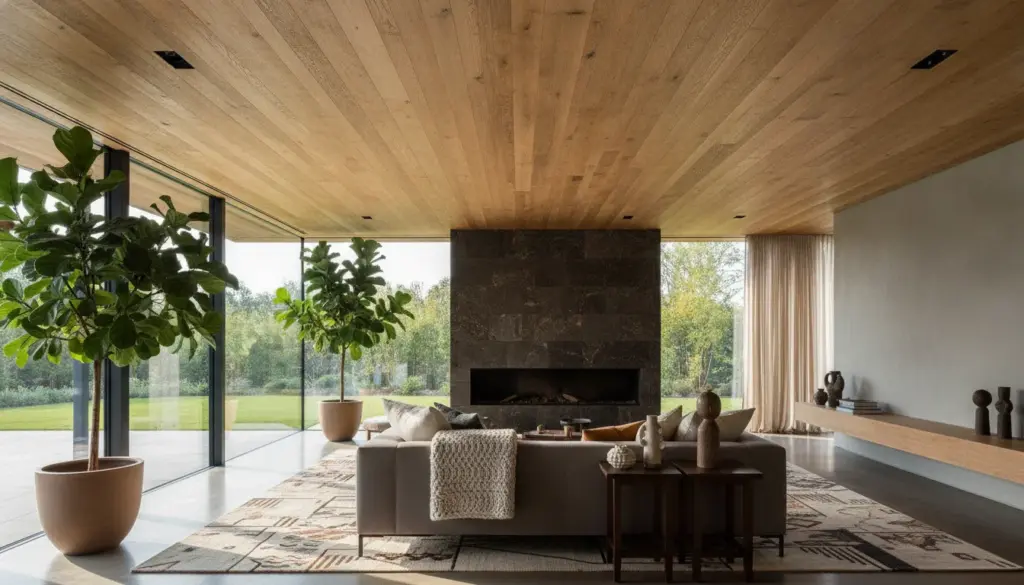
When you picture timber ceilings, your mind might instantly jump to heavy brown beams, gloomy panelling, or a dusty alpine cabin. Fortunately, that outdated aesthetic is long gone. The latest generation of overhead woodwork feels exceptionally airy, serene, and highly architectural. Instead of resembling a heavy timber box, current designs rely on delicate layers and brilliant structural accents.
Today’s approach completely prioritizes gorgeous textures, abundant light, and a calming atmosphere over heavy nostalgia.
The core concept is simple: use natural materials to completely transform a room’s vibe without knocking down load-bearing walls or enduring a grueling renovation. Your ceiling suddenly serves as a stunning decorative focal point, a functional acoustic dampener, and the primary mood-setter all at once.
Lightweight Timber to Maximize Space
The specific type of timber you choose dictates whether your space feels incredibly cozy or uncomfortably cramped. Dark, reddish-brown shades tend to visually push the ceiling downward. If you are aiming for a crisp, contemporary atmosphere, light-toned materials are absolutely essential.
The Best Wood Varieties for Your Ceiling
Rooms designed with a tranquil, “slow living” philosophy thrive on simplicity and softness. The following options align perfectly with that aesthetic:
- Pale oak: Exceptionally timeless, beautifully neutral, and effortless to blend with virtually any decor style.
- Bleached timber: The ultimate choice for a luminous, Scandinavian-inspired vibe or a breezy coastal look.
- Birch or maple: Bright and delicate, featuring subtle grain patterns that never overwhelm the eye.
Utilizing these lighter species beautifully preserves the natural spaciousness of your home. In a soaring, slightly chilly room, pale timber adds instant warmth without feeling oppressive overhead. Meanwhile, in a standard-height apartment, the environment remains delightfully breezy while gaining incredible architectural character.
Embracing Matte Finishes: Goodbye Orange Gloss
In the past, timber ceilings were almost always coated in a harsh, high-gloss varnish that aggressively yellowed over time. That specific finish is exactly what sparks memories of old-fashioned pubs and retro holiday homes. The contemporary method completely reverses this practice, favoring treatments that are virtually invisible to the naked eye.
- Clear, natural oils: These deeply protect the material without darkening its original shade.
- Ultra-matte varnishes: Designed to flawlessly mimic the stunning look of raw, untreated timber.
By utilizing a completely flat finish, the organic texture of the material remains distinctly visible. The surface reflects minimal light, which actually makes your overhead fixtures feel incredibly soft and beautifully diffused. This understated approach pairs flawlessly with off-white walls, textured plaster, or even industrial concrete floors.
The golden rule is simple: less gloss equals a more contemporary, relaxing space.
Slatted Panels and Graphic 3D Statements
It isn’t just the type of material evolving; the installation method is also getting a major upgrade. Flat, edge-to-edge boarding is swiftly being replaced by playful, highly graphic configurations. Narrow wooden slats—often referred to as tasseaux—are rapidly dominating the interior design world.
Creating Depth and Rhythm
Installing slender, evenly spaced battens produces a remarkably sleek linear pattern. When applied above, these slats offer several brilliant advantages:
- They inject dynamic rhythm into areas that might otherwise feel slightly sterile.
- The strong lines can visually stretch or widen a room, depending entirely on which direction they run.
- They look undeniably modern while maintaining a cozy, organic warmth.
Fortunately, you can now purchase pre-assembled panels featuring these precise slats. These ready-made solutions make the entire project much more affordable and significantly easier to install, especially if you want to avoid costly custom carpentry. Surprisingly, you don’t even need to cover the entire expanse. A localized, partial application frequently produces the most visually striking results.
Trendy Installation Methods
- Above the lounge: A wide strip over the sofa establishes a distinct, cozy anchor point in a large living room.
- Edge framing: Running slats along the perimeters instantly adds profound architectural depth.
- Zonal dividers: A distinct wooden band placed between the kitchen and dining area visually separates the zones without requiring a physical wall.
Wood as a Clever Architectural Tool
Overhead timber provides far more than just visual appeal. Strategically positioned wooden segments can actually help correct awkward proportions within a challenging layout.
Consider these incredibly popular applications:
- Cozy alcoves: Building a wooden niche over a reading chair creates an intimately enclosed, snug environment.
- Kitchen drops: A lowered wooden section above a cooking island immediately makes the culinary space feel more inviting and less acoustically hollow.
- Canopy illusions: Running a continuous strip of slats from the headboard straight up and across the ceiling crafts a sensational, modern canopy bed effect.
By cleverly dividing the ceiling into dedicated zones, even a basic, standard-build property gains a premium, custom-architectural feel.
Practical Perks: Warmer Vibes and a Quieter Home
This massive timber comeback is not strictly about aesthetics. Modern households are actively seeking serenity, both in visual design and everyday noise levels. Surprisingly, an upgraded ceiling addresses this need flawlessly.
Say Goodbye to Bothersome Echoes
Minimalist interiors featuring hard flooring, massive glass windows, and slick plastered walls usually share one major flaw: terrible reverberation. Sound aggressively bounces between the floor and the ceiling, making casual conversations sound incredibly sharp and mentally exhausting.
Wood tackles this annoying echo effortlessly. The organic material is naturally softer than rigid drywall or concrete. Slatted designs are especially effective, as the physical gaps and varied depths break up harsh sound waves and absorb excess noise beautifully.
You will immediately notice the dramatic difference during a lively dinner party or a chaotic afternoon with the kids. Voices instantly sound much softer and far less shrill, cultivating a peaceful background hum that makes your house feel like a highly secure, relaxing cocoon.
Seamless Lighting Integration
One of the most thrilling shifts from vintage designs is exactly how modern illumination is incorporated. The traditional single pendant light hanging in the dead center of the room is making way for multiple, highly subtle glowing sources.
- Concealed LED strips: Tucking these between the narrow slats casts a breathtaking, indirect glow.
- Recessed track lighting: Milled tracks sit perfectly flush with the timber, allowing you to easily adjust and relocate your spotlights anytime.
- Sleek linear profiles: Straight lines of light running parallel to the wood grain establish a spectacularly luxurious, boutique-hotel vibe.
Because the actual hardware hides seamlessly within the structure, the ceiling itself appears to radiate light. This brilliant tactic completely eliminates gloomy shadows and keeps the wooden elements looking fresh and highly inviting long after the sun goes down. Ultimately, merging warm timber with incredibly smart lighting ensures your space instantly feels significantly more expensive.
Expert Tips for Starting Your Ceiling Transformation
Diving into a full-house renovation can be incredibly intimidating, so taking smaller, calculated steps is generally the smartest approach. Following a few core guidelines will easily prevent costly mistakes and ensure your investment truly pays off.
Essential Maintenance and Material Choices
To guarantee a completely stress-free experience, keep these highly practical details in mind before you purchase:
- Prioritize sustainability: Always look for certified timber sourced from strictly managed, sustainable forests.
- Think about safety: Inquire about professional fire-retardant treatments, which is especially crucial if you reside in an apartment complex.
- Easy cleaning: Ensure the top coat can be gently wiped with a slightly damp cloth to prevent irritating dust buildup over time.
- Plan your power: Map out your cables and lighting nodes well in advance to avoid painfully drilling into your pristine new woodwork later on.
Styling Inspiration and Color Combinations
A statement wooden feature rarely works in total isolation. Its true stylistic power emerges when combined with the elements beneath it. Adding plush, soft area rugs will further enhance the room’s acoustic performance. Meanwhile, draping linen or organic cotton blinds will dramatically amplify the serene, nature-inspired mood.
You can certainly play with wall colors, provided they don’t clash with your chosen timber tone. Sand hues, gentle greys, and warm, creamy whites are incredibly safe bets that complement paler woods flawlessly. If you want to make a bold statement, painting a single feature wall in a deep forest green or rich navy blue will make the bright ceiling pop spectacularly.
If you remain slightly hesitant, simply start by applying a modular slatted system in a compact space, like a home office or a reading nook. This clever trial run allows you to fully experience the incredible difference overhead timber makes in terms of lighting, acoustics, and pure ambiance before committing to a massive home makeover.