
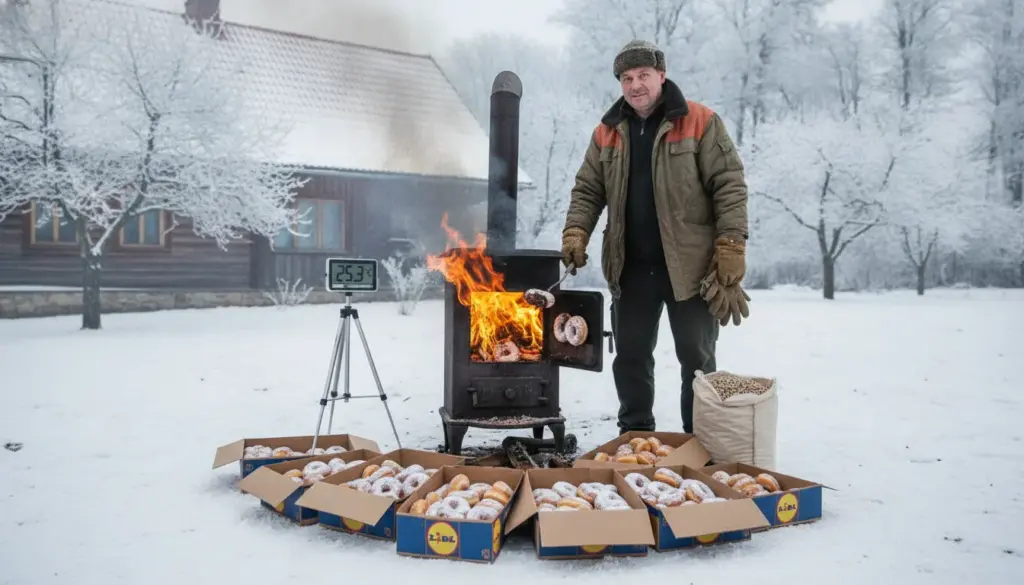
What initiated as a quirky demonstration regarding skyrocketing heating expenses quickly transformed into a thought-provoking statement. The social media stunt ended up highlighting uncomfortable truths about both surging utility bills and rampant food waste.
Pastries outperforming standard wood pellets
The central figure behind this unusual trial is Marek Hoffmann, a Polish digital creator widely recognized online as “AdBuster.” His primary goal was to illustrate the drastic measures individuals might consider as the costs of gas, firewood, and combustible pellets continue to surge across Central Europe.
During a traditional Polish holiday period, akin to Shrove Tuesday, local grocery chains heavily discount their surplus fried treats. Hoffmann realized that these seasonal sweets experienced such massive price drops that they became significantly cheaper by weight than standard heating pellets.
A single bag of conventional fuel actually cost more than an entire crate of pastries, even though both serve the exact same purpose: generating warmth. Eager to test this theory in real life, he visited a nearby Lidl branch and purchased a massive haul. He walked away with 133 donuts, weighing a total of 10 kilograms, for a mere 2.85 euros. This astonishing bargain equated to roughly two cents per pastry.
The combustion chemistry of a donut
Fundamentally, these baked goods are a dense mixture of flour, sugar, and cooking oil. This specific blend of ingredients essentially turns them into an unexpectedly potent combustible material. The high fat and sugar content yields a massive amount of thermal energy when ignited.
Based on the data Hoffmann referenced for his project, these sugary treats generate approximately 18.5 megajoules of energy per kilogram. Remarkably, this edges out standard wood briquettes, which typically offer around 18.27 megajoules per kilo. From a purely scientific standpoint, deep-fried dough easily rivals traditional firewood.
- Donuts: roughly 18.5 MJ per kilogram
- Wood briquettes: approximately 18.27 MJ per kilogram
- Wood pellets: comparable energy output, yet frequently pricier per unit
These theoretical statistics translated perfectly into reality. The content creator loaded the massive pile of confectionery into a heavy cast-iron woodstove, documenting the entire process for his online audience.
A five-hour sugar and fat inferno
Once lit, the sugary pile initially smoldered before erupting into robust flames. The volatile mix of grease and carbohydrates fueled an intense, long-lasting fire, driving the stove’s internal temperatures up to several hundred degrees Celsius.
The most astonishing outcome was the duration of the burn. The donuts provided continuous fire for nearly five hours. For a makeshift fuel source sourced entirely from a bakery aisle, this longevity is truly exceptional. Throughout this period, the appliance radiated consistent heat, completely eliminating the need for Hoffmann to add more kindling.
The iron stove maintained a glowing heat for hours, fueled entirely by ultra-cheap grocery store snacks. Purely in terms of thermal efficiency, the concept was a complete success. If one solely measures the warmth generated per dollar spent, one could grimly deduce that clearance-aisle desserts make a highly viable substitute for expensive lumber.
The moral dilemma of incinerating food
Despite the technical triumph, the digital creator experienced zero sense of victory. Throughout his recording, he candidly discussed the deep unease he felt while torching perfectly edible calories, especially while countless households struggle financially.
He raised several poignant questions that resonated deeply with his viewers:
- Is it ethically justifiable to destroy food for heat, even if it was destined for the dumpster?
- Does this scenario expose the severe imbalance currently plaguing our energy and grocery markets?
- Have utility costs become so prohibitive that ordinary citizens are forced into absurd alternatives?
Hoffmann noted that his demonstration perfectly encapsulates a bizarre modern reality. Festive treats are morphing into emergency kindling simply because, at certain times, they undercut the price of raw timber.
The severe reality of the European energy crisis
This viral stunt is merely a symptom of a much broader issue. Over recent years, the rates for natural gas, coal, and timber have skyrocketed globally. In Poland specifically, a vast number of residences still rely on solid fuels for winter heating. As financial pressures mount, desperate homeowners often push the boundaries of what is acceptable to burn.
Regional news outlets have documented locals feeding their furnaces with everything from excess agricultural grain and dried corn to discarded furniture and household garbage. While these desperate tactics may protect a family’s budget, they severely escalate air pollution and introduce grave health hazards.
When citizens genuinely weigh the pros and cons of burning groceries or trash to prevent freezing, it serves as a damning indictment of current utility markets rather than a celebration of human ingenuity. Various Polish municipalities have issued persistent warnings regarding toxic smog caused by improper heating methods. While a stove stuffed with sugary pastries might seem harmless, chronically burning inappropriate, cheap materials devastatingly degrades local air quality.
Balancing food surplus and thermal gains
This compelling narrative also highlights the ongoing crisis of food waste. Major retailers routinely discard massive quantities of edible goods, particularly following seasonal promotions. Within this wasteful ecosystem, using old pastries as a heat source feels simultaneously ridiculous and highly logical.
Ideally, a more efficient societal framework would redirect these discounted perishables to food banks, community pantries, or charitable organizations. In such a system, they would retain their true value as human nourishment rather than being reduced to a makeshift heating hack.
Crucial warnings about unconventional fuels
Hoffmann’s viral video inevitably sparked a dangerous curiosity among viewers: if bakery items burn this efficiently, what else can go into the fire? Heating experts strongly warn against this line of thinking. Just because a substance catches fire does not mean it belongs in your living room stove.
The severe risks associated with haphazardly burning random household items include:
- Releasing toxic chemical vapors and hazardous particulate matter into residential neighborhoods
- Accelerated creosote buildup in chimneys, drastically increasing the risk of catastrophic house fires
- Uncontrollable temperature spikes that can warp or destroy expensive heating appliances
- Erratic combustion that causes dangerous sparks and heavy smoke to billow back into the home
Anyone looking to transition to alternative heating methods should strictly utilize officially approved options. This includes certified wood pellets, inspected briquettes, or properly seasoned firewood. Many local authorities and sustainability advisors now offer free guidance on achieving efficient, environmentally friendly indoor heating.
Reflecting on our modern energy dependency
The visual of a furnace packed tightly with frosted treats is both highly amusing and deeply tragic. On one hand, it brilliantly showcases human resourcefulness in the face of financial hardship. Conversely, it exposes the extreme vulnerability of ordinary families when utility rates suddenly spike.
For government officials and policymakers, this viral sensation holds up a very uncomfortable mirror. When a consumer mathematically determines that incinerating deep-fried dough is a financially sound strategy to survive the winter, it indicates a catastrophic failure in pricing structures and social safety nets.
For everyday homeowners, this bizarre tale should serve as motivation to evaluate their own household efficiency. Investing in proper home insulation, intelligent ventilation systems, and targeted heating solutions will ultimately yield far better long-term savings than scavenging the clearance aisles for questionable, highly unusual combustible materials.