As someone experienced in home maintenance, I’ve noticed a significant shift in how people tackle bathroom chores. Homeowners are increasingly ditching expensive, neon-colored bathroom gels and specialized liquids. Instead, they are reaching into the kitchen cabinet for something they already own: the standard dishwasher tablet. Those little compressed blocks are engineered to tackle baked-on grease, but they happen to be incredibly effective on bathroom fixtures. By utilizing a few straightforward techniques, you can maintain pristine plumbing without buying an arsenal of specialized products.
From the Kitchen to the Bathroom: The Science Behind the Pod
Dishwasher pods are essentially highly concentrated cleaning bombs packed with active enzymes, degreasing agents, and oxygen bleach. While their primary job is dissolving food particles during a wash cycle, this exact chemical profile makes them remarkably efficient at breaking down stubborn limescale, embedded dirt, and organic buildup inside a toilet bowl.
In regions struggling with hard water, mineral deposits rapidly accumulate around the rim and down the pipe. Traditional toilet liquids frequently just mask unpleasant odors with heavy perfumes rather than dissolving the root cause. Because of its formulation, a dishwasher tablet targets the exact structural makeup of hard water stains, uric scale, and greasy residue. You can essentially view that little pod as a super-concentrated bathroom cleaner disguised in kitchen packaging.
However, this intense cleaning power requires a bit of care. Since the formula is heavily concentrated and mildly caustic, it shouldn’t be applied to delicate materials.
Safe Surfaces vs. Materials to Avoid
- Use on: Porcelain, enamel finishes, ceramic tiling, and hard bathroom plastics.
- Keep away from: Marble, natural stone, untreated timber, aluminum, and unsealed metals.
Always wear protective rubber gloves, ensure proper bathroom ventilation, and thoroughly rinse the treated areas with clean water when you are finished.
Five Surprising Bathroom Applications
1. Dissolving stubborn toilet bowl limescale
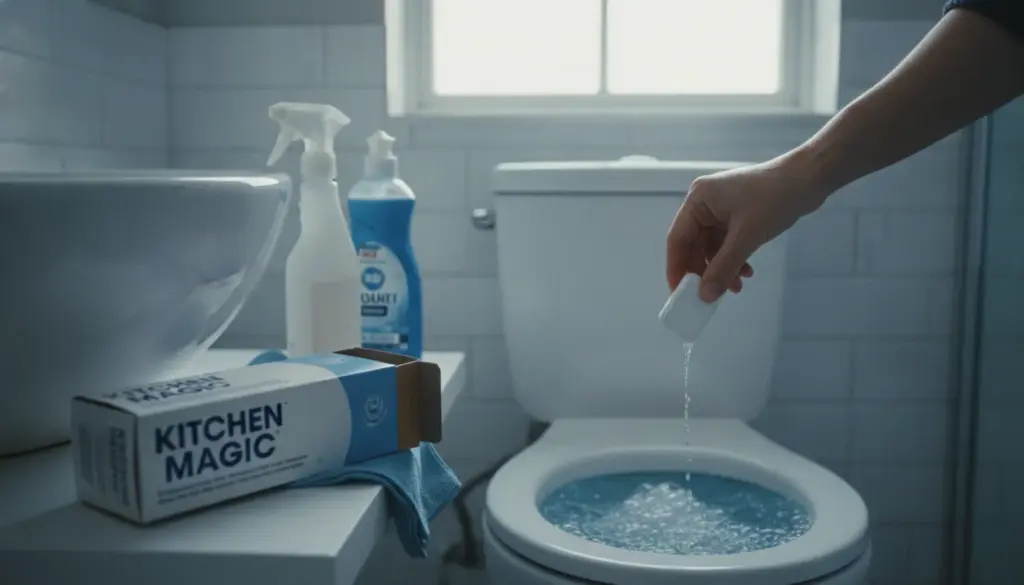
This remains the most popular and visually impressive application. For severely scaled bowls, many households utilize a deep-cleaning overnight method.
Drop one or two tablets directly into the bowl, followed by a careful pour of warm water (aim for around 140°F/60°C, but absolutely never boiling). Leave this concentrated solution to sit overnight. By morning, your toilet brush will glide right through the mineral layer, lifting away yellow or gray streaks with virtually no physical effort.
2. Reviving dull bathtubs and shower trays
Over months of regular use, bathtubs and shower bases develop a cloudy film composed of soap scum and hard water minerals. Your kitchen tablet offers an excellent remedy here as well.
Simply dissolve a single pod in a bucket of warm water, stirring until the block breaks down completely. Apply this liquid mixture to the walls and floor using a soft sponge or cloth. Allow it to sit for a few minutes to penetrate the grime, making sure it doesn’t dry out completely. Finally, rinse away with fresh water and give it a light scrub. The dissolved minerals and soap residue will lift away much faster, leaving the surface looking bright and feeling smooth.
3. Brightening dark grout lines
Bathroom grout quickly turns dark due to a mixture of mold, embedded dirt, and soap residue. While pure bleach-based toilet cleaners risk discoloring your grout, a localized solution made from a dissolved dishwasher tablet offers targeted cleaning.
The active enzymes effectively pull mold particles and dirt outward from the porous grout material. Best of all, it accomplishes this deep clean without degrading the protective glaze on your surrounding ceramic tiles.
4. Eliminating foul drain odors
Shower and sink drains can emit terrible smells, even when the visible surface shines perfectly. Hair, soap scum, and stray food particles frequently get trapped in the P-trap beneath the sink, where they begin to ferment and release odors.
You can effectively break down this stubborn blockage using a partial tablet. Carefully break a pod into halves or quarters, dropping a small piece directly into the affected drain. Flush it down with a splash of warm water so the piece settles right into the plumbing trap. Leave it undisturbed for several hours, ideally overnight. The following day, flush the pipes generously with hot tap water. As the fats and organic matter disintegrate, the foul smells usually vanish. If persistent odors or a slow drain remain, the blockage is likely deeper down the line, meaning it’s time to consult a professional plumber.
5. Sanitizing the toilet brush and holder
The brush and its storage container represent a frequently ignored bacterial hotspot. You truly do not need to purchase a dedicated sanitizing spray for this area.
You can effortlessly refresh the entire set by placing half a tablet into the holder with some warm water. This simple trick leaves the bristles looking presentable and neutralizes that lingering musty smell in the corner of your bathroom.
Understanding Frequency, Savings, and Limits
Transitioning to this kitchen staple can significantly lower your household spending on dedicated toilet gels, descaling liquids, and specific bathroom sprays. A standard box lasts for months and easily replaces three or four separate plastic bottles beneath your sink.
For standard upkeep, dropping a tablet into the toilet bowl once every two weeks is generally sufficient. Many experienced homeowners alternate this method with milder, natural alternatives like white vinegar and baking soda. This balanced approach ensures you aren’t flushing aggressive cleaning agents into the municipal sewer system on a daily basis.
Environmental Impact, Septic Systems, and Safety
Dishwashing pods contain phosphates, bleaching agents, and other potent chemicals. While flawless for lifting baked-on food, they aren’t meant to be your daily, all-purpose cleaner. To minimize environmental impact, reserve this trick for targeted deep cleaning rather than everyday wipe-downs.
If your property relies on a private septic tank or an independent wastewater treatment system, exercise extreme caution. Introducing heavy chemical loads can disrupt the essential bacterial ecosystem inside your tank. For homes with septic systems, standard maintenance is best handled with a gentle vinegar and baking soda mix, saving the powerful tablets strictly for rare, heavy-duty emergencies.
Furthermore, mixing cleaning products poses a severe hazard. Combining dishwasher tablets with chlorine bleach can generate dangerous, toxic fumes. Always stick to one product type per cleaning session, rinse thoroughly, and wait before applying anything else.
Practical Tips for First-Time Users
If you’re eager to test this method, a few smart habits will prevent unnecessary hassle:
- Cut or snap the pods in half for minor cleaning tasks, effortlessly extending the life of a single box.
- Spot-test a hidden area first if you own an older toilet, just to ensure the vintage glaze reacts well to the enzymes.
- Always use lukewarm to warm water, but strictly avoid boiling water; extreme heat can instantly crack porcelain fixtures.
- Open a window or run the exhaust fan while working to disperse any strong chemical scents.
If you already keep a supply of these tablets for your kitchen, you don’t need to spend a dime to try this out. This multi-purpose hack is especially brilliant for compact apartments where storage space is at a premium. Long-term, it pays off to evaluate the specific type of pod you purchase. Opting for “eco-friendly” varieties provides a milder chemical profile, though utilizing rubber gloves and rinsing thoroughly remains standard practice. By making this simple swap, an ordinary kitchen item seamlessly integrates into your regular chore routine, keeping your cabinets completely free of unnecessary clutter.