Why crafting a DIY bird feeding station makes perfect sense
The sweet sound of chirping birds is returning to our gardens, but buying a commercial feeding station can surprisingly drain your wallet. Fortunately, you can craft a remarkably elegant feeding spot using just a forgotten wire hanger and some basic drawer clutter. Taking about fifteen minutes, you can construct a durable hanging feeder using a standard dry-cleaning hanger, simple tools, and a bit of fruit or seed. This clever project costs absolutely nothing, requires zero complex equipment, and provides a massive benefit to the feathered visitors on your balcony or lawn.
Songbirds burn through substantial energy during the early spring months. They are busy securing mates, claiming territory, and gathering nesting materials. Store-bought feeding systems cleverly capitalize on this seasonal need, but those costs add up quickly. Repurposing a single metal wire hanger allows you to offer essential nutrition while minimizing household waste and saving a significant amount of money.
There are several other excellent reasons to build your own system:
- You actively divert materials from ending up in the landfill.
- You maintain complete control over the exact diet provided.
- The design easily adapts to fit the specific layout of your outdoor space.
- Children can participate, gaining valuable hands-on lessons about wildlife and upcycling.
Essential supplies for your wire feeder project
Selecting the perfect metal base
A standard metal wire hanger from the dry cleaner serves as the ultimate foundation for this craft. This specific type of thin wire offers excellent flexibility while remaining sturdy enough to hold a modest food supply. Expect the frame to comfortably support around 200 to 300 grams, which perfectly accommodates an apple half, a handful of peanuts, or a small seed cup.
The primary benefits of using this material include:
- The ability to bend it completely straight and reshape it endlessly.
- High durability, ensuring the metal won’t easily snap under pressure.
- The simplicity of fashioning a custom hanging hook at the very top.
Tools and materials for the feeding tray
Because snipped metal ends can be quite sharp, you will need a few basic utility items to execute this safely. Gather these essentials on your workspace before starting:
- Pliers or combination snips for precisely bending the thick wire.
- Wire cutters to trim away any excess length.
- Thick work gloves to shield your hands from unexpected sharp edges.
- Half an apple or the cut bottom of a plastic beverage bottle to hold the snacks.
Using a piece of fruit like an apple or pear acts as a brilliant, biodegradable feeding bowl. If you lack spare produce, simply slice the base off an empty plastic bottle to serve as a seed cup. This strategy brilliantly gives a piece of single-use plastic a highly practical second life.
Step-by-step instructions to shape your feeder
Straightening out the wire frame
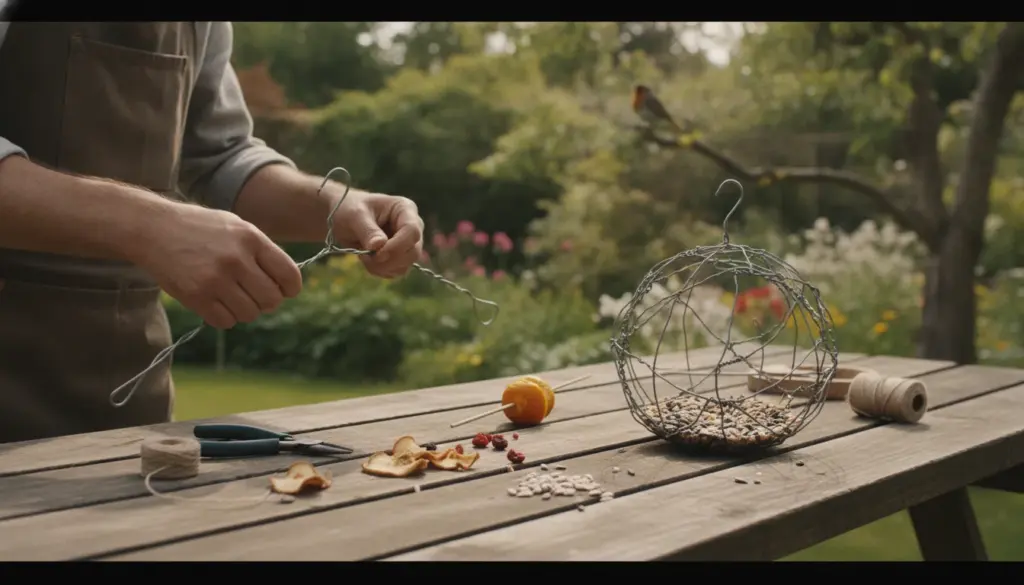
Place your hanger flat on a sturdy surface and grip the twisted junction firmly with your pliers. Gently untwist the knot located just beneath the original hook. Carefully pull the wire out bit by bit until it is completely uncoiled.
Wearing your protective gloves, run your hands firmly along the metal to smooth out as many kinks as possible. Your goal is to create one relatively straight piece measuring roughly 70 to 80 centimeters. The smoother you make this foundational wire, the more structurally sound your final piece will be.
Fashioning the fruit or seed holder
Decide right away whether you plan to serve fresh fruit or loose seeds, as this dictates the bottom design. For a fruit holder, twist the lowest third of your wire into a flat, horizontal spiral measuring roughly five centimeters across. Leave a tiny, straight spike pointing vertically in the exact center so you can securely pierce the fruit.
If you prefer offering seeds, bend that same bottom section into a tight, closed ring matched precisely to the circumference of your plastic bottle base. Test the fit immediately to ensure the plastic cup does not wobble. If it feels loose, simply pinch the metal loop tighter using your pliers.
Creating a secure hanging hook
Now, take the uppermost portion of the wire and fashion it into a wide, generous hook. Bend the metal into a sweeping arch so it easily slips over a thick tree branch or a pergola beam. Crafting a larger hook is vital to prevent the entire structure from tumbling down during strong wind gusts.
Achieving maximum stability at both the top hanging point and the bottom tray encourages more hesitant birds to comfortably land and dine in peace.
Selecting the appropriate seasonal menu
Wondering what exactly to place on your freshly crafted feeding spot? Springtime calls for significantly lighter nutritional options. Suet and fat balls become highly unsuitable as daytime temperatures begin to climb. Instead, opt for these excellent alternatives:
- Fresh chunks of soft fruit, including apples or pears.
- Unroasted, unsalted peanuts, which you can even string on a delicate thread.
- Black sunflower seeds, serving roughly 50 to 100 grams per session.
Pay close attention to how long fresh produce sits outside. Warm weather accelerates spoiling, which quickly attracts unwanted pests like flies and wasps. Always remove uneaten remnants promptly and refresh the food supply on a regular basis.
Safe and strategic placement strategies
Avian visitors deeply value clear visibility and physical safety, with prowling neighborhood cats being their primary concern. To keep them protected, select a location that meets these specific criteria:
- Elevated a minimum of 1.5 meters off the ground.
- Featuring an unobstructed flight path, devoid of dense, hiding bushes immediately underneath.
- Positioned on a branch or beam far away from easily accessible fences or roof edges where predators might lurk.
An exposed branch, a sturdy hook beneath an awning, or a pergola beam often yields the best results. For your own enjoyment, align the feeder with a frequently passed window near your dining table or living room couch.
Expert tips for long-lasting feeder maintenance
Hygiene and ongoing upkeep
Discarded husks and droppings accumulate surprisingly fast around any feeding zone. This buildup drastically elevates the risk of spreading avian diseases. To prevent this, thoroughly rinse both the plastic cup and the metal wire frame frequently with hot water. Avoid harsh chemical detergents entirely; a vigorous rinse is more than sufficient.
Regularly inspect the structure for fresh rust spots or minor metal fractures. Should any sharp burrs appear, simply utilize your pliers to snip the dangerous tip away and bend a fresh, safe edge.
Anticipating your new feathered guests
The specific species you attract highly depends on your local geographic area. However, many standard garden setups typically draw in a delightful variety of wildlife:
- Titmice and chickadees eagerly seeking out sunflower seeds and peanuts.
- Sparrows that absolutely love pecking through mixed seed blends.
- Starlings and robins that go completely crazy for fresh fruit slices.
- Ground-feeders that quietly clean up any dropped crumbs directly beneath the station.
Keep a pair of binoculars handy on the windowsill to instantly transform your living room into a private wildlife observation blind. For younger family members, this experience practically rivals watching a live nature documentary.
Expanding your upcycled bird garden
Once you get a taste for this rewarding DIY process, you can easily apply the identical concept to other household scraps. An empty glass jam jar quickly morphs into a hanging seed dispenser with just some strong twine and a small wooden perch. Meanwhile, a sawed-off section of an old broom handle makes an exceptional secondary perch when tied adjacent to your wire hanger construct.
No matter the variation, meticulously check for pinching hazards or sharp rims where tiny claws could potentially become trapped. Always prioritize soft, natural materials for landing pads, such as a smooth bamboo stalk, a natural twig, or an upcycled wooden spoon.
By taking a step-by-step, creative approach to standard household waste, you cultivate a vibrant, bird-friendly environment without making hefty financial investments. This rewarding hobby simultaneously provides you with spectacular daily views and offers a beautifully simple method to give back to local wildlife.