Is your electric water heater taking much longer to do its job while your utility bills mysteriously creep upward? The likely culprit is limescale buildup. This hidden nuisance not only severely reduces water pressure but can ultimately cause your internal heating element to burn out completely. By maintaining a regular cleaning schedule, you effortlessly bypass the need for an expensive appliance replacement. Plus, your daily showers will return to normal, and you will notice a welcome drop in your monthly energy expenses.
In regions dealing with hard water, mineral accumulation acts as the primary adversary for most household appliances. When it comes to electric water heaters, this chalky residue goes far beyond a simple aesthetic annoyance—it poses a genuine technical hazard. Thoroughly flushing the interior is essentially a mandatory chore for every homeowner looking to guarantee a continuous, uninterrupted supply of hot water.
How Often Should You Descale Your System?
While there is no universal timeline for everyone, appliance experts strongly advise performing preventative maintenance every 6 to 12 months if you reside in a hard water zone. Sticking to this routine keeps the unit’s thermal efficiency operating at its absolute peak and stops internal pipes from slowly clogging.
Are you wondering if your system is currently crying out for attention? Watch out for specific red flags. If you start hearing unusual rumbling or boiling sounds coming from inside the tank, that is a prime indicator. Additionally, if the unit requires significantly more time to heat up or you experience a noticeably weaker stream of hot water, it is time to take immediate action.
Step-by-Step Guide to Removing Limescale
Before doing anything else, remember that electrical safety is always paramount. You must absolutely disconnect the appliance from the main power supply. This is a critical, non-negotiable first step that you cannot afford to skip.
1. Drain the Tank
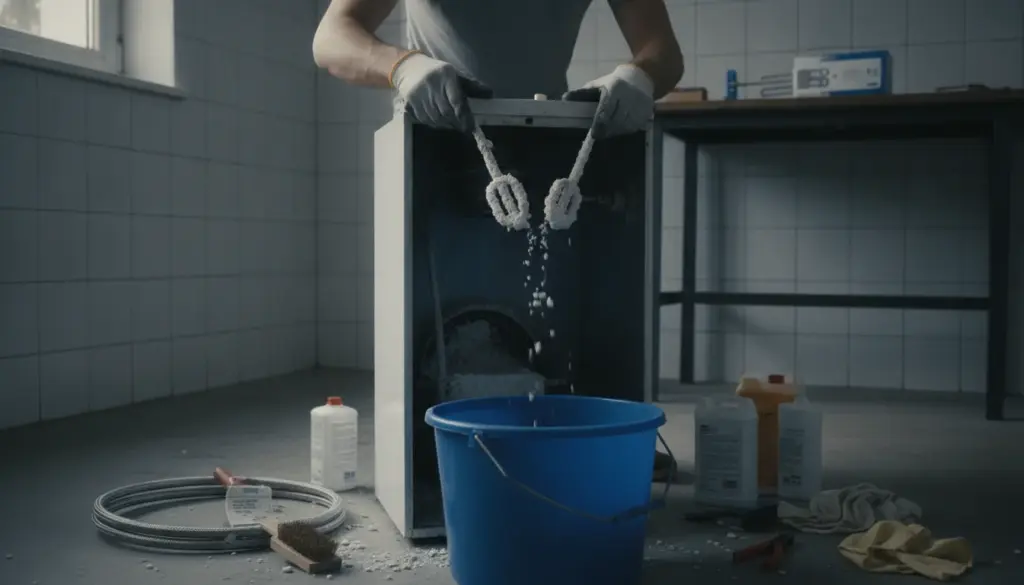
Shut off the cold water valve feeding into the heater. Next, open the hot water faucets throughout your home to relieve built-up pressure inside the system. Once the pressure is normalized, empty the main cylinder by opening the drain valve or carefully loosening the water inlet pipe.
2. Apply the Vinegar Solution
With the cylinder completely empty, you can now introduce plain white vinegar through the water inlet. This everyday household liquid contains natural acids that effectively dissolve stubborn calcium carbonate without damaging any sensitive internal components. For a standard residential unit, you will generally need about 2 to 3 liters of vinegar mixed with water.
3. Let It Soak
Give the acidic solution enough time to break down the hardened minerals. It needs to remain inside the tank for a minimum of 4 to 6 hours. However, if you suspect years of neglected buildup, it is highly recommended to leave the mixture soaking overnight for a much deeper, more thorough clean.
4. Flush the System
Turn the cold water supply back on so the fresh flow can forcefully push out all the dissolved sludge. Keep the water running continuously through an open tap until the stream runs completely clear and the vinegar odor disappears entirely.
Pro Maintenance Tip
Whenever you perform this flush, always inspect the condition of the magnesium anode rod. This vital little component acts as a sacrificial element, deliberately attracting corrosive minerals so they do not cling to the tank walls. If the rod appears heavily pitted or worn, swap it out immediately. It is an incredibly inexpensive replacement part that can literally double the lifespan of your water heater.
Smart Habits to Prevent Future Scale Buildup
You can drastically slow down the rate of mineral crystallization by adopting a few straightforward habits. Surprisingly, a minor tweak to your daily settings can save your equipment from premature failure.
- Adjust your thermostat: Your household water does not need to be scalding hot. Dialing the temperature back to a range of 45°C to 50°C significantly reduces limescale formation while remaining perfectly safe and comfortable for your skin.
- Install a filtration system: Look into adding a polyphosphate water filter. Placing this compact device at your home’s main water entry point stops heavy minerals from settling inside your heating appliances.
- Power down when away: If you plan to leave the house for an extended period, turn the heater completely off or drop the temperature to its lowest setting. This effortless habit conserves energy while preserving the integrity of the heating element over the long haul.