The Hidden Guzzler Inside Your Kitchen
We often blame the refrigerator or the tumble dryer when our electric bills spike. Yet, there is a silent energy vampire sitting right in your cooking space that can rival the power draw of dozens of cooling units during peak operation. Because this appliance is a standard fixture—often seamlessly built directly into our cabinetry—we rarely stop to consider its massive electrical footprint.
For many home cooks, the electric oven feels absolutely essential. Bubbling lasagnas, fresh pastries, and hearty casseroles just wouldn’t be the same without one. However, this beloved appliance is remarkably hungry for electricity, far more than most people realize.
An average electric oven draws anywhere from 2,000 to 5,000 watts of power. To put that into perspective, running your oven for a single hour requires the exact same amount of electricity as turning on two to five 1,000-watt electric space heaters. Depending on your culinary habits, this can easily translate to roughly 40 to 90 kWh every single month.
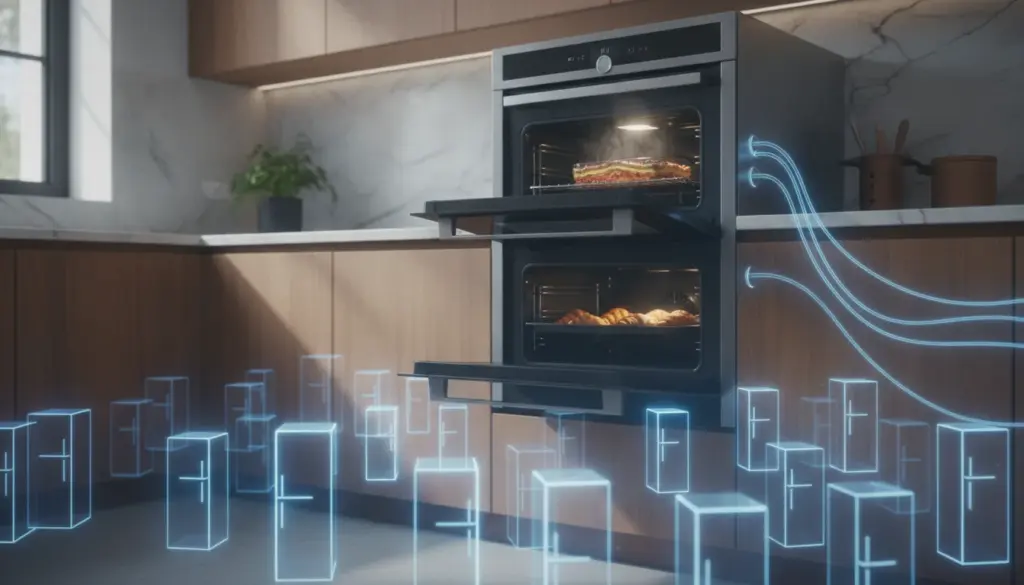
When an oven is firing on all cylinders to heat up, its electrical demand mirrors the combined usage of dozens of refrigerators running simultaneously. While a standard fridge usually operates between 300 and 800 watts without constantly running at maximum capacity, it still gets a bad rap for raising energy costs. In reality, your baking habit easily surpasses that draw in a fraction of the time.
Why Do Ovens Require So Much More Electricity?
The massive contrast in consumption comes down to operating temperatures and core mechanics. A refrigerator maintains a cool, stable climate by cycling its compressor on and off, never requiring extreme heat generation.
Conversely, an oven must rapidly climb to intense temperatures—often hitting 180, 200, or 220 degrees Celsius—and then sustain that scorching environment. Generating and holding that much thermal energy requires a massive influx of power.
The most dramatic energy spike happens the moment you turn the dial to preheat. During this initial phase, the electrical load skyrockets, effectively matching the wattage of an entire row of refrigerators turned on at once. While this invisible surge isn’t something you notice while prepping your ingredients, it certainly makes an appearance on your annual utility statement.
The Real Cost of Annual Baking
Looking at data spanning 100 households, researchers found that yearly electric oven consumption can climb to about 224 kWh. Interestingly, very few individual household appliances demand this much electricity over a twelve-month period.
Naturally, not every baking appliance is identical. Several crucial elements dictate exactly how much energy your specific setup requires:
- Size and volume: Larger cavities simply need significantly more electricity to heat up and stay hot.
- Maximum wattage: Units boasting higher power ratings naturally consume more electricity per minute of operation.
- Frequency of use: Avid home chefs making frequent pies, breads, and roasts will quickly accumulate high kWh totals.
- Build quality and insulation: Superior insulation traps heat effectively, preventing the heating elements from constantly firing back up.
- Cooking modes: Settings like convection, grill, or conventional top-and-bottom heat all have distinct electrical footprints.
While shoppers meticulously check energy labels when buying new washing machines or fridges, the oven rarely gets the same level of scrutiny. This common oversight allows it to remain a highly underestimated household energy drain.
The Invisible Threat of Standby Power
You might assume your energy consumption drops to zero the second your meal is finished, but that is rarely the case. Most modern built-in and freestanding ovens feature digital displays, clocks, or touch panels that never actually power down.
This constant glowing creates a persistent phantom power drain. In fact, residential research conducted in California revealed that devices appearing “off” still pull an average standby load of about 67 watts per home. For certain households, this invisible drain accounts for a staggering 5 to 26 percent of their total yearly electricity usage.
Leaving an oven on standby around the clock effortlessly wastes dozens of euros in unnecessary electrical costs every year. That innocent-looking digital clock pulls energy all day and night, a financial leak that is especially prominent in older or budget-friendly models.
Smart Tactics to Lower Your Cooking Costs
You certainly don’t need to completely abandon your oven to save money. By tweaking a few daily habits, you can dramatically slash its power usage without sacrificing your favorite hot meals.
Strategize your baking sessions
A massive amount of heat goes to waste when we fire up the appliance for a single small item or let the hot air escape between baking sessions.
- Batch your cooking: Roast vegetables, bake bread, and heat up a casserole back-to-back or simultaneously to avoid multiple preheating cycles.
- Maximize rack space: If several recipes require similar temperatures, slide them in together rather than baking them sequentially.
- Drop the heat: Many meals cook perfectly fine at temperatures 10 to 20 degrees lower, even if they require a few extra minutes inside.
Harness leftover heat
The internal temperature stays incredibly high long after you flip the switch to off. You can easily utilize this free thermal energy instead of keeping the elements active.
- Switch off early: Cut the power a few minutes before the timer ends; the trapped heat will easily finish the cooking process.
- Warm items up: Use the slowly cooling cavity to heat up serving plates or bread rather than firing up a cold appliance.
Keep the hot air trapped
Opening the door to check on your food might feel completely harmless, but every peek releases a substantial amount of precious heat into the kitchen.
- Look through the glass: Rely on the internal light and the viewing window to monitor your culinary progress.
- Limit door openings: If you absolutely must open it, do it quickly and shut the door immediately.
- Use a meat thermometer: Probing your roasts helps you gauge doneness accurately without constant, heat-wasting manual checks.
Eradicate phantom power
If your kitchen tech stays in standby mode permanently, the absolute easiest financial win takes just a second: cut the power completely when you aren’t cooking.
- Use a switch: Plug the freestanding unit into a switched wall outlet or a power strip equipped with a toggle switch.
- Find the true off state: Make sure the appliance is entirely shut down if it features a dedicated hard-off button.
- Disable the clock: Dive into the digital settings menu to turn off the time display if the software allows it.
Do Modern Models Actually Save Money?
Newer models typically carry better official energy ratings and boast thicker insulation than vintage units. However, a stellar energy label doesn’t guarantee a low monthly bill, as your personal cooking habits and chosen temperature settings dictate the final cost just as much.
If you are holding onto an older unit with deteriorating door seals, you are actively bleeding thermal energy. Replacing those simple rubber gaskets can noticeably improve both baking times and overall power conservation.
For smaller meals or a quick reheat, utilizing other kitchen gadgets often gets the job done much more efficiently.
- Airfryers and convection fryers: These compact devices heat up incredibly fast and demand a mere fraction of the electricity for smaller portions.
- Microwaves: Unbeatable for rapid defrosting and reheating, using vastly less power than a traditional bake.
- Lidded pans: Certain casserole-style dishes can actually be simmered perfectly on the stovetop over low heat using a high-quality pan.
While large holiday roasts and full-sized cakes will always require a traditional bake, firing up a 200-degree cavity just for a tiny handful of frozen snacks wastes a tremendous amount of electricity.
The Bottom Line for Your Utility Bill
What do all these wattage figures actually mean for your monthly budget? If your appliance consumes the previously mentioned 224 kWh annually and your electricity rate sits at roughly 0.40 euros per kWh, your baking habit costs around 90 euros a year. Once you factor in continuous standby power and inefficient, repeated preheating cycles, that total climbs significantly higher.
By implementing smarter meal planning, minimizing preheating phases, utilizing residual warmth, and killing the standby power, you can claw back a significant chunk of those expenses. Simple behavioral tweaks can easily save dozens of euros annually, entirely eliminating the need to rush out and buy a brand-new appliance.
If your unit is finally ready for the scrap heap, pay close attention to insulation quality, available features, and official energy ratings. More importantly, evaluate your real-world lifestyle needs: how often do you truly bake from scratch, and could a countertop airfryer or microwave handle those daily tasks with a much lighter electrical footprint?