
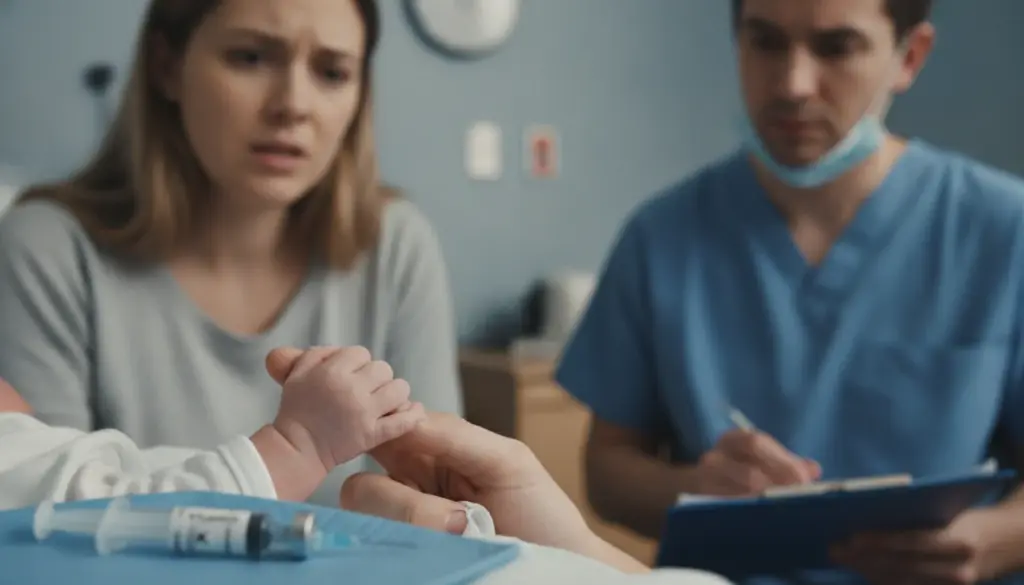
A silent movement is gaining traction in maternity wards around the world. Mothers and fathers are increasingly turning down what seems like a simple injection for their newborns, but this choice carries potentially devastating consequences. Immediately following birth, medical professionals typically administer a vitamin K injection. This standard practice has been utilized since the 1960s to prevent life-threatening hemorrhages. However, recent data reveals that infants missing this crucial safeguard face a dramatically higher likelihood of suffering a cerebral hemorrhage.
Why Every Infant Enters the World Deficient
To understand the danger, we must look at how blood clots. Vitamin K acts as a critical catalyst in this biological process. It drives the production of prothrombin, a specific protein responsible for forming clots and stopping bleeding.
Unfortunately, newborns begin their journey at a significant physiological disadvantage. There are three main reasons for this vulnerability:
- The placenta transfers only minimal amounts of this vital nutrient to the developing fetus.
- An infant’s immature liver cannot process the vitamin efficiently yet.
- Breast milk offers extraordinarily low concentrations during those critical first few weeks.
Because of these compounding factors, virtually every newborn has naturally depleted levels. Without immediate medical intervention, this deficiency paves the way for spontaneous hemorrhaging. These dangerous bleeds can occur in the intestines, under the skin, or most devastatingly, inside the brain.
From a Common Threat to a Rare Occurrence
To combat this fragile start to life, hospitals initiated the routine vitamin K injection shortly after delivery back in 1961. Within just a few hours of receiving the shot, an infant’s levels rise enough to ensure proper blood coagulation. Following the rollout of this protocol, the incidence of deficiency-related bleeding plummeted spectacularly.
Looking at historical medical records highlights the sheer impact of this intervention. Before widespread implementation, roughly one in 200 babies suffered from bleeding issues linked to this specific nutrient shortfall. Once the standard protocol took effect across various nations, that alarming figure dropped to fewer than one case per 10,000 newborns.
During their initial weeks of life, a baby’s brain is incredibly delicate. The cerebral blood vessels are extremely fine and fragile. When poor clotting abilities are added to the mix, even a microscopic tear can trigger a catastrophic brain bleed. Alarmingly, this doesn’t always happen immediately after birth; it can manifest suddenly days later, offering absolutely no warning signs.
Medical literature notes that when infants develop a severe deficiency, the brain is impacted in about 63 percent of cases. This trauma frequently results in lifelong disabilities.
New Findings: An 81-Fold Increase in Danger
A comprehensive review led by physician-researcher Kate Semidey at Florida International University examined nearly two decades of data across 25 distinct studies. While the full scope of these findings will be showcased at a 2026 neurology conference, the core revelation is already crystal clear.
When comparing infants who received the preventive measure with those who did not, the contrast leaves no room for debate. Skipping the injection raises the risk of severe hemorrhage by 81 times. These staggering conclusions are built upon thousands of meticulously documented clinical cases.
For the unfortunate infants who do experience these hemorrhages, the prognosis is incredibly grim:
- Roughly 40 percent endure permanent neurological damage.
- These long-term complications include developmental delays, paralysis, and severe learning disabilities.
- Tragically, about 14 percent of these babies pass away, usually within days of the internal bleeding event.
Behind every clinical statistic is a child facing a lifetime of adversity, all stemming from a skipped procedure that takes mere seconds to perform.
The Rise of Refusal in Delivery Rooms
Despite the overwhelming medical evidence, a growing demographic of parents in Western nations are declining the procedure. Looking at statistics from Minnesota, refusal rates climbed from 0.9 percent in 2015 to 1.6 percent in 2019. While that might sound like a tiny fraction on paper, it translates to hundreds of additional newborns starting life completely unprotected each year.
Data from other regions paints an even starker picture. Certain alternative birthing centers report that over 30 percent of their clients turn down the injection. Meanwhile, health authorities in New Zealand have documented multiple preventable cerebral hemorrhages in infants whose guardians declined the standard care.
The Impact of Skepticism and Digital Misinformation
Observational research suggests that rejecting this initial injection is rarely an isolated decision. Parents who decline it are up to 90 times more likely to refuse other standard neonatal procedures, including early vaccinations and routine metabolic screenings. This points to a much broader skepticism regarding established medical protocols.
Social media platforms significantly fuel this hesitation. Persistent rumors circulate online about supposedly harmful preservatives found in the formulations. However, decades of practical application and rigorous toxicological reviews show absolutely no pattern of harm. Unfortunately, that clinical nuance is frequently lost in the echo chambers of the internet.
Another widespread digital myth suggests that nursing provides an infant with all the necessary nutrients. Clinical studies definitively prove that breast milk simply falls short of fulfilling a newborn’s initial requirements for blood coagulation, creating a dangerous gap between what the baby needs and what they actually consume.
Shifting the Conversation to Pregnancy
Pediatricians and neurologists are now advocating for improved, earlier education. Rather than bringing up the topic during the chaotic moments of labor or immediately post-delivery, specialists recommend making it a standard discussion point during prenatal check-ups.
Addressing this beforehand allows time to calmly explore vital points:
- The biological reason every infant is born deficient.
- The devastating, lifelong impact of an infant cerebral hemorrhage.
- The actual, verified safety profile established over decades of hospital use.
- The availability of alternative options, such as oral drops, alongside their specific pros and cons.
By moving this dialogue to the prenatal phase, expectant mothers and fathers can make informed choices free from the stress of childbirth and the disruptive noise of online forums.
Neurologists argue that this hesitation touches upon a much larger societal issue. Navigating the growing distrust of deeply established, highly effective medical guidelines is becoming a daily challenge. Each refusal chips away at a collective safety net originally designed to eradicate rare but devastating pediatric complications.
Practical Questions for Expectant Parents
Navigating the sea of medical opinions can undoubtedly feel overwhelming. When meeting with an obstetrician or midwife, families should feel empowered to ask practical, direct questions:
- What administration methods are available locally, and how do their protection levels differ?
- Have there been any documented adverse reactions in our specific region recently?
- How frequently do deficiency-related hemorrhages actually occur in this specific hospital or country?
- What quality control measures ensure the safety of the administered formula?
Families preferring to do their own research should request official hospital pamphlets or national clinical guidelines. These documents offer grounded, evidence-based facts that heavily outweigh the sensationalism often found on social media. This also presents a prime opportunity for healthcare providers; clearly presenting facts helps keep families from getting lost in anonymous online debates.
The Broader Scope of Neonatal Preventive Care
This debate doesn’t exist in a vacuum. In many countries, the immediate postpartum period involves a comprehensive package of preventive measures: antibiotic eye drops, hearing screenings, heel prick tests, and initial immunizations. Skepticism toward one element often breeds doubt about the entire package.
This shifting mindset poses a tangible risk to public health. When evidence-based protocols are viewed as mere optional suggestions, pediatricians warn that long-forgotten afflictions will inevitably resurface. Indeed, pediatric neurologists are already reporting cases of irreversible damage in their clinics that, medically speaking, should have been completely avoided.
Ultimately, navigating these decisions requires balancing a deep desire to protect one’s child with the need to maintain agency over medical interventions. An open, unhurried dialogue with medical professionals—one that welcomes skepticism and critical inquiries—is the best way to find that balance. Grounding these conversations in hard data, like the staggering 81-fold surge in severe bleeding risks without the vitamin K shot, provides the clarity needed to make the safest possible choice.