That familiar black square sitting right in the middle of your kitchen counter is slowly losing its appeal. As we move toward 2026, a groundbreaking, practically invisible cooking method is taking center stage. Kitchen manufacturers are increasingly prioritizing minimalist, serene environments free from visual clutter. The natural progression? Preparing meals directly on your countertop without any visible stovetop, using concealed technology that blends seamlessly into the room.
The end of the black induction era
For quite some time, the dark induction hob stood as the ultimate hallmark of a contemporary home. It was sleek, flat, and eliminated the need for open gas flames. However, many homeowners and designers now find that dark rectangle disruptive, especially when paired with light or natural materials. In open-concept living spaces, a glossy black panel often sticks out like a sore thumb.
Interior specialists are noting a strong shift toward material continuity. The goal for 2026 is unambiguous: get rid of the distinct cooking appliance and embed the mechanics directly into the surface. Ultimately, the stovetop ceases to exist as a separate object, leaving you with a beautifully calm island where you just happen to cook.
Understanding hidden induction
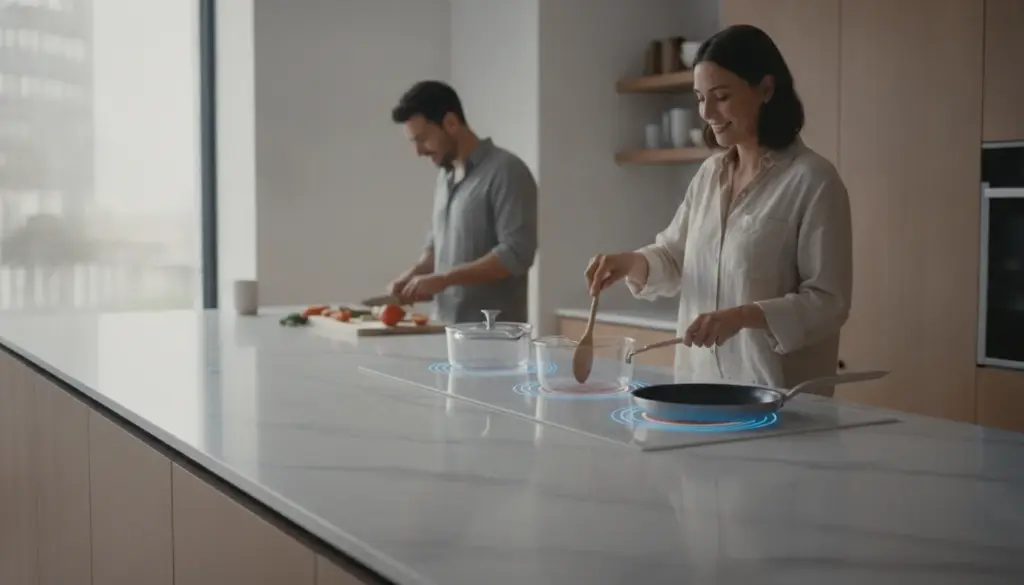
Often referred to as “under-counter induction,” this innovative setup relies on the exact same magnetic principles as a standard induction model, except everything is hidden away. Instead of a fragile glass panel, you get a single, uninterrupted slab made from technical ceramic, compact ceramic plates, or sintered stone.
Magnetic coils are strategically mounted underneath this solid material. When you place a compatible pot over the designated area, the base of the cookware heats up instantly. Remarkably, the actual countertop surface remains largely cool to the touch.
Spotting the cooking zones
Since the traditional glass canvas is gone, marking the heat zones requires a much softer touch. To guide your pans, manufacturers utilize incredibly subtle visual cues. You might notice:
- Tiny, integrated LED dots that only illuminate during meal prep
- Faintly engraved rings or symbols etched directly into the stone
- Slight variations in texture and color right above the coils
Operating the system is just as discreet. Controls are typically relocated to the front fascia of the cabinetry or housed in a compact, flush-mounted panel. Depending on the brand, you might use touch-sensitive buttons along the counter’s edge or a small touchscreen interface.
The experience of direct-to-counter cooking
Preparing dinner feels entirely different when you are literally working on your benchtop. You can seamlessly slide cutting boards, ingredients, and skillets across one expansive, unified plane. The heat is strictly confined to the exact spots where the magnetic coils sit beneath the stone.
Compared to older cast-iron or standard ceramic models, this solid surface retains significantly less heat. Because the pan gets hot while the surrounding stone stays relatively cool, you gain several practical benefits:
- A much lower risk of accidental burns
- Food splatters are far less likely to bake onto the surface
- The preparation area cools down incredibly fast after use
You can easily chop vegetables, serve appetizers, or even set down your laptop in the exact same spot without it feeling like a kitchen appliance.
Why the industry is heavily invested
A calmer aesthetic appeal
The primary motivation behind this shift is pure aesthetics. An unbroken stretch of stone looks infinitely more spacious and luxurious. When designing with wood, concrete, or natural stone textures, a harsh black glass panel instantly disrupts the visual flow. Hidden induction allows the beautiful grain or pattern of your chosen material to shine without interruption.
This is particularly valuable in open-plan homes where the kitchen doubles as a home office, homework station, or entertaining bar. Once dinner is served, the area effortlessly transitions back into a living space.
Effortless maintenance
Daily upkeep is another major selling point. Without raised lips, crevices, or a separate glass perimeter, wiping away crumbs and grease takes just one sweeping motion. A damp cloth and a mild daily cleaner are usually all you need. Those frustrating baked-on edges that plague standard hobs are virtually eliminated from your cleaning routine.
Uncompromised performance and energy efficiency
When it comes to raw power, these concealed units match the performance of high-end traditional models. Boiling water takes exactly the same amount of time, temperature adjustments remain highly precise, and energy consumption is identical.
As an added bonus, materials like sintered stone and technical ceramic are exceptionally durable. They are much less prone to scratching or cracking than standard glass tops, offering excellent longevity for busy households.
The blueprint of a 2026 kitchen
This invisible aesthetic extends far beyond the stovetop. The upcoming wave of kitchen design seamlessly integrates multiple concealed elements, including:
- Flush counters paired with integrated, hidden cooking zones
- Downdraft extractors hidden directly within the stone or cooking area
- Cabinetry featuring handles that vanish into the woodwork
- Smart lighting tucked away invisibly inside plinths and upper cupboards
The ultimate objective is minimizing visual appliance clutter to maximize multifunctional freedom. The traditional boundaries between the dining area, lounge, and prep zone are disappearing, turning the modern island into an all-in-one living hub.
Crucial considerations before upgrading
Choosing the right cookware
Just like standard induction, this technology requires magnetic pots and pans, but surface contact is critical here. Keep these rules in mind:
- Cookware with a perfectly flat bottom guarantees the most efficient heat transfer
- Exceptionally thick bases retain temperature beautifully, though they may take slightly longer to heat up
- Older, warped pans will struggle to perform on these highly sensitive hidden systems
Installation and investment
Hiding your stovetop demands specialist installation. The stone must be milled to a highly precise thickness, boast extreme heat resistance, and properly accommodate the heavy coils. Naturally, this specialized engineering commands a higher initial price tag than an off-the-shelf appliance.
If you are hoping to retrofit this into your current home, be aware of the limitations. Not every existing countertop can safely handle direct thermal stress, meaning you will likely need to replace the entire surface.
Addressing practical daily concerns
Safety is a common question for first-time buyers. While the benchtop stays significantly cooler, residual heat is still a factor. To handle this safely, these systems always include a discreet residual heat indicator—usually a tiny glowing icon—to warn you if a zone is still warm.
Another practical hurdle is where to place a scorching hot pot. In reality, most people designate a specific section of their island for trivets, or they install a heat-resistant inlay right next to the active zones.
For families with young children, this concealed tech actually offers peace of mind. Because kids often don’t recognize a plain counter as a cooking appliance, the temptation to touch is lower. Furthermore, you can activate a child safety lock, ensuring the coils remain entirely inactive unless a compatible pan is present and the controls are deliberately engaged.
Long-term design implications
This innovation is part of a massive architectural shift toward appliances that fade entirely into the background. With refrigerators hidden behind custom panels and extractors sinking into islands, anyone planning a renovation in the near future will inevitably have to consider invisible cooking.
For heavy-duty home chefs who constantly juggle multiple large pots, a traditional setup might still hold practical appeal for now. However, for compact urban apartments, high-end architectural builds, and expansive open-plan layouts, concealed induction will soon be the standard. By thoughtfully planning your materials and layout now, you can future-proof your home with a design that goes far beyond a beautiful aesthetic.