Trading Suet Balls for Self-Sufficiency
As soon as the first frost hits, many Western garden enthusiasts rush outdoors to hang up peanut garlands and suet balls. We are taught that braving the cold requires our immediate intervention. Yet, across the globe, Japanese nature lovers adopt a radically different philosophy by deliberately leaving their bird feeders empty.
This absence of supplementary food stems not from neglect, but from a profound understanding of ecological independence. Rather than offering bags of seeds, they cultivate landscapes capable of sustaining local wildlife naturally. This hands-off approach challenges our deeply rooted winter habits and offers a fascinating new perspective on wildlife stewardship.
The Philosophy Behind the Empty Feeding Tray
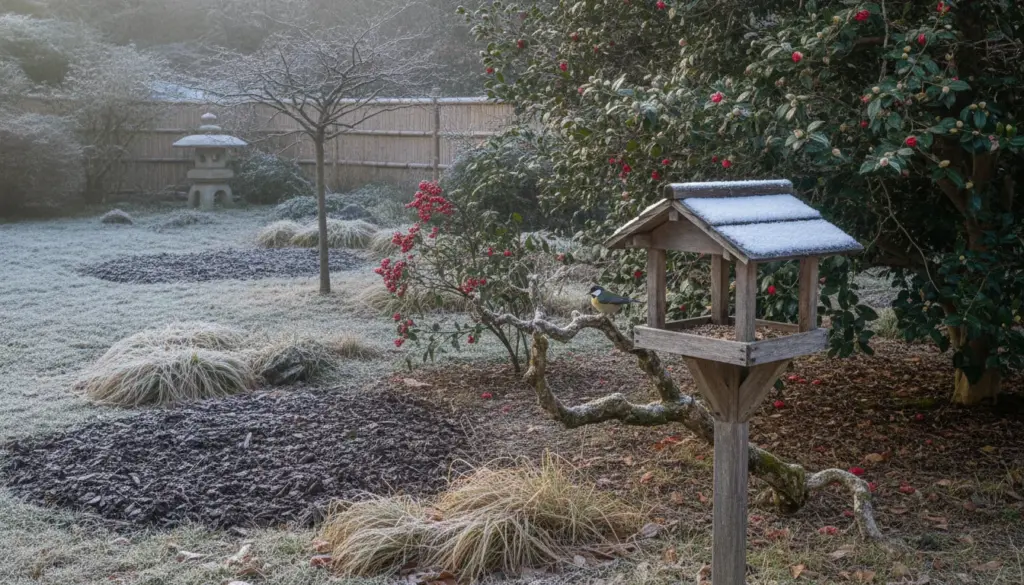
Take a stroll through a traditional garden in Kyoto or a public park in Tokyo during January, and you will notice something striking. There are no plastic silos or hanging treats, yet the trees are teeming with avian life. The secret lies in horticultural design rather than artificial handouts.
In Japanese ecological thought, genuine care involves respecting wild survival strategies rather than interrupting them with convenient meals. The relationship between human and nature remains observational. Gardeners prefer to quietly watch and listen, allowing the bird to exist as an untamed creature rather than a domesticated dependent lingering by the back door.
The Hidden Dangers of Artificial Dependency
The primary motivation for keeping feeding stations empty is preventing behavioral habituation. When feathered visitors encounter an endless buffet year after year, their natural foraging instincts begin to dull.
Instead of actively hunting for hidden insects, dormant seeds, or lingering berries, these animals adjust their biological rhythms to a human-dictated schedule. If a homeowner suddenly stops providing food, the dependent population faces an immediate survival crisis.
Furthermore, artificial feeding introduces significant health risks. Concentrating diverse species into one small area turns a simple birdhouse into a bustling hub for pathogen transmission. Droppings and saliva inevitably mix with the remaining seeds, accelerating the spread of dangerous viruses, parasites, and fungal infections.
- High concentration: Gathering numerous birds in a single spot drastically increases the rate of physical contact.
- Sanitation risks: Uncleaned feeders act as perfect incubators for harmful microorganisms.
- Competitive stress: Fighting over a limited food source lowers the natural immune defenses of the animals.
By eliminating these artificial hubs, flocks remain smaller and naturally dispersed. Because individuals forage across a wider territory, a single sick blackbird is far less likely to infect the entire neighborhood.
Viewing Frost as a Natural Filter
While many of us view freezing temperatures as an environmental disaster for fragile wildlife, Japanese ecologists maintain a more pragmatic outlook. Severe cold and food scarcity function as essential evolutionary filters. Only the individuals possessing the strongest instincts, optimal physical condition, and superior foraging strategies survive to reproduce in the spring.
When humans heavily intervene with high-calorie winter feasts, we inadvertently alter this natural selection process. Saving weaker animals might feel rewarding in the short term, but propping up every individual can ultimately weaken the genetic robustness of the entire species over time.
There is also a highly practical benefit to withholding food. A heavily fed titbird feels no urgency to hunt down overwintering caterpillars, larvae, or other garden pests. Hunger drives this crucial insect control, and while it may sound harsh to Western sensibilities, this natural predation is exactly what makes these flying visitors so incredibly valuable to a balanced ecosystem.
Designing a Living Pantry
Embracing this Eastern mindset does not mean abandoning your local wildlife. Instead of spending money on commercial feed, the effort is redirected toward intelligent planting. The goal is to transform your entire yard into a permanent, self-sustaining foraging ground.
Rather than relying on plastic dispensers, gardeners cultivate a diverse array of climbing vines, native trees, and dense shrubs that naturally yield insects, seeds, and berries throughout the darkest months.
Strategic Plants for an Independent Wildlife Haven
- Ivy: Produces highly nutritious, fat-rich berries late in the season, right when other natural resources are completely depleted.
- Holly and Firethorn: Feature vibrant berries that cling to the branches for months, acting as a powerful magnet for fieldfares and blackbirds.
- Ornamental Crab Apples: Provide miniature fruits that can be left on the branches specifically as late-winter sustenance.
- Rowan (Sorbus varieties): An irresistible natural attractant for starlings and various thrush species.
In a thoughtfully designed space, the food supply naturally replenishes itself. As animals consume berries and distribute the seeds through their droppings, new shrubs spontaneously sprout in unexpected corners. The landscape organically evolves in tandem with its inhabitants.
Transitioning Your Own Backyard
If you currently maintain a busy feeding station, local ecologists strongly advise against pulling the plug immediately during freezing weather. Wildlife in your neighborhood has already built expectations around your yard. Cutting them off abruptly during a harsh frost will cause severe distress.
Shifting toward a more Japanese-inspired model requires long-term landscaping strategies, not a sudden change of heart in the middle of January. A well-designed space eventually reaches a point where human intervention is only necessary during truly catastrophic weather anomalies.
From Rescuer to Observant Host
Adopting this philosophy requires a fundamental shift in how you view your role outdoors. You transition from a winter rescuer burdened by heavy bags of seed to a gracious host who designs an optimal environment and then steps back to observe.
A thriving, wildlife-friendly garden features varying plant heights, dense protective hedges, and intentional messy zones filled with fallen leaves and decaying branches. This structure provides everything local fauna requires: natural sustenance, thermal cover, and secure nesting sites. Your active interference decreases, yet your impact grows exponentially through smart foundational design.
Actionable Steps for a Hands-Off Approach
If you wish to slowly integrate this natural philosophy into your own property, keep these expert landscaping principles in mind:
- Leave the decay: Allow spent flower heads and seed pods to remain standing through the winter; they provide vital calories for sparrows and finches.
- Embrace untidiness: Designate a quiet corner for a brush pile or thick leaf litter to shelter overwintering insects and tiny mammals.
- Prioritize native flora: Indigenous plants align perfectly with the digestive systems and foraging habits of local bird populations.
- Decentralize feeding: If you must offer supplemental snacks, scatter minuscule amounts across multiple hidden locations rather than loading up a single crowded tray.
Those who embrace this ecological mindset quickly notice a secondary benefit: the garden becomes far more peaceful and requires significantly less maintenance. By eliminating the constant chore of scrubbing feeders and hauling grain, you free up time to simply appreciate the intricate natural drama unfolding in your shrubbery.
For individuals who genuinely love animals, doing absolutely nothing can feel wildly counterintuitive. Yet, this Eastern perspective beautifully demonstrates that taking a step back is frequently the most sustainable form of environmental care. Not every solution needs to be purchased from a pet store; a cleverly cultivated yard can serve as an endless, living pantry for robins, blackbirds, and tits—ensuring they never forget their inherent survival skills.