Have you ever paused to think about the ancient secrets buried right beneath the busy streets of Italy’s capital? Picture this: developers break ground for a brand-new student housing complex, but instead of laying concrete foundations, they strike upon spectacular mausoleums and vibrant mosaics. Astoundingly, these structures have remained intact for nearly two millennia. This spectacular find fundamentally shifts our understanding of ancient Roman topography, offering a fascinating glimpse into how the elite lived—and passed away—during the height of the Empire.
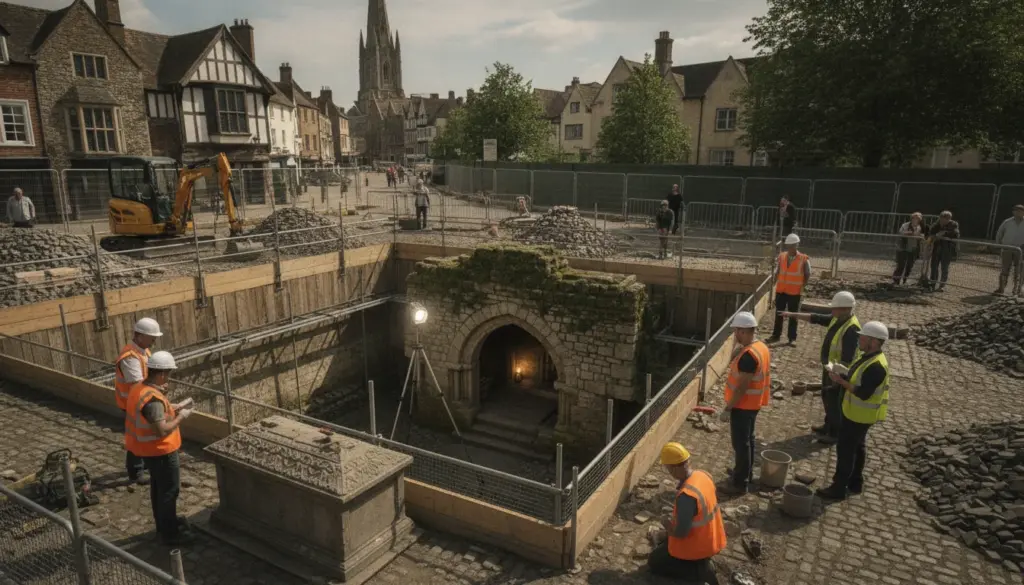
More than a century after the historic Via Ostiense discoveries, experts have stumbled upon a massive, entirely unknown burial ground. Digging near San Paolo Extramuros has been underway for roughly six months. Even though the project is still in its infancy, researchers are already calling this a discovery of monumental importance.
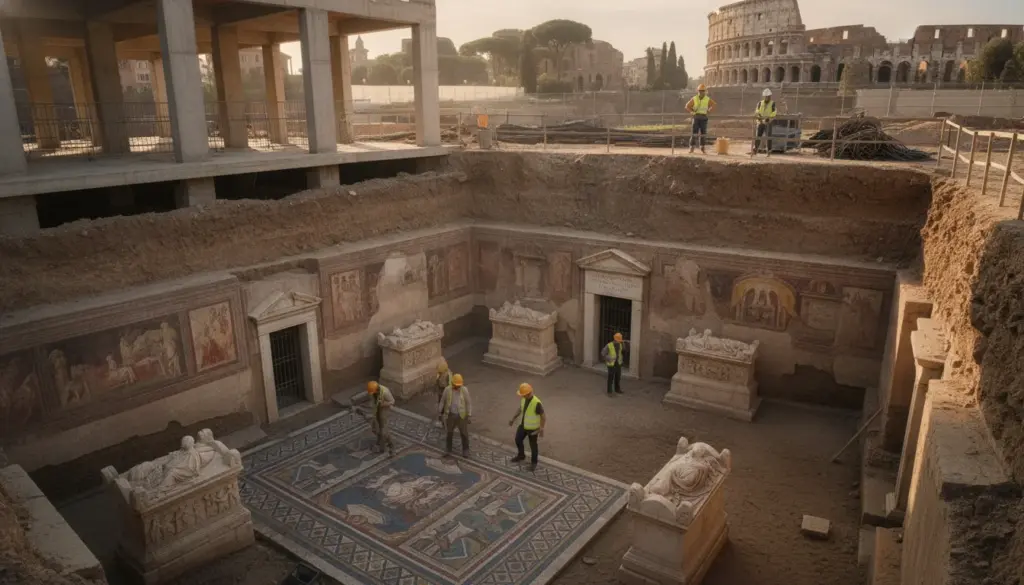
Initial surveys brought to light elaborate sepulchers dating back to the second century AD, originally built for Rome’s wealthiest citizens. This is exactly where the most ornate, colossal structures were situated. As centuries passed, shifting into the third and fourth centuries AD, the site’s purpose transformed dramatically. The glamorous tombs gave way to basic earthen trenches, where deceased individuals were frequently buried directly on top of one another.
This layered history gives modern scholars an incredible opportunity to study both the structural design and the captivating anthropological aspects of ancient Roman life. According to chief archaeologist Angela Vecchione, the team located the Ostiense necropolis in an area where absolutely no one anticipated finding it. It is truly remarkable that these delicate ruins somehow survived the heavy urbanization of modern Rome.
A Closer Look at the Ancient Burial Structures
While the uppermost soil layers revealed very simple, unadorned burial pits, the deeper levels hold something genuinely breathtaking. Elaborate mausoleums boasting highly complex architecture are concealing true artistic masterpieces.
Vecchione notes that although her team is merely clearing the upper sections of these buildings right now, they can already see stucco decorations of extraordinary beauty. Inside one specific mausoleum, excavators uncovered a terrace featuring a detailed mosaic floor. Historically, ancient Romans used these specific gathering spaces to host ceremonial feasts honoring their departed loved ones. Digging just one meter below the surface, the crew also identified a cluster of five square-shaped buildings topped with classic barrel vaults.
Excavation director Diletta Menghinello highlighted a massive rectangular brick tomb equipped with a curved interior space, known as an exedra, specifically designed to hold urns filled with ashes. Out front, remnants of another mosaic pathway survive, hinting that it likely connects to even more hidden chambers nearby. Surrounding this main site, archaeologists pinpointed 13 smaller tombs shaped like little temples, which served as traditional columbaria for holding additional remains.
Protecting the Past While Building the Future
How do you preserve priceless antiquities without halting urban progress? Alessandro Giuli, the Italian Minister of Culture, has publicly promised that this incredible site will be thoroughly protected and showcased to the public. The current blueprint is remarkably ambitious: safeguarding the ancient heritage while still completing the student dormitory above it. Ultimately, the vision is to design a unique space where contemporary living merges with antiquity, making the artifacts fully accessible to visitors.
Maurizio Carvelli, who heads the Camplus company overseeing the development, remains highly optimistic. He points out that integrating ancient ruins into modern construction is a familiar process in various Italian cities. Honestly, blending the old with the new is the most sustainable way for Rome to expand while retaining its historic soul and honoring its ancestors. Innovative architectural compromises like this one are absolutely essential for preserving our shared cultural wealth for future generations.