Have you ever paused to think about the valuable nutrients tossed into the trash while cooking dinner? To be completely honest, a large majority of us make the exact same misstep by discarding pumpkin rinds. Rather than tossing them out, these vitamin-packed scraps can easily transform into your next go-to snack.
Home cooks are quickly realizing that this perceived garbage is actually an incredible culinary asset. Pumpkin skin hides an impressive amount of fiber, offering much stronger digestive support than the actual flesh inside. Furthermore, these outer layers are packed with essential health-boosting minerals and natural antioxidants. By choosing to repurpose this part of the vegetable, you significantly upgrade your daily nutrition while actively fighting food waste.
Why Pumpkin Rinds Are a Genuine Treasure
These robust outer layers boast a variety of properties that make them an incredibly versatile resource for any household. First and foremost, they are exceptionally high in dietary fiber, which is absolutely vital for keeping your digestive system running smoothly. They also deliver a solid dose of natural antioxidants designed to help shield your cells from premature aging.
This impressive nutritional profile explains why contemporary recipes frequently suggest leaving the vegetable unpeeled. Properly utilizing the skin is a fantastic way to boost your health while simultaneously cutting costs. It allows for a meaningful reduction of organic waste in your kitchen, forming the perfect foundation for zero-waste cooking habits.
Expert Tip: Before consuming the tough exterior, always verify that your squash is organically grown. Alternatively, give it a vigorous scrub with a stiff brush under warm water to completely eliminate any dirt trapped inside its porous surface.
Practical Ways to Repurpose Your Scraps
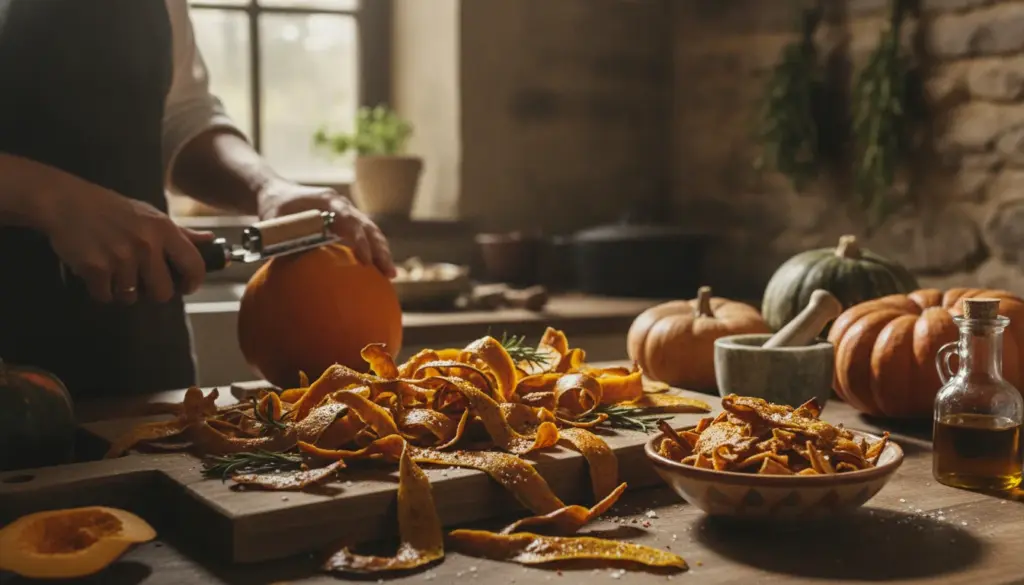
This specific type of food scrap shines in various culinary applications, yet it also proves tremendously beneficial for your backyard garden. One of the absolute best methods for enjoying them is crafting crunchy roasted chips. Simply slice the clean rinds into very thin strips, toss them with a drizzle of olive oil, a pinch of salt, and your preferred spices, then bake them until they achieve a gorgeous golden hue.
Another brilliant alternative involves tossing these remnants into your homemade vegetable broths. Simmering the skins alongside traditional soup veggies infuses stews and stocks with an incredibly deep flavor profile and an extra punch of nutrients. You can even chop them up finely to bulk out savory dumpling or pancake fillings, or fold the bits into vegetable puddings and savory muffins.
Taking the Scraps Outside the Kitchen
If you would rather use them outdoors, keep in mind that these leftovers make an absolutely spectacular natural fertilizer. When tossed straight into the compost bin or buried directly beneath the topsoil, they rapidly break down into rich organic matter that beautifully conditions the earth.
This is a wonderfully effortless technique to help your plants thrive while substantially lowering your weekly garbage output. Embracing this clever habit is arguably the easiest step toward a greener, more sustainable lifestyle.
Don’t forget to save this guide for your next cooking session!