
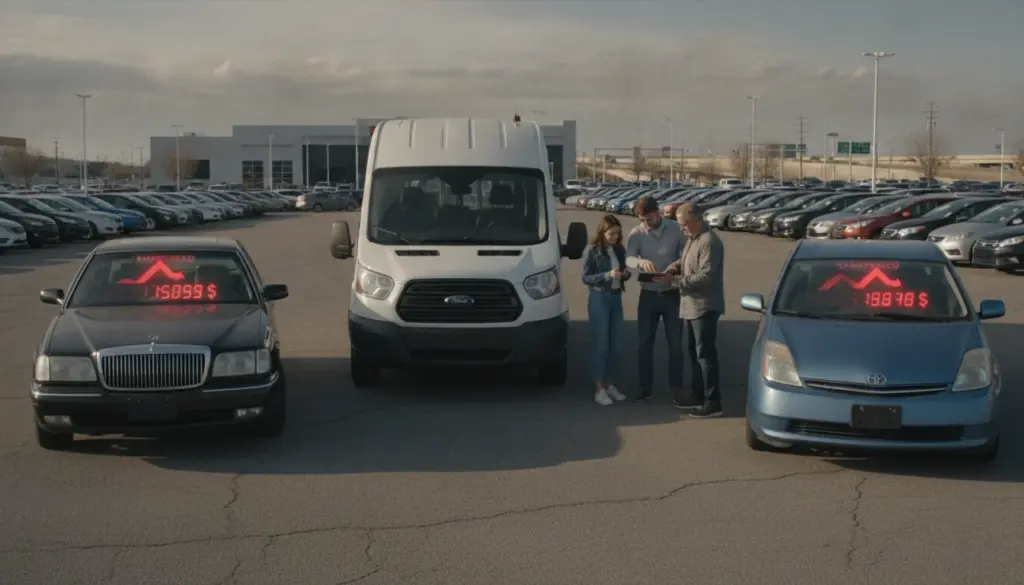
A fresh analysis of the used vehicle market highlights exactly which models are most susceptible to mileage manipulation going into 2025. Automotive data specialists recently evaluated tens of thousands of vehicle history reports to uncover disturbing trends. Familiar luxury sedans, dependable work vans, and even iconic hybrid pioneers are among the worst offenders. Buyers navigating the secondhand market need to scrutinize these statistics to avoid costly mistakes.
The Lucrative Reality of Mileage Tampering
Altering an odometer is the deceptive practice of intentionally lowering a vehicle’s recorded mileage. Fraudsters achieve this either by tweaking electronic software or manipulating the physical instrument cluster. The motivation remains purely financial: a car with a lower reading appears significantly younger and artificially inflates its market value by thousands of dollars.
Unfortunately, while the dashboard displays a remarkably fresh number, the mechanical wear and tear remains unchanged. Unsuspecting buyers end up paying a premium for what they believe is a lightly driven car, only to bring home a heavily worn vehicle. The real financial blow hits months later through unexpected part failures, exorbitant repair bills, and a plummeted resale value once the true condition emerges.
High-Risk Models Identified in Recent Market Data
Recent investigations into the 2025 market focused heavily on tracking data from France, analyzing whether logged mileage histories progressed logically or displayed suspicious downward drops. The findings exposed a clear hierarchy of manipulated models.
Audi takes the top spot when it comes to questionable mileage entries. The Audi Q7 frequently surfaces with heavily altered dashboard figures, with an alarming 6.6 percent of inspected vehicles showing an irregular pattern. On average, fraudsters wiped a staggering 88,392 kilometers off these luxury SUVs.
Following closely behind is the elegant Audi A6, sharing a 6.3 percent fraud rate with the Opel Vivaro commercial van. The average rollback distance for these models is highly deceptive:
- Audi A6: Approximately 65,574 kilometers erased from the history.
- Opel Vivaro: Roughly 64,557 kilometers artificially removed.
In practical terms, a buyer might confidently purchase a vehicle displaying 150,000 kilometers, completely unaware that the engine and transmission have actually endured well over 200,000 kilometers of grueling road time.
Other Notable High-Risk Contenders
Slightly lower down this high-risk list sit the Opel Insignia, the Mercedes-Benz Sprinter, and the Opel Astra. While their percentage of tampered odometers might appear marginally lower, the sheer volume of these vehicles on a bustling used car market means buyers will encounter altered examples frequently. Per hundred available units, multiple vehicles could easily be hiding a polished dashboard number.
Commercial Vans Hide the Largest Mileage Discrepancies
The latest statistics prove that commercial delivery vans and utility vehicles experience the most extreme mileage discrepancies. This trend makes logical sense, as business vehicles rack up massive distances annually while operating on demanding schedules. Consequently, the gap between the true wear and the falsified dashboard reading becomes gigantic.
Industry experts highlight several shocking averages when it comes to missing kilometers on commercial vans:
- Fiat Ducato: An average rollback of 144,287 kilometers.
- Volkswagen T5: Roughly 122,852 kilometers wiped away.
- Mercedes-Benz Sprinter: About 120,258 kilometers vanished from the system.
In certain instances, unscrupulous sellers roll back the odometer multiple times as a van passes through various owners. Entrepreneurs investing in secondhand utility vehicles face disastrous consequences. An outwardly neat Fiat Ducato boasting 160,000 kilometers might actually be hiding over 300,000 kilometers of heavy-load cargo transport.
European Road Warriors: Hybrids and Highway Cruisers
When broadening the scope to the entire European market, a different set of vehicles dominates the leaderboard. Three specific models consistently draw the attention of scammers across the continent: the Toyota Prius, the Audi A8, and the Volvo V70.
The reasoning behind these specific targets is quite transparent. The Toyota Prius frequently serves duty in taxi fleets or intense commercial pools. Meanwhile, the Audi A8 and Volvo V70 are beloved highway cruisers designed to absorb massive cross-country distances effortlessly. Because these cars naturally accumulate extreme mileage, the financial incentive to create a friendlier dashboard reading is incredibly strong.
Why Modern Digital Dashboards Remain Vulnerable
A common misconception among drivers is that odometer fraud faded away alongside old-fashioned, mechanical dials. The current reality paints a much darker picture. Although contemporary digital odometers continuously sync with various electronic control modules throughout the chassis, their security protocols are frequently inadequate.
Equipped with shockingly inexpensive hardware ordered from obscure online shops, a marginally tech-savvy mechanic can rewrite a car’s entire digital footprint. Criminal networks specialize in bypassing specific manufacturer software loopholes, keeping their risk of detection exceptionally low while maximizing their profit margins on every manipulated vehicle.
How Imported Vehicles Elevate Local Market Risks
Domestic used car markets across Europe rely heavily on robust cross-border import streams. This fluid movement allows manipulated vehicles and work vans to transition seamlessly from one country to another, eventually settling onto reputable sales platforms through local dealerships or private sellers.
While national registration systems and mileage tracking databases certainly help filter out obvious scams, they cannot provide absolute protection. Historical data on imported automobiles is notoriously fragmented, especially if the vehicle spent large portions of its lifespan serviced by independent garages rather than official franchise dealerships.
Proactive Steps to Avoid Odometer Scams
Shoppers searching for a pre-owned car or commercial van possess several powerful tools to mitigate these expensive risks. Implementing a strict evaluation process is essential:
- Demand comprehensive service records: Always request a fully stamped maintenance booklet that clearly notes the mileage at every service interval.
- Scrutinize past invoices: Historical repair bills routinely feature the exact odometer reading recorded by the mechanic at that specific time.
- Schedule independent inspections: Hire a neutral, certified garage to conduct a thorough pre-purchase diagnostic check.
- Analyze physical wear markers: Compare the degradation of the steering wheel, foot pedals, gear shifter, and driver’s seat against the claimed dashboard number.
- Leverage digital history reports: Utilize reputable online automotive data platforms to pull international tracking records.
- Apply extra caution to high-risk categories: Always double-check the backgrounds of luxury highway cruisers and commercial utility vehicles.
If a seller’s narrative contradicts the physical paperwork, simply walk away. The automotive market is vast, and there is always a safer alternative waiting down the road.
The Legal Gray Area of Proving Fraud
Manipulating a vehicle’s mileage is a criminal offense across most jurisdictions. Furthermore, knowingly selling a tampered vehicle without disclosing the discrepancy to the buyer is equally illegal. Despite these strict laws, gathering concrete evidence remains notoriously difficult. Without an indisputable, officially recorded history to compare against the current dashboard, malicious traders frequently evade prosecution.
Advanced Verification for High-Risk Purchases
If you are actively hunting for a highly targeted model like an Audi Q7, a Mercedes Sprinter, or an imported Toyota Prius, standard checks might not be enough. Industry experts recommend taking your investigation a step further:
- Investigate whether the chassis number previously belonged to a registered taxi operator or corporate lease fleet.
- Contact an official brand dealership and request a rundown of known warranty or maintenance actions linked directly to the Vehicle Identification Number (VIN).
- Watch out for highly contradictory visual cues, such as a pristine dashboard number paired with a heavily worn tow hitch or a completely battered cargo bay.
While this level of investigative work might feel excessive to an average consumer, dedicating a few hours to research routinely prevents thousands of dollars in hidden mechanical disasters. When doubts linger over a specific vehicle’s past, adjusting your budget slightly to secure a car with an impeccably transparent history is always the wisest choice. Complete maintenance transparency delivers long-term reliability and total peace of mind.