
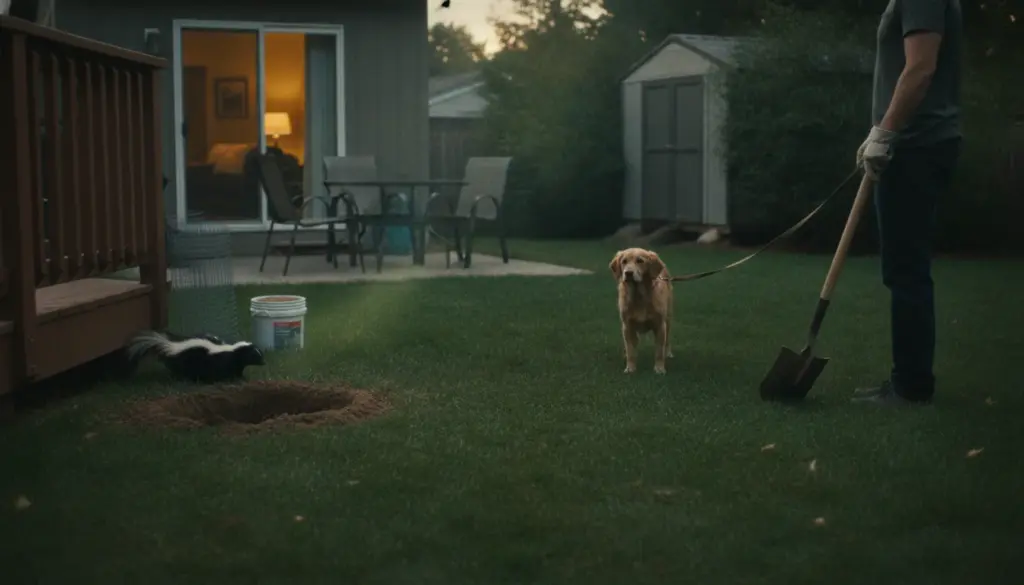
Taking back your outdoor space
Very rarely does a skunk just stop by for a single night. Once these striped mammals claim a spot beneath your deck, shed, or patio, a peaceful backyard can quickly turn into a disaster zone. Between the freshly dug craters in your lawn, the eye-watering odor seeping indoors, and curious pets getting sprayed, the frustration builds fast. However, relying on proven wildlife management techniques—combining physical exclusion, smart deterrents, and long-term prevention—allows you to reclaim your property humanely and effectively.
Why skunks choose your property
These nocturnal visitors are driven by simple survival instincts, seeking out locations that offer an abundance of food, secure hiding spots, and minimal human interference. If your landscape checks all three boxes, you have accidentally rolled out the welcome mat.
Food sources that attract midnight foragers
Because they are opportunistic omnivores, skunks will eat almost anything. This dietary flexibility makes them particularly stubborn guests. Their primary targets usually include:
- White grubs and various beetle larvae buried in the turf
- Snails, spiders, and crawling insects hiding in garden beds
- Small rodents scurrying around firewood stacks or outbuildings
- Rotting fruit left beneath plum, pear, or apple trees
- Improperly sealed garbage cans and accessible food scraps
If you wake up to find shallow, cone-shaped indentations scattered across your lawn, you can be fairly certain a skunk spent the night hunting for grubs in your grass.
Preferred daytime hiding spots
Beyond a reliable meal, these animals require a dark, quiet place to sleep during the day and raise their offspring. They typically gravitate toward:
- Hollow voids beneath porches, raised patios, and wooden decks
- Unsecured foundation vents and open crawl spaces
- Accumulated piles of lumber, rocks, or yard debris near property lines
- Overgrown landscaping and thick, dense shrubbery
As creatures of habit, they generally stick to exact travel routes between their den and feeding grounds. You can often confirm their presence by looking for distinct paw prints, noticing a lingering musky scent, or spotting fresh droppings filled with undigested insect parts and seeds. The more comfortable your yard is, the harder it will be to convince them to leave.
Blocking access to prevent entry
The absolute most reliable method for keeping unwanted wildlife away is physical exclusion. While this requires a careful property inspection and a bit of manual labor, the results are highly effective and permanent.
Identifying structural weak points
Take a slow walk around the perimeter of your home and pay close attention to:
- Broken ventilation grates or gaps in the concrete foundation
- Spaces beneath garden sheds, cabins, or storage units
- Holes dug along fence lines or beneath wooden gates
- Openings around drainage pipes, utility cables, and plumbing
Surprisingly, a skunk can squeeze its body through a gap measuring just ten centimeters. What looks like a minor, unimportant crack to a homeowner is often perceived as a welcoming front door by local wildlife.
Installing effective underground barriers
By utilizing heavy-duty wire mesh and a shovel, you can stop digging animals in their tracks. Constructing an L-shaped trench barrier along the base of fences or foundations prevents them from simply tunneling under your perimeter defenses.
Caution during the spring and summer breeding season
From roughly May through August, female skunks are typically nursing their babies inside hidden dens. If you permanently seal all entrances during these months, you run a massive risk of trapping helpless infants underneath your home while the desperate mother is locked outside.
Throughout the mating and rearing season, it is critical to install a one-way exclusion door over the primary entry point. This specialized device allows the adult to exit the den to forage, but physically blocks her from getting back inside.
Monitor the area for a few consecutive days to ensure zero activity remains. Only after you are completely certain the space is empty should you permanently patch the hole with dirt and hardware cloth.
Using light, water, and scent deterrents
Not every wildlife encounter requires heavy excavation or professional intervention. Sometimes, making the environment mildly irritating is enough to force them to relocate.
Motion-activated disturbances
Because they prefer stealth and darkness, sudden environmental changes are highly effective. Consider deploying:
- Motion-sensor lighting that floods the yard with brightness when triggered
- Automated sprinklers that shoot a sudden burst of water at moving targets
- Ultrasonic repellers emitting high-frequency noises (though success rates vary depending on the environment)
Position these devices strategically along known travel corridors, directly facing a suspected porch entrance, or right next to your compost bin.
Scent repellents and strategic planting
While no single scent guarantees complete success, olfactory deterrents add a valuable layer of defense to your overall strategy. Always remember to reapply liquid or granular repellents after heavy rain, and keep all concentrated scent formulas out of reach of children and pets.
Landscaping choices also play a surprisingly active role in pest management. Strong-smelling herbs like lavender, mint, thyme, and oregano create a natural olfactory boundary when planted alongside walkways or patios. These aromatic plants naturally attract beneficial pollinators while simultaneously discouraging nocturnal diggers from exploring the area.
By pairing these herbs with nectar-rich native plants, you can cultivate a thriving garden ecosystem without resorting to harsh chemical treatments everywhere.
Knowing when to hire a professional
There are times when a situation is simply too complex for DIY methods. If you are dealing with a massive nest under your primary residence, relentless lawn destruction, or an animal that continuously defeats your barriers, contacting a certified wildlife control operator is the smartest move.
The professional difference
A trained wildlife expert approaches the situation with specialized tools and knowledge, offering:
- Comprehensive environmental assessments of the entire property
- Deployment of humane, commercial-grade live traps and exclusion tools
- Safe removal in strict accordance with regional wildlife regulations
- Installation of permanent, heavy-duty exclusion fencing
Because many municipalities heavily regulate how native wildlife can be trapped and relocated, hiring a licensed company protects you from accidental legal violations and ensures the animal is treated ethically.
Preventing future wildlife issues
Once your yard is finally clear, the goal is to keep it that way through consistent, seasonal maintenance.
The bi-annual property inspection
Dedicate time twice a year to evaluate your home’s exterior defenses: once in late autumn before animals seek winter shelter, and again in early spring prior to the breeding season. During these checks, be sure to:
- Inspect for newly formed structural cracks or soil erosion near foundations
- Clear away accumulating piles of leaves, scrap wood, or construction debris
- Verify that all outdoor trash bins are thoroughly washed and tightly secured
- Promptly rake up any decaying fruit that drops from garden trees
Bundling these quick inspections with standard seasonal chores, like applying fertilizer or pruning shrubs, easily turns wildlife prevention into an effortless backyard routine.
Maintaining a balanced yard ecosystem
Wildlife conflicts frequently arise when a landscape becomes unbalanced. A lawn suffering from a severe grub infestation acts as a giant buffet, drawing in skunks and other digging foragers. By focusing on fundamental soil health, avoiding overly aggressive mowing, and treating lawn pests at the first sign of trouble, you drastically reduce your yard’s appeal.
Planting early-blooming bulbs and native shrubs invites predatory insects, hedgehogs, and insectivorous birds to share the space. These natural predators help control the grub population for you, ensuring your grass remains a lush landscape rather than a midnight snack bar.
Managing properties near natural habitats
Homeowners living near agricultural fields, dense woodlands, or rural borders will inevitably face pressure from various woodland creatures, including raccoons, foxes, and pine martens. Fortunately, the exact same defensive principles apply across the board: secure garbage, bury fence mesh, tightly enclose chicken coops, and remove accessible food.
In rural or heavily wooded environments, adopting a zoned landscaping approach works best. Keep your untidy brush piles and rustic stone walls pushed out toward the far edges of the property line. Closer to your actual dwelling, maintain a highly manicured, tightly controlled zone free of hiding spots. This visual distinction clearly communicates to wandering wildlife exactly which parts of the property are strictly off-limits.