Why the World Needs the Unloved Cockroach
While the sudden appearance of a scurrying insect usually triggers an immediate urge to flee, have you ever considered the ecological fallout if these creatures vanished entirely? Cristian Lucanas, a dedicated entomologist from the Philippines, reveals a startling reality: rather than mere pests, these bugs serve as vital, unseen protectors of our global ecosystem. Without their constant efforts, natural habitats would quickly collapse.
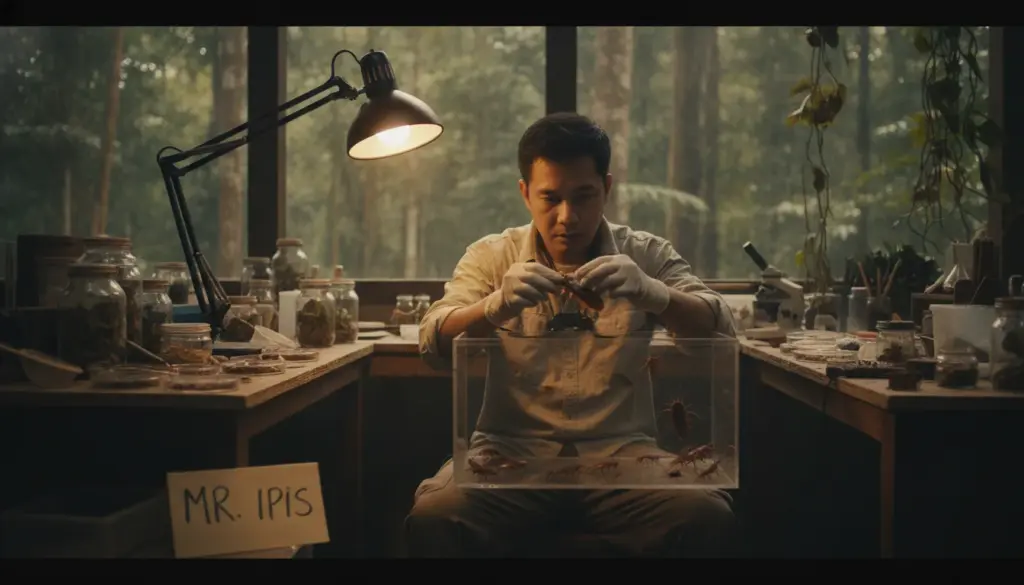
Affectionately dubbed “Mr. Ipis”—utilizing the local dialect’s term for the insect—by his peers, this 31-year-old researcher possesses an unparalleled understanding of roach biology. His deep dive into taxonomy has already resulted in the discovery of 15 entirely new species. Lucanas openly admits that he, too, harbored a deep-seated childhood hatred for the scavengers, noting that such revulsion feels almost hardwired into human nature. Ultimately, his scientific curiosity overpowered that primal fear, revealing complex creatures far beyond the common household nuisance.
Nature’s Ultimate Recycling Team
For environmental research, the Philippine archipelago serves as an extraordinary biodiversity hotspot. The region hosts roughly 130 distinct cockroach varieties, with a staggering 75% classified as endemic species found exclusively within those islands. In the wild, these invertebrates function as highly efficient natural recyclers.
Acting as detritivores, they consume decaying organic materials and funnel essential nutrients directly back into the earth. From an ecological standpoint, the recovery and regrowth of forest ecosystems would grind to a devastating halt without their relentless breakdown of woodland debris.
- Expert Insight: The troublesome pests wandering across kitchen floors represent merely a fraction of a percent of the total global population. The vast majority thrive deep inside caves and dense woodlands, actively avoiding human contact while maintaining the health of regional plant life.
The Chain Reaction of a Roach-Free Planet
If these resilient scavengers were suddenly wiped out, the environmental consequences would be catastrophic. Countless populations of spiders and birds would immediately lose their primary dietary staple. Even more alarming, declining soil quality could mean that vegetation would absorb significantly less carbon dioxide. In a worst-case scenario, this ecological disruption could actively accelerate the progression of global warming. Ultimately, they form a non-negotiable cornerstone of the food web.
A Journey Born in a Bat Cave
The origin of Lucanas’s unique career path dates back twelve years during an expedition into a bat-infested cavern. Observing thousands of these insects actively foraging on the cave floor, he experienced a profound professional awakening. Interestingly, the scientist is also an avid J.R.R. Tolkien enthusiast. He frequently merges his two passions by naming his newly identified specimens after characters from The Lord of the Rings, lending a touch of literary fantasy to his rigorous scientific work.
Debunking the Nuclear Survival Myth
Before concluding this exploration of insect ecology, it is crucial to dismantle a widespread pop-culture fallacy. Lucanas clarifies that cockroaches will not miraculously inherit the Earth following a hypothetical nuclear conflict. While they certainly possess impressive physical resilience, their actual environmental superpower lies in driving the Earth’s biological regeneration, not in surviving apocalyptic levels of radiation.
The hidden realm of insects contains endless marvels, and the ongoing field work of “Mr. Ipis” reminds us to treat the creatures beneath our feet with a bit more reverence. Keep this ecological guide handy for the next time you spot one of nature’s greatest recyclers.