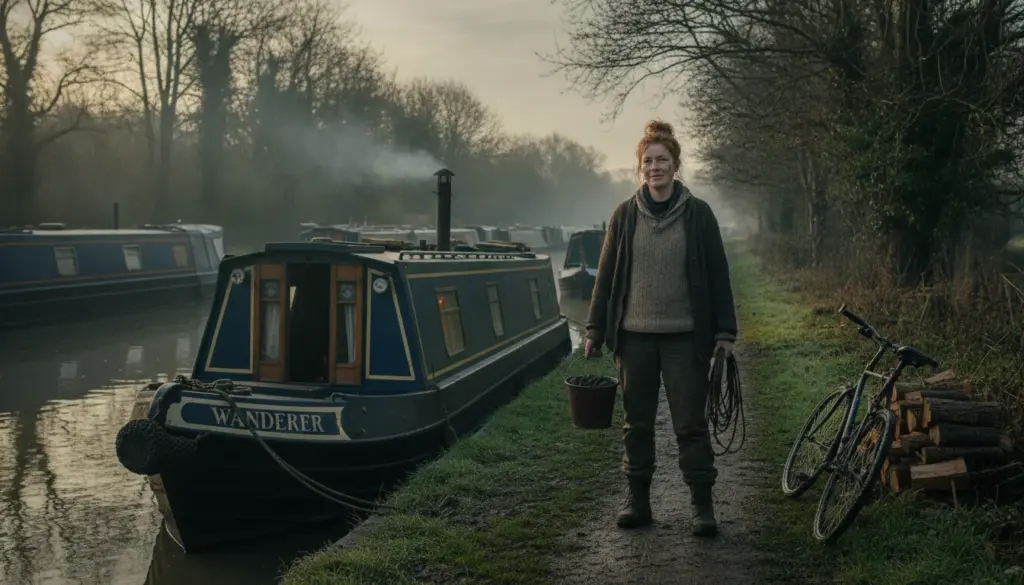
Since 2019, Elizabeth Earle has completely opted out of the traditional rental market, calling a narrowboat on the United Kingdom’s waterways her full-time home. If you picture a glamorous yachting lifestyle, think again. This is a grueling, grounded existence where annual expenses hover around €5,000, and simply visiting a friend’s standard bathroom feels like hitting the jackpot. Rather than chasing corporate overtime, she embraced a profound sense of independence, even if it frequently smells of woodstove smoke and damp earth.
Across the UK, an estimated 15,000 individuals have made a similar leap, trading bricks and mortar for floating steel to escape soaring living costs. The driving forces vary wildly—from strict budgeting necessities to a deep desire to unplug from modern society. The idea sounds incredibly romantic until you actually face the gritty, everyday reality of life afloat.
Surviving the First Few Months in a Steel Tube
Earle’s journey began with a rather humble purchase: a basic vessel that cost a mere £3,800. The initial experience was far from cozy. With zero shower facilities, a literal bucket serving as a toilet, and indoor temperatures that made sleeping feel like an arctic expedition, it was a harsh awakening. Managing a boat requires serious survival logistics, a detail frequently glossed over in highly stylized lifestyle magazines.
Despite the brutal beginning, her relentless determination paid off handsomely. After completely overhauling the cramped space, she managed to sell it for £20,000, utilizing those funds to upgrade to a far more spacious and accommodating craft. Today, she is moored along the Coventry Canal in Warwickshire. Earle thrives on being immersed in nature, knowing that if she ever grows tired of the scenery, she can simply fire up the engine and navigate to a fresh backdrop.
The True Cost of Aquatic Freedom
Maintaining this nomadic lifestyle currently sets her back roughly €5,700 annually, breaking down to an incredibly modest €475 per month. That budget covers everything essential: marine insurance, bottled gas, solid heating fuel, diesel, and the mandatory Canal and River Trust cruising license. While it represents just a fraction of what one might spend living in London or Manchester, navigating these waters without a solid financial plan is a recipe for disaster that could easily cost tens of thousands of pounds to fix.
Winter Battles and 25-Kilogram Coal Bags
Any lingering romance evaporates the moment the coal supply dwindles during a freezing winter spell. Because narrowboats are rarely moored conveniently next to supply shops, Earle must physically lug heavy fuel sacks through muddy towpaths for hundreds of yards. Furthermore, personal safety becomes a daily calculation. Trudging back to an isolated mooring in pitch darkness demands high situational awareness and a constant eye on personal property. This lifestyle fundamentally requires a willingness to get your hands dirty.
The Unappreciated Luxury of Plumbing
When it comes to sanitation, most liveaboard boaters rely on either cassette or composting systems. Earle utilizes a composting setup and readily admits that utilizing a traditional flushing toilet at a friend’s house feels like an unimaginable luxury. To conserve her onboard water tank and avoid frequent pump-outs, she strategically showers at a local gym. It is exactly this type of constant, underlying logistical planning that land-dwellers completely take for granted.
Building a Truly Connected Community
Despite the physical hardships, the waterway network fosters an incredibly tight-knit society. Fellow boater Maxine Brown points out a stark contrast to traditional housing, noting that she never even knew her immediate neighbors when living in a conventional apartment. On the canals, mutual assistance is practically guaranteed, and the daily grind slows down to a much more natural, deliberate rhythm. It is a highly specific way of living—you will either fall deeply in love with it on the first night or abandon ship within a week.
According to figures from the Canal and River Trust, the demographic of permanent water-dwellers continues to expand by a few percent each year. Could you comfortably sacrifice central heating and limitless running water in exchange for this level of unbridled independence? Let us know your thoughts in the comments below!