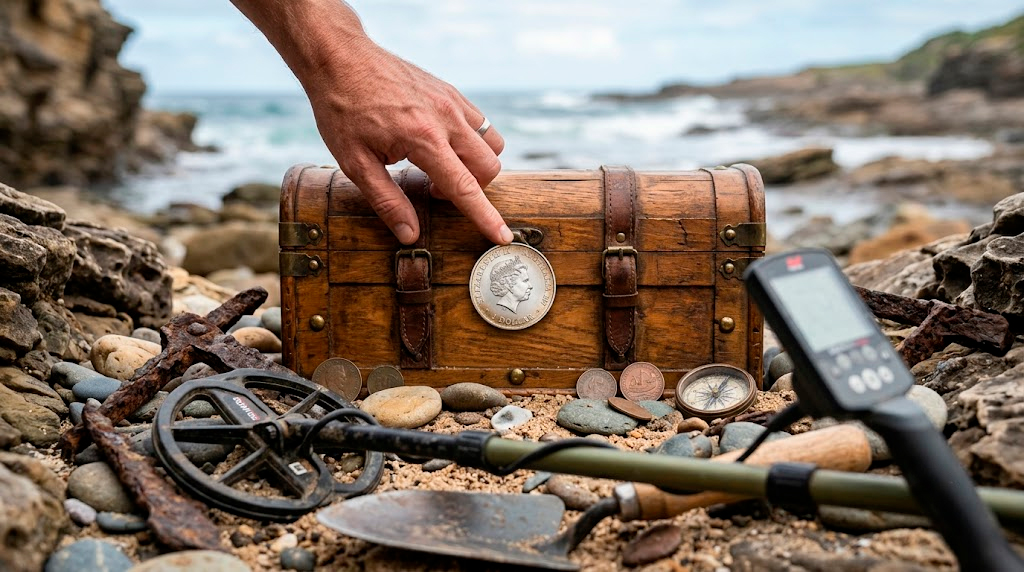
Your old loose change could be hiding a fortune beyond your wildest dreams. One highly specific minting error has turned an ordinary metal disc into the Holy Grail for collectors, fetching a staggering $11,700 at auction.
Gold rush in the world of coin collecting
Coin collecting is no longer just about squinting at dusty albums on a rainy Sunday. It has grown into a brutally lucrative market where enthusiasts hunt down errors, rare production runs, and unique pieces, fully prepared to splash out the equivalent of a luxury car chassis to get them.
For a coin to earn serious investment status, it must hit two rigorous benchmarks: extreme rarity and flawless condition. In 2022, news swept through the numismatic community of a record-breaking lot at Heritage Auctions, where an otherwise unassuming dollar coin changed hands for an absolute mint.
The secret of the 1999 ‘mule’ coin
All the excitement surrounds a one-dollar coin produced during a historic transitional phase at the US Mint. At the turn of the millennium, the US was phasing out the “grey” copper-nickel dollars featuring Susan B. Anthony in favour of the new “golden” coins depicting Sacagawea.
During this crossover, a rare blunder occurred. A tiny batch of coins was struck using the old obverse die (bearing Susan B. Anthony’s portrait) but on the new, golden manganese-brass blanks intended for Sacagawea. The result is a hybrid—known to collectors as a “mule”—that theoretically shouldn’t even exist in circulation.
How to spot this rarity in your pocket change
To be perfectly frank, the odds of finding one sitting in your vending machine change are slim, but they aren’t zero. Here are the telltale signs that make this coin worth over £9,000 ($11,000):
- Year of minting: It must be dated 1999.
- Colour: The coin has a distinct, bright golden hue (a copper-zinc-manganese alloy).
- Obverse (Heads): Features the portrait of social reformer Susan B. Anthony.
- Reverse (Tails): An eagle landing on the Moon (the classic design for that series).
Where is the best place to sell rare coins?
To put it simply: steer well clear of your local pawnbrokers, as they’ll likely offer you a fraction of its true market value. The biggest returns are made through specialist numismatic auction houses, like the aforementioned Heritage Auctions. That is where determined collectors from across the globe go head-to-head, driving the final hammer price through the roof.
Just keep in mind that the less a coin has been handled by human fingers, the higher its final valuation will be. Every single scratch on the rim takes a massive bite out of your potential retirement windfall.