Unlocking the Mysteries of Natural Selection
Have you ever pondered how nature managed to engineer incredibly intricate organs like the eye? Biologists have spent countless decades trying to unravel the mechanics of biological adaptation. Now, thanks to a groundbreaking computational experiment, we can watch millions of years of organic progression unfold in mere hours.
Research teams from Lund University and MIT recently cultivated digital organisms that developed vision entirely on their own. This provides far more than a fascinating technological showcase. It offers definitive answers to evolutionary mysteries that have puzzled experts since Darwin’s era.
Constructing a 100% Virtual Ecosystem
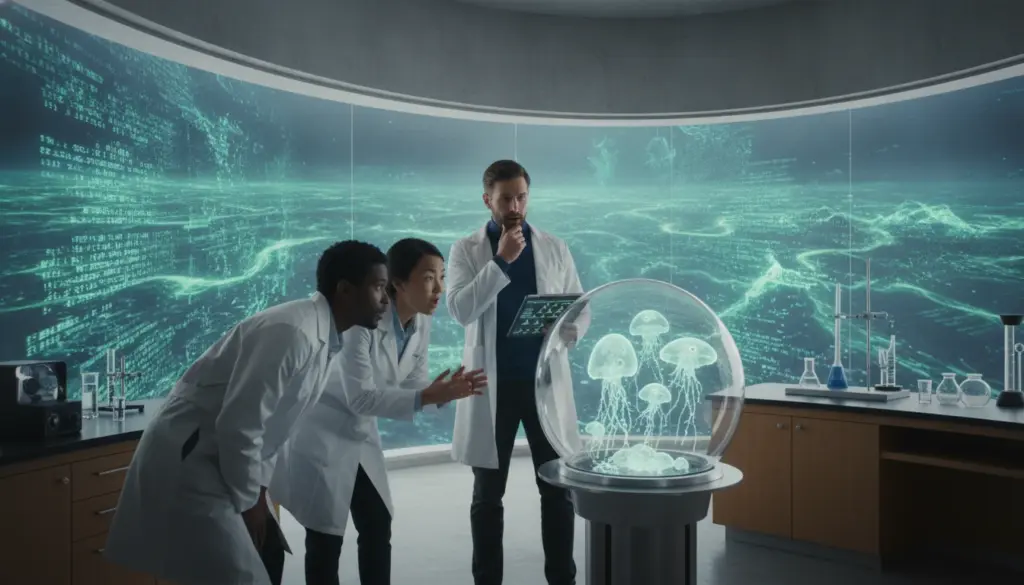
The investigative team accomplished something that sounds straight out of a futuristic novel. Advanced algorithms successfully orchestrated living dynamics within a completely simulated realm. This breakthrough research proves that digital progression can almost flawlessly mirror actual biological patterns.
By dropping virtual creatures into a synthetic landscape, scientists observed whether intense environmental pressures could force the spontaneous creation of complex anatomical structures. The outcome was absolutely staggering.
By utilizing random genetic variations and actively selecting the most effective configurations, the framework perfectly recreated the harsh rules of survival of the fittest. It is truly mesmerizing to witness how rudimentary light-sensitive tissues progressively emerged. Eventually, these basic traits transformed into fully functional digital eyes linked to complex neural networks. Everything organically grew from the raw struggle to adapt and survive.
The Blueprint for Digital Biology
The core foundation of this analysis revolves around the simultaneous evolution of sight, cognition, and physical reactions. Essentially, these artificial entities are dropped into complex simulations where they must accomplish specific objectives. Common survival tasks included:
- Navigating safely through intricate, unpredictable mazes
- Detecting hidden objects scattered within their environment
- Actively tracking and following moving targets
As generations pass, the system autonomously adjusts their visual characteristics. Everything from the exact placement of eyes to the sheer number of photoreceptors and their field of view undergoes constant modification.
Biomimicry and Environmental Demands
Expert insight: When examining these highly advanced learning models, the concept of biomimicry becomes incredibly relevant. The exact solutions formulated by the computer almost identically match the most efficient survival strategies found in the wild. This heavily implies that natural selection is fundamentally a relentless drive toward pure mathematical optimization.
Perhaps the most captivating revelation is that environmental demands directly dictate physical appearance. Whenever the digital beings needed to dodge incoming hazards, their visual sensors scattered around their entire bodies, closely resembling insect anatomy. Conversely, when a task demanded pinpoint accuracy for object recognition, the model prioritized high-resolution, forward-facing vision, much like vertebrate predators.
Solving the Optical Dilemma
The researchers also closely monitored how specific optical components naturally developed. In the beginning, these primitive visual setups tried to enhance image sharpness by simply shrinking the pupil. However, this severely restricted incoming light, making it difficult to see in darker conditions.
To resolve this critical conflict of interest, the computer model spontaneously “invented” light-bending lenses. This amazing development completely validates the long-standing theory that real-world lenses originally formed to perfectly balance image clarity with adequate brightness.
Scaling Laws and Cognitive Growth
Furthermore, the project revealed a fascinating biological standard known as a scaling law. Simply expanding the creature’s “brain” capacity yields no real benefit if the sensory resolution remains poor. To actually boost visual performance, both cognitive processing power and optical clarity must increase in tandem.
Interestingly enough, this exact correlation exists in the animal kingdom. In nature, brain volume and eye dimensions are always intimately linked to ensure maximum sensory efficiency. This sophisticated simulation also perfectly captures the Baldwin effect.
This evolutionary principle dictates that an individual’s ability to learn new tricks during its lifetime heavily influences long-term genetic shifts. Creatures that quickly master new skills exhibit a much higher probability of passing down both physical and cognitive advantages to the next generation.
A New Era of Scientific Discovery
Ultimately, this collaborative effort inaugurates an entirely new era of scientific exploration. The computational model finally explains the “why” behind the specific biological pathways evolution decided to take over millions of years.
Far beyond a mere digital novelty, this setup acts as a powerful hypothesis-testing engine. It possesses the sheer potential to drastically accelerate future breakthroughs across both organic biology and advanced robotics, reshaping how we view the origins of life.