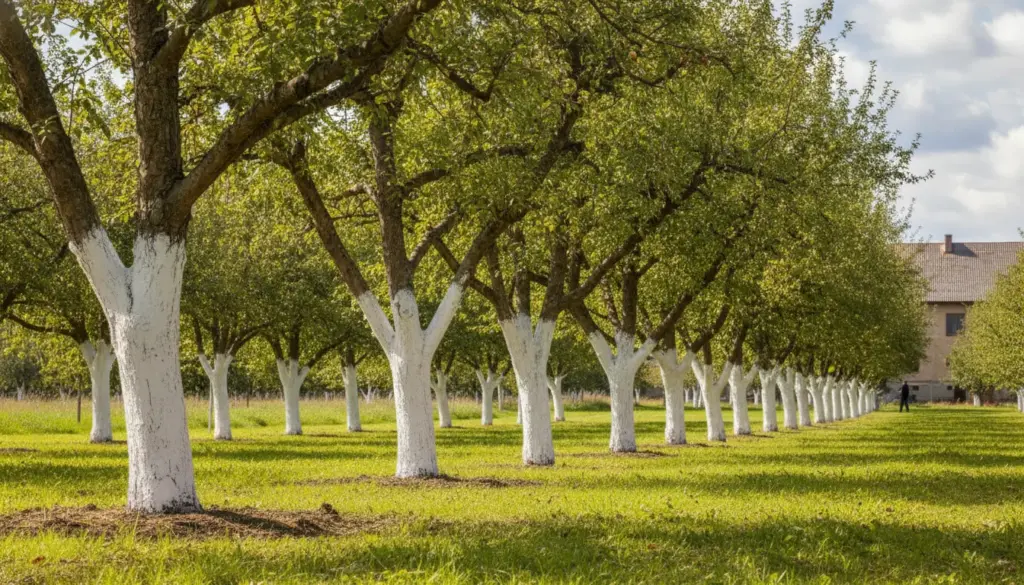
Have you ever noticed those stark white tree bases in local parks or neighborhood gardens and wondered about their exact purpose? This striking look has absolutely nothing to do with visual appeal. In horticultural practice, it actually serves as a highly effective technique for protecting your plants from severe bark splitting and dangerous pathogens. By implementing this straightforward treatment, you essentially fortify the tree’s defensive structure, leaving it highly resilient against harsh, unpredictable weather.
The Science Behind the White Coating
Horticulturists refer to this age-old practice as whitewashing. The process involves coating a clean trunk with a carefully balanced mixture of slaked lime (calcium hydroxide) and water. Once applied, this brilliant white layer functions as a formidable thermal and physical shield. To achieve optimal results, you must paint the solution directly from the soil line right up to the base of the lowest branches. The primary goal is to create a seamless, uniform crust that resists crumbling once the moisture naturally evaporates.
Core Advantages of Tree Whitewashing
Applying this chalky coating unlocks several crucial benefits for your orchard or landscape:
- Creates an insect blockade: The powdery surface makes it exceptionally difficult for ants and other crawling pests to navigate their way up into the canopy.
- Reflects intense sunlight: The bright color bounces harsh solar rays away from the wood, preventing localized overheating and severe sun damage.
- Minimizes thermal shock: It actively shields the delicate bark tissues from rupturing during sudden, drastic temperature fluctuations.
- Lowers infection rates: The lime seals off microscopic fissures, effectively shutting the door on invasive fungal spores and harmful bacteria.
In fact, routine whitewashing is considered absolute critical maintenance for gardens situated in climates that experience massive temperature swings between daylight hours and nightfall.
Professional Timing for Maximum Protection
For the highest success rate, aim to complete this task during the transition between late December and early January. Keep a close eye on the weather throughout the season. If heavy winter rains manage to wash away the calcium coating, you should strongly consider reapplying the mixture in February. During this late-winter period, intense daytime sun warms the trunks rapidly, which inevitably triggers devastating frost cracks when nighttime freezing sets in.
How to Properly Prepare and Paint Your Trees
Before you even think about picking up a brush, you must thoroughly scrub the trunk free of dirt, clinging moss, and lichens. Only after establishing this beautifully clean canvas should you brush on your lime mixture, taking special care to avoid slapping on an overly thick layer. As a general rule of thumb, it is best to repeat this routine annually. Natural elements like driving wind and heavy precipitation will gradually erode the defensive shield over time, slowly diminishing its protective capabilities.
When executed with patience and care, applying this bright barrier will never harm your beloved plants. Ultimately, this traditional technique remains an incredibly simple and budget-friendly strategy that tangibly boosts the overall vigor of your landscape. By taking these preemptive steps, you actively support the robust, long-term growth of your trees. Be sure to keep these handy gardening insights saved for your next winter yard prep!