Every year, countless apiarists face devastating winter losses or disappointing stagnation in their seasonal yields. However, deliberately splitting your hives serves as far more than just a mere rescue operation. It acts as a highly effective management technique, empowering you to completely dictate the genetics, vitality, and overall output of your yard rather than crossing your fingers and hoping for the best.
Replacing Guesswork with Science
Gone are the days when expanding an apiary relied purely on gut feelings. Today’s leading apiculture researchers note that successful hive multiplication depends entirely on data-backed scientific criteria, enabling highly accurate growth forecasting. This calculated method does more than merely boost your physical box count; it fundamentally maximizes the honey-producing potential of every individual colony.
Agricultural experts highlight that employing a methodical framework drastically reduces seasonal risks while guiding better management choices year-round. In fact, following a structured expansion blueprint remains the most reliable pathway to recovering from severe cold-weather die-offs without sacrificing your genetic standards.
Expert advice: Before initiating any splits, always secure high-quality queens from a reputable breeder or have mature queen cells ready to go. Relying on emergency queens raised spontaneously by the workers frequently degrades the operational traits of your next generation.
The Hidden Dangers of Wild Swarms
Specialists strongly caution against relying on captured feral swarms to build up your operation. While snatching a free cluster from a tree branch seems like an effortless way to scale up, it genuinely operates like a game of biological roulette. By introducing these unverified insects, you risk bringing in unknown pathogens and aggressive genetics, which can easily destabilize your entire production system over time.
Conversely, executing planned splits with verified resources guarantees you know exactly what is buzzing inside your boxes. Carefully selecting for vitality and gentle temperaments directly improves your daily handling experience while simultaneously driving up nectar collection rates.
Choosing Between Nectar Yields and New Hives
Long-term apiary success requires setting extremely clear seasonal objectives right out of the gate. Have you decided what your primary focus is for the upcoming spring? Some beekeepers will aggressively target maximum honey extraction, whereas others might prioritize rapidly multiplying their hive count.
Because you simply cannot push for top-tier results in both categories simultaneously, you must carefully evaluate a few critical environmental factors:
- Local forage availability: Can the surrounding landscape produce enough nectar and pollen to sustain additional colonies?
- Regional weather patterns: Are the temperatures and rainfall conducive to rapid brood rearing?
- Current colony vigor: Only the absolute strongest, disease-free hives should ever be considered for splitting.
Managing the Apiary as a Unified System
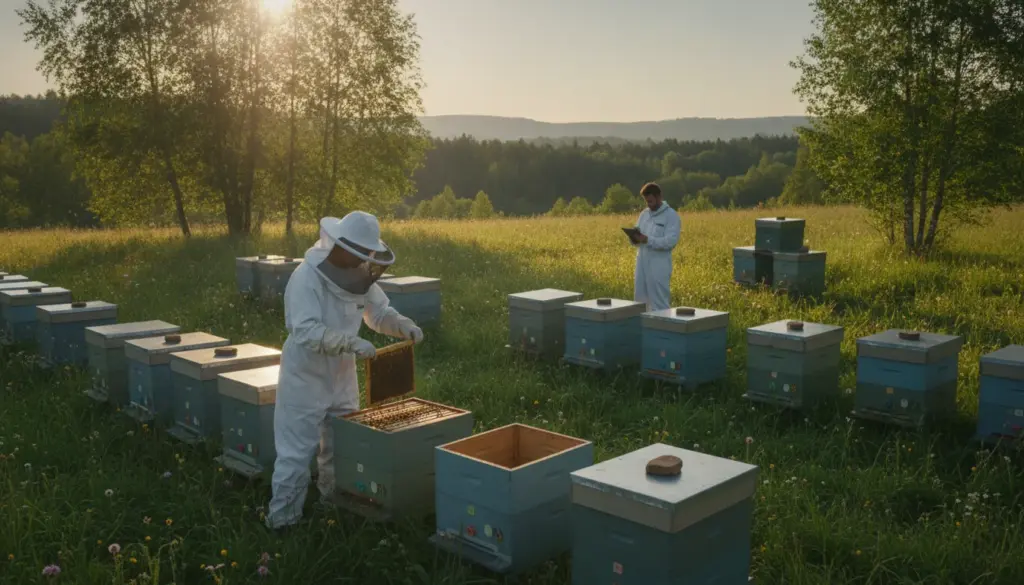
Contemporary beekeeping methodologies suggest treating your entire yard as a single, cohesive management unit. This strategy dictates that major apiary tasks should be synchronized across all boxes simultaneously. Aligning your workflow in this manner drastically improves overall operational oversight while saving countless hours of labor.
Ultimately, sustainable growth always boils down to prioritizing quality over sheer volume. By embracing division techniques rooted deeply in natural bee biology, you will cultivate robust nucleus colonies that rapidly evolve into massive honey-producing powerhouses. With a solid blueprint in hand, scaling your beekeeping journey morphs from a stressful gamble into a highly predictable, incredibly rewarding endeavor.