A popular cooking technique currently making the rounds promises perfectly tender asparagus without ever reaching for a blade. The concept feels wonderfully effortless, yet culinary professionals are raising a few red flags. While it sounds incredibly efficient, this viral method often sends perfectly edible vegetable pieces straight into the compost bin.
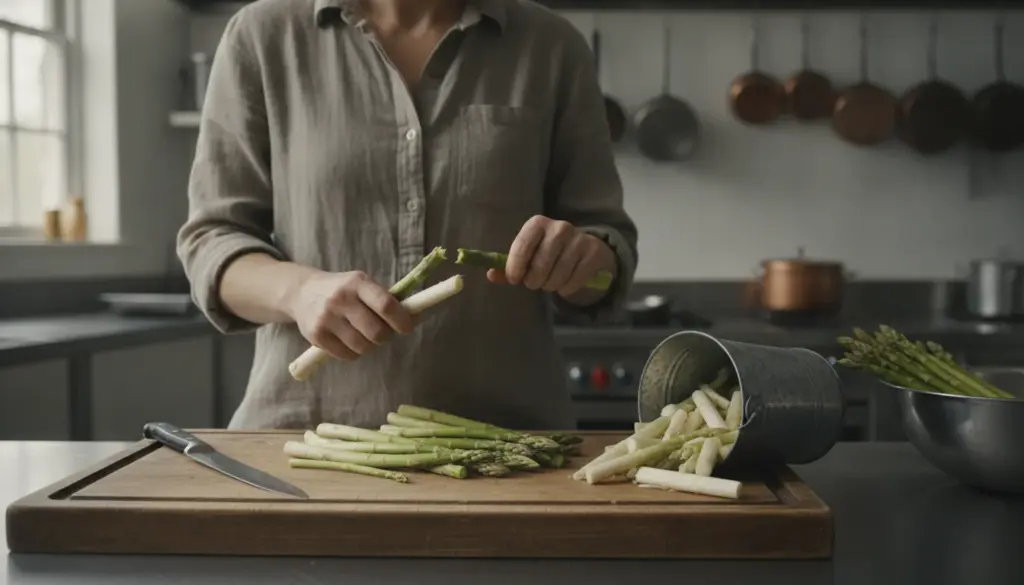
The core idea relies on a simple bend-and-snap motion. By grabbing a spear with both hands and gently flexing it, the stalk supposedly breaks exactly where the tough, fibrous base meets the tender stem. Home cooks everywhere praise this approach, especially those looking to avoid extra chopping boards and dirty utensils. It promises a seamless solution to eliminate the chewy ends while preserving the delicious parts.
Does the Snapping Technique Actually Work?
In theory, the drier, more rigid bottom section should give way before the flexible top. However, rigorous testing in home kitchens reveals that this natural breaking point is far from precise. Quite often, the spear splinters much higher up than necessary, sacrificing a significant portion of your meal.
While satisfying to execute, relying solely on this auditory cue leads to unnecessary food waste. The exact location of the snap depends heavily on a few fluctuating variables:
- Overall freshness of the spear
- Thickness of the stalk
- The amount of pressure applied and where you hold it
- How dehydrated the vegetable has become
When dealing with incredibly fresh, robust asparagus, the woody section is usually minimal. Yet, the stalk might still break higher up simply because the base refuses to yield easily. As a general rule: the bending method serves as a decent quick gauge, but it remains far too inaccurate to use as an absolute measurement.
The Difference Between Green and White Asparagus
Green Stalks Handle the Bend Better
This hands-free approach yields the best results when applied to the green variety. These stalks boast a much thinner exterior, offering greater flexibility. In many cases, you only need to trim a tiny fraction off the base. Professional chefs frequently skip peeling green asparagus entirely, perhaps only shaving the thickest specimens slightly near the bottom.
If you are rushing to get a sheet pan ready for the oven or the grill, snapping green asparagus serves as an excellent time-saver.
White Asparagus Demands Proper Peeling
The situation changes drastically when handling white asparagus. The main culinary hurdle isn’t just the very tip of the base, but rather the highly fibrous skin encasing the entire lower half. Failing to meticulously remove this outer layer guarantees a stringy, unpleasant bite. Simply snapping off the end completely fails to address this issue.
For these pale spears, culinary instructors highly recommend a specific preparation routine:
- Slice off the bottom inch cleanly with a sharp blade.
- Peel the entire stalk starting just below the delicate head all the way down.
- Apply a heavier hand when trimming older, bulkier stalks at the base.
Relying on the bending trick here leaves you with seemingly tender stalks that secretly harbor hard, unchewable threads where the tough skin remains intact.
Using the Trick Without the Waste
You don’t have to abandon this satisfying technique entirely. By merging the viral hack with traditional knife skills, you can achieve both speed and maximum yield. An approach championed by experienced cooks involves snapping a single spear to find the general transition zone. Once you establish that visual baseline, simply line up the remaining bundle and slice them cleanly with a knife.
Spotting the Freshest Produce
Sourcing superior ingredients means you will encounter far less woody material to discard. Freshness dictates how much prep work is truly required. Keep an eye out for these quality indicators at the grocery store:
- Firm, straight posture: They should feel springy and resilient, never rubbery or drooping.
- Tightly clustered heads: The delicate tips must remain completely closed, avoiding any frayed or opened appearances.
- Flawless exterior: The sides should look smooth, devoid of wrinkles or shriveled patches.
- Hydrated bases: A freshly cut bottom looks moist, rather than distinctly brown or cork-like.
To verify quality on the spot, gently rub two stalks together. Farm-fresh asparagus will produce a faint squeaking noise. If they remain silent and feel somewhat limp, dehydration has likely set in, increasing the chances of a tough, woody base.
Expert Storage Methods for Maximum Tenderness
Even premium bunches will deteriorate rapidly if stored incorrectly at home. To extend the lifespan of your vegetables and prevent the bottoms from hardening, utilize one of these proven refrigeration strategies:
- The damp towel wrap: Loosely encase the bundle in lightly moistened paper towels, then tuck them inside an unsealed plastic bag to lock in humidity.
- The floral arrangement: Stand the stalks upright in a glass containing an inch of water. For optimal results, loosely drape a small plastic bag over the delicate tops to stop moisture loss.
Aim to cook your produce within three days of bringing it home. Extended storage times inevitably lead to tougher extremities, forcing you to slice away more of the plant.
Repurposing the Woody Ends
If looking at a pile of discarded ends brings on feelings of guilt, remember that these scraps are packed with incredible flavor. While their texture makes them unpleasant to chew, they serve as fantastic aromatic bases. Consider simmering them into a robust vegetable stock perfect for risotto.
Alternatively, toss those tough trimmings directly into your boiling cooking water. They will infuse the liquid, imparting a deeper flavor to the tender stalks cooking alongside them. You can apply this exact same strategy to white asparagus peelings, transforming waste into a fragrant foundation for luxurious soups.
Pro Tips for Flawless Execution
Even perfectly trimmed stalks can suffer from improper cooking techniques. Achieving the ideal texture requires just a bit of attention to detail during the heating process. Always ensure your spears are cut to a uniform length, which guarantees they finish cooking at the exact same moment.
Keep in mind that white varieties generally require a longer cooking time than their green counterparts. A quick poke with a sharp paring knife will immediately tell you if they have softened sufficiently. When opting to roast or grill, lightly toss the vegetables in quality oil and coarse salt, arranging them in a single, uncrowded layer for even caramelization.
The enduring popularity of the snapping method reflects our modern desire for swift, tool-free culinary shortcuts accompanied by a bit of flair. That crisp, resounding snap feels incredibly intuitive, especially for beginners intimidated by precise knife work.
Ultimately, seasoned home chefs naturally gravitate toward a hybrid approach. Sometimes speed takes precedence, while other meals demand the refined precision of a sharp blade. By mastering proper storage, recognizing freshness, and cleverly utilizing your scraps, you ensure every stalk reaches its full, delicious potential.