Reducing kitchen waste is a common goal for many households, yet bananas often prove to be a stubborn challenge on the countertop. These popular fruits seem to mature in the blink of an eye, developing dark spots before quickly ending up in the compost bin. By adopting a handful of straightforward habits, you can significantly slow down this natural aging process, ensuring your fruit remains firm and vibrant for an extended period.
The Science Behind Rapid Banana Browning
It often feels like bananas age overnight, but there is a specific biological reason for this rapid change: ethylene gas. While many fruits naturally release this ripening hormone, bananas are particularly sensitive to its effects.
- They naturally generate their own ethylene as they mature.
- Any bumps or surface bruises will immediately spike gas production.
- Warm environments dramatically accelerate the entire chemical reaction.
- Proximity to other gas-producing produce intensifies the ripening speed.
If you place your bunch next to avocados, pears, or apples, they become trapped in an invisible cloud of ethylene. This exposure forces those vibrant yellow skins to transition to brown at a much faster rate. Storing your fruit bowl in direct sunlight or near a radiator will also cause the discoloration to speed up considerably.
The fastest ripening occurs when physical bruising, excess heat, and concentrated ethylene combine. By systematically eliminating these three factors, you can easily add several days to your fruit’s shelf life.
Essential Storage Techniques for Yellow Bananas
Extending the freshness of your produce doesn’t require complex strategies. The most effective results stem from a few mindful choices regarding how you set up your kitchen.
Keep Them Out of the Refrigerator
Many people instinctively toss overripe fruit into the fridge, assuming the chill will preserve it. While this might seem logical, it is counterproductive if your goal is maintaining a pristine yellow exterior. Cold temperatures cause structural damage to the skin’s cells, prompting the outside to turn black quite rapidly. The flesh inside might remain edible, but the visual appeal is completely lost.
The only time refrigeration makes sense is when the fruit has already reached your desired level of ripeness and you do not mind a dark peel. In that specific scenario, the chilly air will slightly pause the softening of the interior flesh.
Suspend the Bunch on a Hook
Utilizing a dedicated stand or a simple under-cabinet hook offers surprising benefits for preservation. By elevating the bunch, you achieve several protective effects:
- The delicate skin avoids direct contact with hard kitchen surfaces.
- Pressure points and bruising are significantly minimized.
- Air circulation improves, allowing each piece to mature evenly and slowly.
When left resting flat on a counter, the weight of the top fruit presses heavily into the bottom ones. These pressure zones are exactly where soft, brown spots will form first.
Wrap the Crown with Cling Film
One of the most highly regarded techniques among culinary enthusiasts involves covering the very top of the bunch. This area, known as the crown, is the central junction where all the individual stems connect.
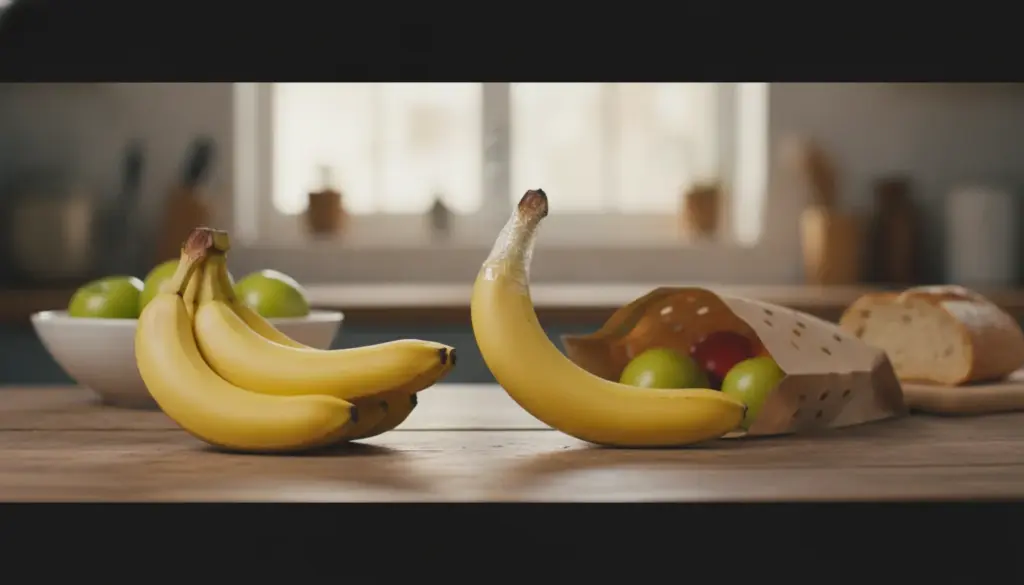
By tightly securing aluminum foil or plastic wrap around this specific section, you effectively trap a significant portion of the ethylene gas right at its origin. Consequently, a much lower volume of the ripening hormone manages to reach the rest of the fruit bowl.
Applying this method regularly can grant you an additional two to four days of pristine firmness before any dark spots appear. It is a completely free habit that takes mere seconds to implement right after unpacking your groceries.
Maintain Distance from Other Produce
Placing your fresh purchase next to a large pile of apples is a guaranteed recipe for rapid spoilage. Avocados, pears, and apples are notorious ethylene producers. Bananas readily absorb this surrounding gas, forcing their own aging timeline into overdrive.
A few basic rules of thumb will help manage this issue:
- Allocate a dedicated hook or standalone dish strictly for bananas.
- Store high-gas producers like pears and apples on a completely separate counter.
- Never place your display bowl on a sunlit windowsill.
Smart Shopping Habits to Manage Ripeness
Even with impeccable storage conditions, nature will eventually take its course. Therefore, it is incredibly useful to plan ahead while navigating the supermarket aisles.
Purchase Staggered Maturity Levels
Selecting a single cluster of uniformly yellow fruit means you will inevitably face a surplus of perfectly ripe food all at the exact same time. A far more strategic approach involves mixing maturity stages:
- Select a few mostly green pieces to consume in four or five days.
- Grab some partially yellow ones to tide you over mid-week.
- Pick out one or two perfectly yellow specimens for immediate snacking.
This staggered method guarantees a perfectly timed snack for every day of the week, preventing a massive batch from browning simultaneously.
Find a Cool, Shaded Spot
A shadowed corner of your kitchen workspace generally serves better than a decorative centerpiece bathed in natural light. The ideal environment features standard room temperature, zero direct sunlight, and total isolation from heat-generating appliances. The ambient warmth radiating from a stovetop or dishwasher will silently fuel the ripening process without you even realizing it.
Creative Solutions for Overripe Fruit
When a piece of fruit crosses the line into excessive mushiness, it remains incredibly valuable. The flavor profile actually deepens and sweetens considerably at this stage, making it an exceptional culinary ingredient.
Blend Them into Nutritious Smoothies
A standard kitchen blender acts as the ultimate rescue tool for overly dark produce. Simply slice the soft flesh into rounds, freeze them if desired, and combine them with yogurt, plant-based milk, or standard dairy. Toss in a spoonful of rolled oats or peanut butter, and you instantly have a robust, filling breakfast beverage.
Transform Them into Baked Goods
Extensively aged bananas infuse baked treats with a luxurious, creamy texture and profound sweetness while keeping the crumb beautifully moist. Just three dark pieces provide the perfect base for a batch of muffins or a small loaf. Because the fruit is so intensely sweet by this point, you can generally reduce the amount of refined sugar called for in the recipe.
Prevent Slices from Oxidizing
Anyone preparing fruit salads or oatmeal toppings knows that sliced rounds begin oxidizing almost immediately upon exposure to air. The most effective countermeasure is introducing a touch of acidity. Gently tossing the cut pieces in a small amount of lime or lemon juice delays discoloration thanks to the potent antioxidants present in the citrus.
Orange juice is a viable alternative if you prefer a slightly sweeter flavor profile. This microscopic layer of acidic liquid creates an invisible barrier around the flesh, effectively blocking oxygen from triggering the enzymatic browning reaction.
The Tangible Benefits of Better Storage
Countless home cooks discover that implementing these minor adjustments yields far better results than purchasing specialized, expensive preservation gadgets. A basic wire hanger, a scrap of foil applied to the stem, and strategic placement away from heat sources collectively result in significantly less discarded food and reduced kitchen frustration.
Furthermore, these practices offer noticeable financial benefits. Given that these are among the most frequently purchased grocery items, every bunch saved from the trash directly lowers your weekly supermarket expenses. Repurposing the darker ones into baking projects ensures you extract maximum value from your grocery budget.
For busy households, establishing a designated baking day proves highly effective. Once a week, any lingering fruit featuring brown spots gets automatically diverted into pancake batter or massive smoothie pitchers. This routine ensures nutritious intake, clears out the fruit bowl, and completely eliminates the guilt associated with throwing away edible produce.
By experimenting with these various techniques, you will quickly identify the ideal combination for your unique kitchen setup. Whether it is wrapping the crowns tightly or simply relocating your storage bowl away from a warm appliance, a few weeks of mindful observation will reveal a drastic improvement in how long your fresh produce retains its perfect golden hue.