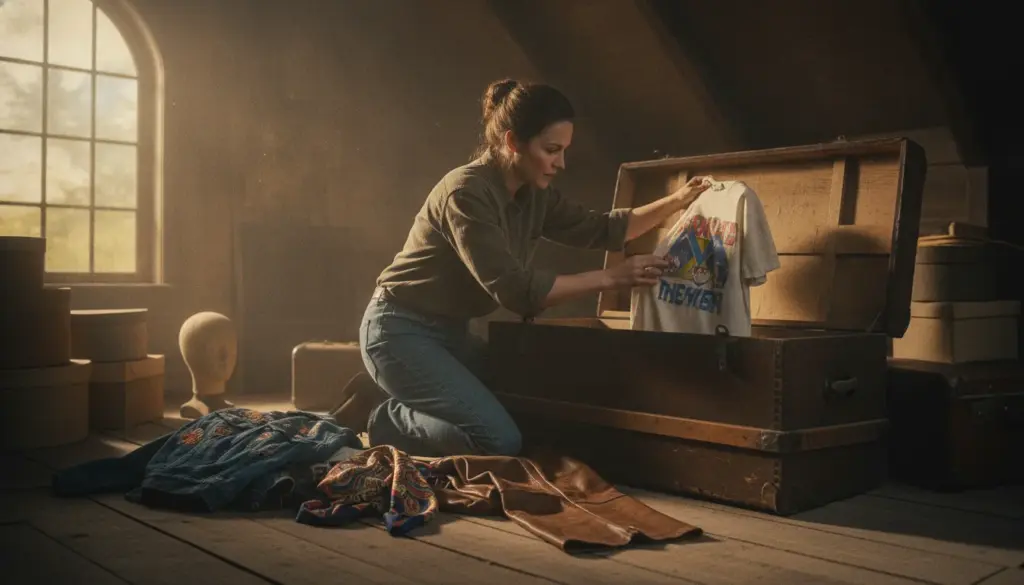
A growing number of people are currently digging through their attics and closets in search of old apparel. They aren’t driven by a sense of nostalgia, but rather by the rapidly expanding vintage market. Garments that were casually donated to thrift stores a decade ago are now commanding hundreds of dollars. The real trick is simply knowing exactly what to look for.
Vintage Outpaces Fast Fashion Growth
Industry analysts estimate the global secondhand and vintage fashion sector reached around 40 billion euros in 2024. Within the next ten years, experts suggest this figure could nearly triple. This surge isn’t just fueled by trendsetters seeking retro denim. Rising raw material costs, higher energy prices, and a stronger focus on sustainability have made well-crafted, older clothing highly desirable again.
During the 1970s, 1980s, and parts of the 1990s, brands typically manufactured garments with heavier fabrics, superior stitching, and less hurried production methods. Consequently, these robust pieces survive for decades, whereas much of today’s fast fashion falls apart after just a few years. Scarcity is another massive factor. Once a specific item goes out of production, its value naturally climbs as soon as demand increases.
By 2026, apparel from the 1970–2000 era is increasingly treated as a genuine collector’s item rather than a simple hand-me-down. In countless homes, these hidden treasures are currently sitting in garbage bags, cardboard boxes, or plastic bins tucked away in the garage or attic. Right now, three specific garment types truly stand out when it comes to potential payout.
Three Garments That Can Fetch Up To 500 Euros
1. The Classic Denim: Vintage Levi’s 501
A Levi’s 501 manufactured before roughly 1985 is considered the holy grail within many secondhand circles. Depending on the exact size, rarity, and level of wear, selling prices generally range from 150 to 500 euros per pair. Early editions featuring the famous red “Big E” label—produced until the early 1970s—perform exceptionally well among dedicated collectors.
Why is this particular jean so incredibly popular? The denim itself was substantially thicker and often utilized selvedge denim, which is easily recognized by a tightly woven edge along the inside seam of the leg. This fabric feels much denser, develops beautiful wear patterns, and perfectly molds to the wearer’s body. You will see this superior quality reflected in the high prices on specialized platforms where connoisseurs hunt for specific manufacturing years and distinct details.
2. The Timeless Raincoat: Classic Luxury Trench Coats
A vintage trench coat from a high-end fashion house dating back to the 1980s or earlier operates as a silent moneymaker. Many of these coats hang entirely forgotten in wardrobes simply because the fit feels somewhat “too roomy” or “too traditional” for modern tastes. However, going into 2026, these garments easily sell for 300 euros and up, provided they remain in great condition.
Prominent brands featuring a distinctive checkered pattern on the interior lining are particularly sought after. A well-maintained piece, devoid of major tears or heavy discoloration, can easily exceed 400 euros when appropriately marketed alongside a premium wool sweater or scarf.
3. Oriental-Style Silk Jackets: The Tangzhuang
The third garment remains slightly less known to the general public: the Tangzhuang. This is a satin or silk jacket featuring a distinctive mandarin collar and traditional knotted cord fasteners. For years, you could find these jackets hanging in local charity shops for just a few dollars. Now, as we approach 2026, online interest has skyrocketed.
When buyers scour digital marketplaces using terms like “Chinese vintage jacket,” “silk jacket,” or explicitly “Tangzhuang,” they are usually filtering for premium materials like authentic silk. Exquisite embroidery, a pristine lining, and minimal signs of wear will quickly net you anywhere from several dozen to hundreds of euros, heavily depending on the piece’s origin and overall craftsmanship.
- Pre-1985 Levi’s 501s, ideally featuring a selvedge edge and the older red tab.
- Luxury trench coats manufactured before 1990, boasting meticulous finishing.
- Satin or silk Tangzhuang jackets equipped with a stand-up collar and cord knots.
- General vintage: Heavy denim, pure wool, or authentic silk garments from the 70s through the 90s.
- Value boosters: Intact original tags, clear sizing and material info, and excellent overall condition.
How to Spot Genuinely Valuable Clothing
Evaluating Vintage Denim
Grab the pant leg and carefully roll the hem up slightly. If you spot a tightly woven strip on the inside edge, frequently featuring a colored thread, you are likely looking at highly coveted selvedge denim. Next, inspect the small red tab located on the back pocket and pay close attention to the lettering. Older designs typically feature different typography compared to modern manufacturing runs.
You should also examine the zipper and button fly. Vintage brand names stamped into the metal hardware strongly indicate an early production era. Finally, thoroughly check the condition: are the pockets completely intact, is the fabric dangerously thin in certain areas, and are there severe rips near the crotch? While minor wear adds character, gaping holes in vulnerable areas will severely depress the asking price.
Assessing a Classic Trench Coat
A premium trench should feel remarkably sturdy without being overly stiff. The fabric must drape elegantly and resist immediate creasing when you bend the sleeves. Inside the collar or along the inner lining, you will usually discover a tag stating the manufacturing country. Labels indicating “Made in England” or Western European production prior to 1990 instantly build trust with targeted buyers.
Identifying a Premium Tangzhuang
You can instantly identify a Tangzhuang by its unique combination of a narrow, upright collar and signature fabric-loop button closures. The absolute most desirable iterations are crafted from 100 percent silk, projecting a soft luster that never looks plasticky. If the textile feels incredibly smooth but slightly more “alive” than standard polyester, there is a strong chance you have real silk.
The embroidery work also reveals crucial details regarding quality. Flimsy threads and uneven stitches point straight to cheaper mass production. Conversely, dense, heavy embroidery boasting subtle color gradients signals painstaking craftsmanship. If the interior lining is coming loose or you notice pulled threads everywhere, the resale value will drop.
The Best Places to Sell Your Finds
Anyone looking to turn their forgotten wardrobe into serious money should absolutely compare prices first. On major international reselling platforms, you can filter your searches by “sold items” rather than just looking at current asking prices. This approach provides a much more realistic market snapshot than simply viewing optimistic sellers hoping for a massive payout.
Dedicated apps and digital marketplaces are incredibly convenient for swiftly offloading jeans and silk jackets. You simply take the photos yourself, write out the detailed descriptions, and ship the items directly to the buyer. However, for designer trench coats and high-fashion pieces, many experienced sellers prefer platforms that offer authentication services, or even specialized fashion auction houses.
In those specialized settings, professional appraisers scrutinize the labels, materials, and stitching, which significantly boosts buyer confidence. The more definitively you can prove the garment’s origin, size, materials, and condition, the higher your chances of securing top dollar.
Practical Tips for Research and Valuation
Unsure whether a vintage sweater or coat is truly made of wool? A basic fiber test will give you the answer. Carefully extract a tiny pinch of fuzz from an inconspicuous inner seam and hold it over a small flame. Fibers that smell distinctly like burning hair and crumble into fine ash after being blown out generally indicate animal fibers such as cashmere or wool.
Take the necessary time to gently clean your garments before listing them. Investing in a professional dry cleaning service makes perfect sense if the potential return is substantial, especially for luxury designer coats. Never use harsh detergents on vintage silk, as powerful chemicals can permanently ruin its delicate sheen. A fresh-looking, beautifully photographed piece with clear close-ups undeniably sells much faster and for significantly more money.
Finally, it can be highly lucrative to bring a stack of vintage apparel to a specialized boutique. Certain local shops will gladly provide a rough, complimentary estimate or even offer to purchase your items on the spot. For truly exceptional discoveries—such as incredibly old denim or rare haute couture—an auction house might be the ideal route. These professionals possess extensive databases of past sales figures and can easily determine if your discovery is likely to attract serious bidding wars.
Once you get a taste for it, clearing out the garage can easily become an exciting hobby. Looking through old family photo albums can provide excellent clues about what relatives wore back in the day, hinting at what might still be hidden in those dusty storage bins. Combine that historical detective work with some foundational knowledge regarding materials, tags, and manufacturing years, and a rainy weekend spent rummaging through the attic might just result in a fantastic financial windfall.