The Hidden Spring Roots of Summer Garden Disasters
Countless gardeners only notice their beloved shrubs deteriorating once summer arrives. Suddenly, foliage turns yellow, unsightly dark patches appear, branches go bare, and blossoms look utterly pathetic. However, the fate of your summer garden is actually decided during the earliest days of spring. By tackling three straightforward chores this March, you can cultivate vigorous, vibrant shrubs that remain virtually untouched by the dreaded black spot disease.
The Devastating Impact of Fungal Infections
This fungal affliction ranks among the most frequent nightmares for anyone growing these classic flowers. While it rarely kills the shrub outright, it causes severe exhaustion. The foliage develops ominous dark—sometimes purplish—blemishes before yellowing and dropping off prematurely.
This early leaf loss directly sabotages the shrub’s overall vitality. With fewer leaves available for photosynthesis, the plant’s energy reserves plummet. Consequently, it produces significantly fewer and much smaller blossoms, struggles to grow, and becomes highly vulnerable to drought conditions or hungry insect pests. Essentially, the underlying pathogen steals your plant’s life force, paving the way for secondary complications.
The culprits are microscopic fungi—specifically Diplocarpon or Marssonina rosae—that perfectly sync their lifecycle with the changing seasons. They stubbornly survive the cold winter months by hiding out in fallen foliage and organic debris right at the base of your plants. As soon as mild, humid spring weather rolls in, these dormant attackers wake up.
From there, wind and rainfall take over the heavy lifting. Heavy raindrops splash against the infected soil, launching spores directly onto low-hanging, tender new leaves. Gusting winds then carry these pathogens to neighboring shrubs, or even into adjacent gardens. When temperatures hover between 13 and 30 degrees Celsius, and leaves stay damp for extended periods, this infection spreads like wildfire.
Why March is Your Golden Window for Action
If you wait until June to start spraying and treating, you are already fighting a losing battle. Stepping into the garden in March gives you a massive tactical advantage. Right now, your shrubs are just beginning to push out new growth, and while the fungus is waking up, it hasn’t yet invaded the fresh foliage en masse. This brief transitional window is exactly when three specific gardening tasks can prevent catastrophic summer damage.
1. The Deep Clean: Eradicating Old Foliage
Your very first line of defense is incredibly basic: a thorough cleanup. Surprisingly, countless hobbyists skip this crucial step year after year, allowing the infectious pressure to build up exponentially with every passing season.
- Meticulously rake up every single fallen leaf around the base, including anything that looks partially decomposed.
- Carefully pick out tiny dead twigs and crispy remnants trapped between the living canes.
- Pay special attention to the dense inner core of the shrub, which acts as a magnet for trapped debris.
Crucial warning: Do not toss this infected debris onto your home compost pile. The persistent spores will easily survive the standard composting process, waiting to return and ruin your garden next year. Instead, dispose of the material in your regular household trash, or send it to a municipal green waste facility where professional high-heat processing will destroy the pathogens. By drastically reducing the contaminated material on the ground, you significantly lower the volume of airborne spores circulating this spring.
2. Nature’s Protective Barrier: Applying a Thick Mulch Layer
Once the ground is spotless, it is time for your second March mission: covering the root zone with a generous layer of mulch. While it sounds like a simple landscaping aesthetic, this actually acts as a highly effective physical barricade against fungal attacks.
Sometime this month, spread a solid 3 to 5-centimeter layer of organic material around the foot of every single shrub. Always leave a small, bare circle directly around the main stems. Piling moist bark or compost right up against the crown can cause devastating rot.
This spongy layer acts as a shock absorber against heavy spring downpours. By softening the impact of raindrops, it stops contaminated soil from splashing back up onto your pristine lower leaves. As a bonus, this covering traps essential ground moisture, chokes out competing weeds, and slowly breaks down to enrich the soil structure. Your plants win on multiple fronts.
3. Strategic Spring Feeding: Fueling Natural Defenses
The final task focuses entirely on nutrition. A robust, adequately nourished plant possesses a far greater natural immunity against environmental stressors. Well-fed shrubs push out denser foliage, develop sturdier canes, and bounce back remarkably fast if a minor infection does manage to take hold.
These are notoriously hungry plants. They require a perfectly balanced fertilizer rich in nitrogen, phosphorus, and potassium, alongside vital trace elements. Gardeners have several excellent choices:
- Store-bought organic fertilizers explicitly formulated for blooming shrubs.
- Pelletized cow manure combined with a specialized supplemental feed.
- High-quality liquid nutrients designed for flowering woody plants.
- Homemade compost teas or organic botanical tonics.
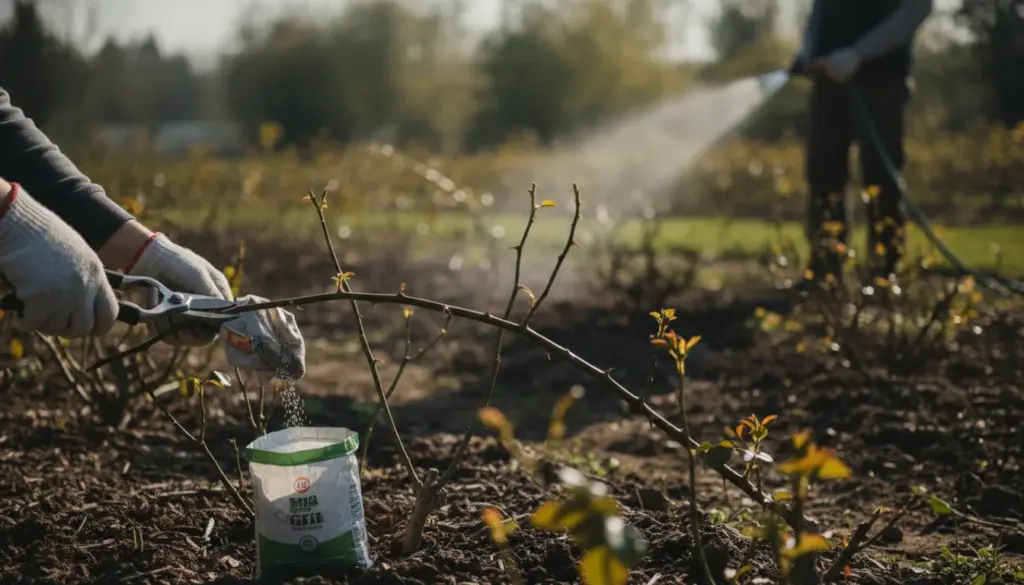
Many dedicated growers swear by specialized liquid elixirs diluted in water. A standard, highly effective ratio is 10 milliliters of concentrated tonic mixed into 1 liter of water. Always pour this nutrient drench directly onto the surrounding soil, making sure to avoid splashing the foliage. The root system absorbs these elements, delivering a massive energy boost right as the growing season kicks off.
Aim to apply your first round of fertilizer in late March or early April, right as the buds visibly swell and active growth begins. In a standard gardening year, a secondary application in late June is usually plenty. Never overdo the nitrogen. Excessive nitrogen forces the plant to push out floppy, ultra-soft leaves that are prime targets for fungal invasions.
Pro Tips: Further Minimizing Fungal Risks
While meticulous cleaning, strategic mulching, and proper feeding establish a rock-solid foundation, a few extra cultural habits will tip the scales further in your favor.
Smart Placement and Variety Selection
These classic bloomers crave abundant sunlight and gentle breezes. An exposed, airy location allows the wind to rapidly dry off damp foliage, severely hindering fungal development. Conversely, tucking them into tight, humid corners guarantees that leaves stay wet for hours. Ensure your plants receive a minimum of four to five hours of direct sunlight daily, and space them generously to promote optimal airflow.
If you are shopping for new additions, actively seek out modern cultivars bred specifically for exceptional disease resistance. While antique, nostalgic varieties boast breathtaking charm, their historical genetics often make them highly susceptible to seasonal ailments.
Masterful Watering and Pruning Techniques
When hydrating your garden, strictly apply water at the base of the plant rather than spraying it over the canopy. Foliage left wet heading into the evening—especially during warm summer nights—creates a perfect incubator for fungal spores. Utilize a targeted drip irrigation hose or a watering can with a simple spout.
Pruning should always aim to create an open, bowl-like center. Excellent air circulation through the heart of the shrub ensures that morning dew and rain evaporate quickly. Systematically remove any weak, overly thin, or crossing canes, leaving only the most vigorous main structural branches intact.
If you faithfully execute these March tasks every single year, you will likely witness a dramatic transformation within just one or two seasons. Expect remarkably cleaner leaves, significantly denser growth, and an extended, prolific blooming period. While it is impossible to banish naturally occurring pathogens from your environment entirely, their destructive grip on your garden will noticeably weaken.
For those who love pushing boundaries, supplemental organic treatments can also help. Dusting leaves with lava meal physically toughens the plant tissues, while applying horsetail extracts delivers a heavy dose of structural silicic acid. Blending high-quality compost with clay minerals also boosts soil biology. These advanced natural remedies are fantastic additions, but they simply cannot replace your three essential spring tasks. Clean, mulch, and feed—those will always remain the absolute backbone of a spectacular flowering season.