A Surprisingly Simple Swap for Home Bakers
More and more home bakers are discovering a remarkably affordable, fruit-based alternative for their sweet treats. While traditional pastry bases have long relied on massive blocks of butter, a completely different supermarket staple is now taking center stage. This humble ingredient costs under two euros, drastically slashes the calorie count, and yields an incredibly tender dough. Amazingly, the structure of your pastry holds up perfectly, satisfying even the harshest dessert critics.
Why Reconsider Butter in Your Pastry?
In the world of baking, butter is legendary for building rich flavors and creating that signature flaky texture. It delivers a melt-in-the-mouth bite, but naturally comes with a hefty dose of fat. To put things into perspective, just 100 grams of butter packs around 715 kilocalories, with the vast majority stemming from saturated fats.
Many individuals are looking for clever ways to dial back that heavy intake. It isn’t about forbidding butter entirely, but rather acknowledging how quickly it adds up in a diet already rich in fats and sugars. If you love to bake frequently or enjoy multiple slices a week, those numbers compound rapidly.
Fortunately, a brilliant ingredient swap can drop your dough’s calorie count by almost ten times, all without risking a baking disaster. This is exactly where a budget-friendly pantry staple steps in: unsweetened applesauce. That everyday jar, usually reserved as a dinner side dish, acts as a surprisingly effective foundation for your crust.
The Dramatic Difference: Applesauce vs. Butter
Unsweetened applesauce consists primarily of water, natural fruit sugars, and fiber. A 100-gram serving contains roughly 70 kilocalories. When stacked against the 715 kilocalories found in the same weight of butter, you are looking at nearly a tenfold reduction.
- Butter (100g): Roughly 715 kcal, predominantly saturated fat.
- Unsweetened applesauce (100g): Roughly 70 kcal, practically fat-free.
- Cost of butter: Generally around 8 to 10 euros per kilo.
- Cost of applesauce: Typically less than 2 euros per jar.
This winning trifecta of lower fat, fewer calories, and reduced cost makes applesauce an incredibly appealing choice for mindful bakers or anyone who loves experimenting in the kitchen.
The Science Behind the Fruit
In a standard shortcrust, fat coats the flour particles to prevent excessive gluten formation, keeping the crust crumbly rather than tough. While applesauce functions differently on a chemical level, it still produces a wonderfully workable dough. Apples naturally contain pectin, a dietary fiber that binds ingredients and traps moisture.
This pectin provides the dough with necessary structure and a pleasant, smooth mouthfeel. Instead of hard clumps of fat, you get a softer, moister pastry base carrying a very subtle fruity note.
Key benefits for your dough:
- Increased tenderness: Post-bake, the crust remains pleasantly soft rather than dry or overly crumbly.
- Effortless rolling: A properly chilled applesauce dough is generally much easier to roll out compared to brittle, butter-heavy pastry.
- Better fridge behavior: Butter turns rock-hard in the refrigerator, whereas dough enriched with applesauce stays pliable and easy to handle.
- Mild sweetness: The inherent sugars in the fruit allow you to cut back slightly on refined white sugar in your recipe.
When to Use Fruit, and When to Skip It
This clever substitution shines brightest in sweet recipes. Think along the lines of classic apple pies, fruit tarts, crumbles, and softer cake-like bases. The delicate apple flavor naturally complements these fruit-forward desserts.
Savory bakes, however, require a different approach. If you are preparing a quiche, vegetable tart, or savory galette, you need a flavor-neutral base. In those instances, plain yogurt is an excellent alternative. It offers similar moisture benefits but leaves out the sweet, fruity aroma.
Step-by-Step: Crafting a Lighter Crust
The fundamental rule is incredibly straightforward: swap the butter for unsweetened applesauce using a precise one-to-one ratio. If your recipe calls for 100 grams of butter, simply use 100 grams of applesauce instead.
However, because fruit puree carries significantly more water than pure fat, you must make a few crucial tweaks to your baking process.
- Reduce added liquids: Cut the amount of milk, water, or other liquids in the original recipe by half, as the applesauce already provides ample hydration.
- Mix briefly: Only knead or stir until the mixture just comes together. Overworking the dough develops too much gluten, resulting in a chewy, tough texture.
- Mandatory chilling: Let the dough rest in the refrigerator for at least 30 minutes. This gives the flour time to absorb the moisture, preventing a sticky mess and making rolling much easier.
A Foolproof Base Recipe
For a standard 24-centimeter springform pan, this reliable baseline works beautifully:
- 250g all-purpose flour
- 100g unsweetened applesauce
- 30–50g sugar (adjust to your preference)
- 1 egg (optional, helps with binding)
- A pinch of salt
- Optional: cinnamon or vanilla extract to enhance flavor
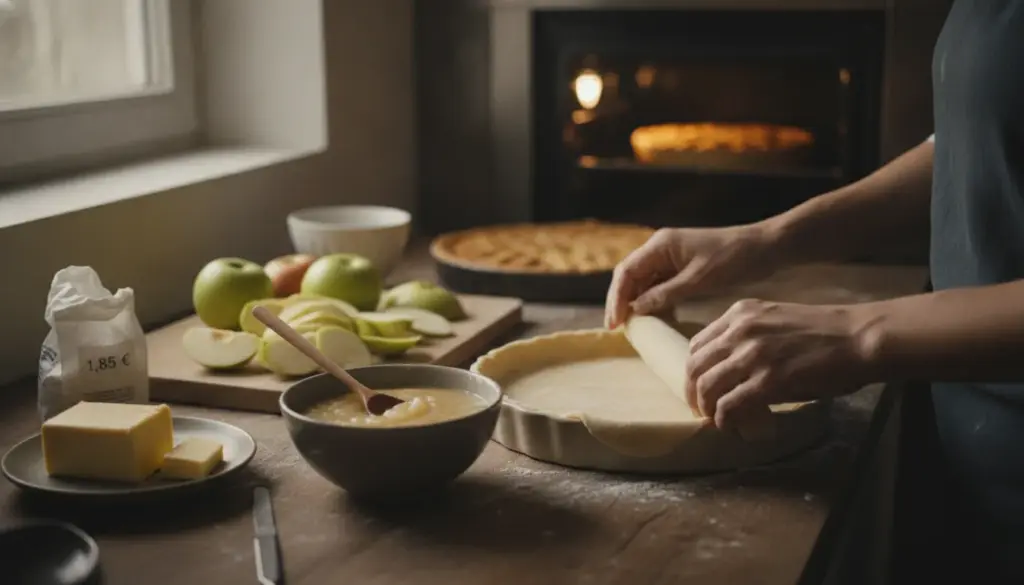
Briefly combine your dry ingredients. Add the egg and applesauce, quickly bringing everything together into a cohesive ball. Wrap the dough tightly and chill for half an hour. Afterward, roll it out, line your tin, blind bake if your specific filling requires it, and finish baking as usual.
Nutritional Perks and Expert Baking Tips
By making this simple swap, you automatically drop the saturated fat content of your dessert. Nutritional experts consistently advise limiting these fats, as excessive consumption is linked to cardiovascular issues. Plus, you sneak a little extra fiber into your treat. While it remains an indulgence, every small adjustment contributes to a better daily balance.
If you are trying this technique for the first time, choose a recipe where the filling provides robust texture and flavor, like a pear tart or apple crumble. A slightly softer base will blend right in without being overly noticeable.
- Stick to unsweetened: Always buy applesauce without added sugar to prevent the pastry from becoming cloyingly sweet.
- Don’t taste test raw: The sweetness of the dough develops and intensifies in the oven, so raw tasting can be misleading.
- Adjust baking times: Bake the crust slightly longer at a moderate temperature to achieve a firmer, drier crumb.
- Pre-bake for wet fillings: If your filling is particularly juicy, always blind bake the crust with pie weights first to avoid a soggy bottom.
Creative Variations for Dietary Needs
For those who love to experiment, a fifty-fifty split is a fantastic compromise. Using half butter and half applesauce drastically reduces the calorie load while retaining a hint of that beloved buttery richness and crispness.
When tackling savory pastries, remember that plain yogurt substitutes in the exact same one-to-one ratio. It brings a mild tang that pairs gorgeously with goat cheese or roasted vegetables. Always run a small test batch when baking for a special occasion, allowing you to see exactly how your preferred brand of flour interacts with these moisture-rich alternatives.
If you navigate dietary restrictions in your household, these tricks are incredibly adaptable. Blend in whole wheat flour to boost fiber, utilize plant-based yogurts for dairy-free needs, or fold in ground nuts for an enriched mouthfeel. Little by little, you can craft lighter, smarter pastries that make enjoying a second slice completely guilt-free.