
A chaotic cosmic neighbor just down the street
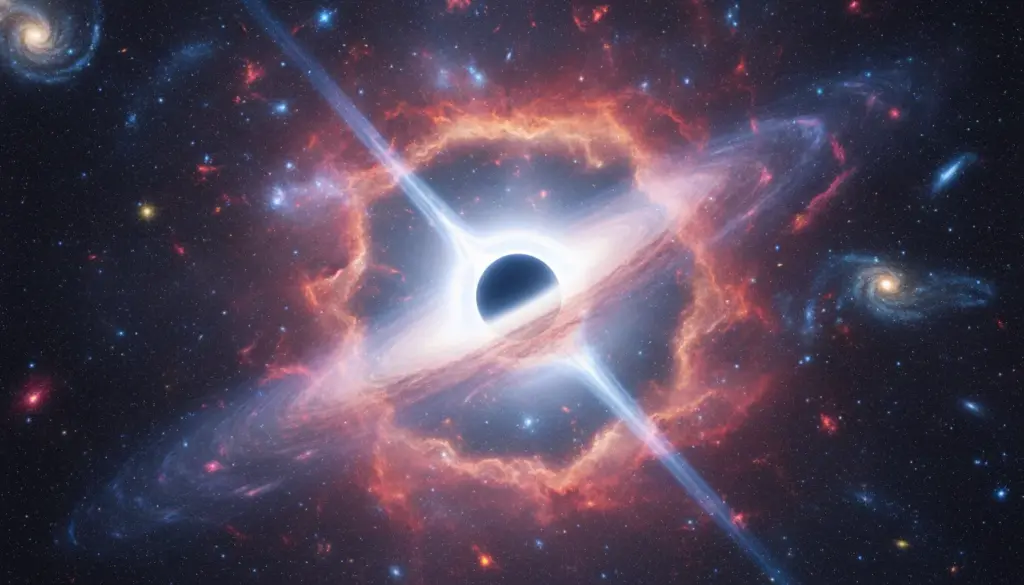
A seemingly ordinary galaxy located 13 million light-years from Earth is hiding a surprisingly turbulent secret. The James Webb Space Telescope recently peered through a thick veil of debris to expose the bustling core of the Circinus Galaxy. Deep inside this cosmic neighborhood, a supermassive black hole is greedily consuming surrounding gas and dust, functioning as a colossal energy generator.
In astronomical terms, a distance of 13 million light-years means this star system is practically in our backyard. While dedicated amateur sky-watchers can occasionally spot it, the Circinus Galaxy is notoriously difficult to observe. Because it sits closely aligned with the Milky Way’s galactic plane, a dense fog of local stars and debris severely obscures our view from the ground.
At the very heart of this system lies an active galactic nucleus. Here, a gargantuan black hole continuously swallows massive amounts of material while simultaneously blasting out fierce radiation. Previous images captured by the Hubble Space Telescope hinted at an unusual surplus of infrared light radiating from this central region, but its exact source remained a mystery.
From expelled matter to a cosmic feeding frenzy
Earlier astronomical models suggested that this mysterious infrared glow primarily originated from superheated gas being violently ejected by the black hole into deep space. However, the latest observations have completely flipped this narrative. Most of this glowing heat is actually radiating from a dense, swirling cloud of material that is slowly being devoured.
This material forms a distinct, donut-shaped structure, often referred to as a dust torus. According to recent data analysis, a staggering 87 percent of the detected infrared emissions comes directly from this feeding ring enveloping the black hole.
Only a tiny fraction—roughly 1 percent—is actually generated by expelled cosmic winds, which is significantly less than what older data implied. The remaining 12 percent radiates from surrounding outer regions that older, less sensitive instruments simply merged with the bright central core.
Piercing the cosmic veil with infrared vision
The true power of this modern space observatory lies in its unmatched ability to capture infrared wavelengths. Unlike visible light, these longer wavelengths effortlessly slice through thick interstellar smog. While older telescopes stared blindly at an opaque wall of debris, modern sensors can effortlessly map intricate structures and delicate temperature shifts.
Operating from a perfectly stable orbital position known as Lagrange Point 2, roughly 1.5 million kilometers from our planet, the telescope enjoys an ultra-cold, unobstructed view. To bring the absolute core of the Circinus Galaxy into sharp focus, astronomers utilized a specialized technique called interferometry. This advanced method smartly suppresses overwhelming starlight, allowing hidden, subtle details to finally emerge.
How specialized filters reveal the invisible
To capture these groundbreaking images, scientists relied on a highly sensitive infrared camera equipped with unique modulating filters. This setup dramatically tones down the blinding glare of nearby stars so that the delicate environment around the black hole becomes beautifully defined.
- Near-infrared precision: The instrument captures specific wavelengths perfectly suited for penetrating dense cosmic environments.
- Advanced interferometry: It actively cancels out disruptive light flares and blinding stellar glare.
- Unprecedented clarity: Combining these tools produces the sharpest ever view of an active galactic center.
Remarkably, this marks the very first time such precise interferometric techniques have been successfully applied outside the Milky Way. Previously, this level of observation was strictly limited to nearby stars within our own galaxy.
The mechanics of a supermassive giant
The black hole anchoring the Circinus Galaxy is a true heavyweight, packing a mass equivalent to millions of suns. An accretion disk furiously spins around this gravitational anchor, pulling material inward much like water draining from a bathtub.
As this cosmic debris spirals closer to the event horizon, extreme friction causes it to heat up dramatically. This intense thermal reaction releases radiation across multiple wavelengths, offering scientists a rare window into the extreme physics of the area.
Crucially, this newly detailed dusty donut is not just random leftover debris. It acts as an active storage reservoir, carefully buffering and channeling raw material directly into the accretion disk to sustain the black hole’s massive appetite. The whole galaxy essentially behaves like an immense engine: pulling raw matter inward while blasting incredible amounts of energy outward.
Setting a new benchmark for galaxy research
Countless other galaxies in our local universe showcase similar chaotic behaviors, though they are usually situated much further away and appear far blurrier. By studying this relatively close system in such high resolution, researchers now have a pristine reference model for understanding more distant cosmic structures.
Precisely measuring the radiation split between the feeding ring, expelled matter, and outer zones clarifies exactly how these gravitational monsters operate. These insights are essential for updating our current scientific models regarding both black hole growth and overall galactic evolution.
Understanding the cosmic terminology
A light-year simply measures the distance light travels over a single year, which equates to roughly 9.5 trillion kilometers. While 13 million light-years sounds impossibly far, it is incredibly close when compared to the ancient cosmic structures normally targeted by deep-space observations.
Infrared refers to wavelengths that are slightly longer than visible light. While invisible to the naked human eye, we perceive it as pure heat. Because warm clouds surrounding active galactic nuclei radiate intensely in this spectrum, infrared instruments are the ultimate tools for mapping them.
Finally, an accretion disk is the luminous, rapidly spinning ring of gas and dust immediately hugging the black hole. Within this chaotic zone, material is violently compressed and accelerated to a fraction of the speed of light, ultimately determining how much energy the entire system projects into space.
Looking ahead to future cosmic discoveries
Successfully combining extreme infrared sensitivity with advanced light-filtering techniques has officially unlocked a new era of astronomical research. Scientists are already planning to point these tools toward other active galactic centers nearby, as well as ancient systems formed during the universe’s infancy.
These stunning observations remind us that galaxies are far from static, quiet star clusters. They are incredibly dynamic engines driven by extreme gravity, swirling gas, and colossal gravitational anchors. While the exact details discovered in the Circinus Galaxy remain invisible to human eyes, these translated data sets grant us an extraordinary look directly into the beating heart of our celestial neighbor.