
The Unraveling of a Medical Miracle
Medical professionals are sounding the alarm as common infections increasingly shrug off our strongest medications. In this escalating crisis, advanced algorithms are unexpectedly stepping up as a crucial defensive tool. When Alexander Fleming stumbled upon penicillin in 1928, he completely transformed modern healthcare. Conditions like severe pneumonia, blood poisoning, and dangerous wound infections suddenly became highly treatable.
Fast forward a few decades, and this immense medical triumph is unraveling. Decades of heavy-handed and often unnecessary prescriptions have placed intense evolutionary pressure on microscopic pathogens. Microbes carrying random genetic mutations survived these initial treatments, multiplied rapidly, and passed their biological shields down to future generations.
Doctors worldwide are watching their medical toolkits empty out as standard treatments repeatedly fail. The World Health Organization now flags antimicrobial resistance as a premier global health crisis. Currently, roughly 1.1 million individuals lose their lives annually to untreatable bacterial infections. If this trajectory remains unbroken, experts project around eight million annual fatalities by 2050—surpassing the current death toll of all combined cancers.
Rising Superbugs and a Stagnant Pharmaceutical Pipeline
Certain notorious names continuously surface in medical journals when discussing this resistance crisis. Neisseria gonorrhoeae, the culprit behind gonorrhea, routinely evades first-line therapies today. Similarly, Staphylococcus aureus—a microbe living harmlessly on millions of people’s skin—has morphed into aggressive strains completely immune to methicillin and similar drugs. These resilient variants can quickly trigger devastating bone infections or deadly sepsis.
Behind closed doors, dozens of lesser-known pathogens are following the exact same evolutionary path. Bacteria adapt far quicker than our pharmaceutical industry can formulate and approve fresh medications. Between 2017 and 2022, a mere dozen new antibiotics received global regulatory approval, and nearly all of them were simply minor tweaks to existing drug classes. Pathogens already recognize these fundamental structures, rendering many of them practically useless from the start.
Engineering a completely novel antibacterial molecule is a grueling process, frequently consuming over a decade and billions of dollars. Pharmaceutical giants are increasingly abandoning this sector. Because antibiotics must be used sparingly to prevent new resistance, profit margins remain exceptionally low. Add in rigorous regulations and massive clinical trial costs, and the financial logic simply clashes with our urgent medical reality.
Computational Power as a Molecular Detective
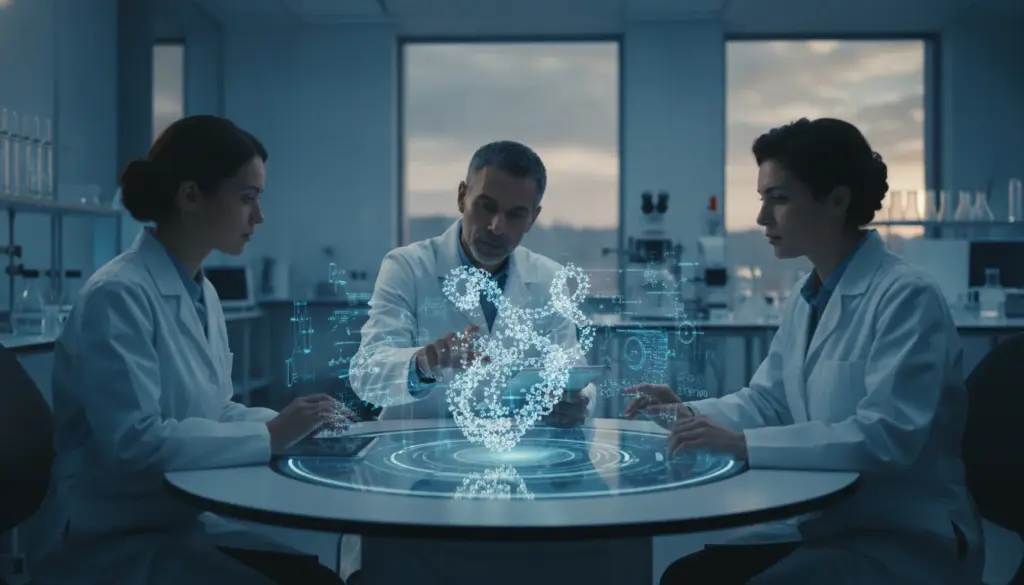
To break through this pharmacological deadlock, research teams are turning to computational biology. A prominent breakthrough comes from the Massachusetts Institute of Technology (MIT), where Professor James Collins and his team trained a specialized model to hunt for novel antimicrobial agents.
Instead of blindly testing random compounds, the system first absorbed a century’s worth of pharmacological data. It learned how known drugs are structured, how they dismantle microbes, which toxicity levels pose risks, and what different bacterial architectures look like at a molecular level. Armed with this foundational knowledge, the system identified specific geometric patterns that signal bacteria-killing potential.
This is where the sheer speed and scale of computational processing took over:
- The algorithm virtually screened approximately 45 million existing chemical structures to predict their lethal effects on pathogens.
- Promising candidates underwent slight digital modifications, prompting the system to recalculate their efficacy.
- This iterative process generated roughly 36 million entirely new synthetic variants that had never existed in a physical laboratory.
Only after this massive digital filtration did scientists move to the actual lab. They synthesized a selection of these digitally crafted molecules and exposed them to living bacteria. Remarkably, two distinct compounds effectively eradicated resistant strains, utilizing attack mechanisms entirely different from any current medication. Uncovering two serious contenders in a single run is considered a monumental industry breakthrough.
Strategic Partnerships Beyond Just New Pills
These advanced systems do much more than simply invent new chemical compounds; they help us maximize the resources we already possess. Tools like AlphaFold can accurately predict the three-dimensional structures of proteins, including those found in bacterial membranes. This capability allows researchers to pinpoint exactly where a drug should bind and reveals how pathogens use structural mutations to dodge treatments.
Furthermore, sophisticated AMR-AI (antimicrobial resistance-AI) models are emerging to forecast evolutionary trends. By analyzing massive datasets encompassing patient records, laboratory results, and genetic sequences, these tools can alert physicians when certain treatments are about to lose effectiveness.
For modern healthcare facilities, this translates into actionable, life-saving strategies:
- Quickly determining if a newly admitted infection is likely to be drug-resistant.
- Basing critical treatment decisions on real-time clinical data rather than outdated medical guidelines.
- Deploying shorter, highly targeted antibiotic courses that spare a patient’s beneficial microbiome.
- Detecting early warning signs of regional superbug outbreaks before they spread widely.
A Definitive Turning Point in Modern Medicine
Nobody in the scientific community expects algorithms to single-handedly cure the resistance crisis. Microorganisms will relentlessly continue to adapt, and every newly introduced drug will inevitably trigger another wave of natural selection. Without improved hospital hygiene, smarter prescribing habits, and strict curbs on agricultural antibiotic use, we are merely treating the symptoms.
However, this technological integration marks a definitive turning point. These systems can sift through massive chemical libraries in mere days—a feat that would take human researchers several decades. While experimental failures remain common, the sheer velocity of these digital trials ensures that the rare, groundbreaking successes surface much faster.
By blurring the lines between information technology and biology, scientists no longer need to rely strictly on intuition or luck. Hypotheses are now pre-screened by algorithms capable of detecting intricate molecular patterns that remain invisible to the human eye. This significantly boosts the odds that tomorrow’s therapies will be fiercely potent while carrying far fewer side effects.
Transforming the Future of Patient Care
For the average person walking into a clinic today, immediate changes might not be obvious, as most computationally designed molecules are still navigating the early phases of clinical research. Yet, we are rapidly moving toward a future defined by personalized, data-driven healthcare. Soon, an attending physician facing a severe infection could receive instantaneous, algorithmic advice that factors in the specific bacterial strain, regional resistance trends, and the patient’s complete medical history.
For strained global health networks, the greatest immediate benefit is the gift of time. Every month that an existing medication remains effective through optimized usage provides crucial breathing room to safely test and deploy next-generation remedies.
To truly grasp the stakes, it helps to understand the underlying biology. Resistance mechanisms dictate how bacteria defend themselves, whether by modifying their cell walls or chemically dismantling an attacking drug. A resistance gene is the specific snippet of DNA that codes this defense playbook, which can spread like wildfire through a bacterial population. Advanced models excel at mapping these exact genetic blueprints to real-world clinical outcomes.
When this deep genetic insight merges with practical clinical data—such as fever spikes, blood panels, and past infection history—it paints a remarkably comprehensive picture of how to successfully treat an individual. By merging human medical expertise with immense computational power, we are finally leveling the playing field in our high-stakes war against superbugs.