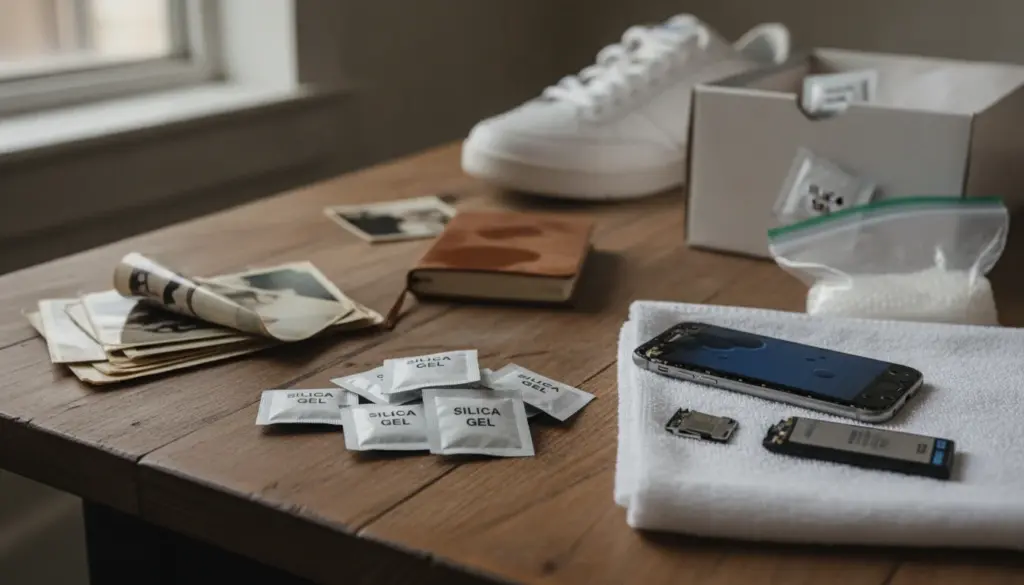
Most people toss those tiny white pouches found in new shoe boxes and gadget packaging straight into the trash. However, these little moisture absorbers are actually highly valuable tools to keep around the house. Rather than treating them as garbage, you can utilize these silica gel packets to shield your valuables—from waterlogged phones to irreplaceable family photographs—against destructive humidity.
The Science Behind Silica Gel and Moisture Control
Inside those little paper sachets are tiny granules made from a silicon-based compound. While they might look like perfectly smooth spheres to the naked eye, their microscopic structure is completely covered in tiny pores. These microscopic cavities act as powerful magnets for airborne water molecules.
This fascinating process is scientifically known as adsorption. Instead of soaking up liquid like a kitchen sponge, the moisture physically clings to the exterior surface of each granule. Because of this unique physical trait, a surprisingly small pouch can pull a vast amount of humidity out of an enclosed space.
In fact, silica gel can safely capture up to 40 percent of its own weight in water without crumbling or losing its solid shape. Manufacturers rely on this exact chemical behavior to prevent leather from molding, keep metals rust-free, and protect delicate electronics during global transit. The best part is that this moisture-trapping trick works just as effectively in your own living room cabinets.
A First-Aid Kit for Waterlogged Electronics
It only takes a split second of clumsiness for your phone to end up in a puddle, a sink, or the toilet. While the classic household advice is to bury the device in a bowl of uncooked rice, that method is actually far less effective than using silica gel.
Steps to rescue a soaked device
- Power the device down immediately and never plug it into a charger.
- Take out the protective case, SIM card, and any memory cards.
- Carefully pat the exterior completely dry using paper towels or a soft microfiber cloth.
- Place your wet smartphone inside a highly airtight plastic bag or sealable container.
- Pack the space with as many silica gel sachets as possible, ensuring the device is fully surrounded.
- Keep the container tightly sealed for 48 to 72 hours, resisting any urge to check on it early.
This exact emergency protocol works beautifully for dropped wireless earbuds, compact cameras, or handheld gaming consoles left out in the rain. Naturally, these beads cannot reverse existing electrical short circuits, but they significantly boost the odds of reviving your precious technology.
Preserving Cherished Memories and Delicate Metals
Humidity acts as a silent destroyer of important paperwork. Storing old diplomas, vintage photographs, or legal documents in cardboard boxes often leads to sticking pages, warped edges, and that unmistakable musty odor. Tucking a few silica gel packets into your storage folders will drastically slow down this deterioration process.
Excess moisture also wreaks havoc on fine silverware and jewelry collections. Silver tarnishes rapidly in damp conditions, while copper blends quickly develop an unsightly green or black crust. Slipping a discreet desiccant pouch into your cutlery drawer or jewelry box actively limits this oxidation, ultimately saving you from scrubbing with harsh chemical polishes.
In tightly closed cabinets and moving boxes, even one small pouch performs surprisingly well as a moisture buffer for your most fragile belongings.
How to Reactivate Saturated Silica Packets
Eventually, these porous beads will reach their maximum capacity and stop pulling humidity from the air. You will typically notice this after a packet has spent months sitting inside a sweaty gym bag or a damp basement storage bin.
Fortunately, you do not need to throw them away once they are full. Applying gentle heat forces the trapped water molecules to detach from the granules, effectively resetting them for future use.
Oven regeneration method
- Preheat your oven to a low temperature of roughly 80 degrees Celsius.
- Spread the packets evenly across a dry baking tray or oven dish, making sure they do not overlap.
- Bake them for approximately one hour to allow the trapped moisture to completely escape.
- Let the sachets cool down entirely before touching them or placing them back into storage.
Through this simple thermal process, the trapped water evaporates. Your dried-out packets are now ready to absorb almost as much humidity as they did on day one. By doing this, you can build an endlessly reusable supply over time without spending a single dime.
Smart Safety Practices for Household Use
While standard consumer-grade silica gel poses very little health risk under normal circumstances, it should never be treated as a toy or a snack. The bold warnings printed across the packaging are there for a valid reason.
- Store your unused packets securely in one designated spot, like a tightly sealed glass jar or tin.
- Keep them entirely out of reach of curious pets and toddlers to prevent accidental swallowing.
- Never tear the paper pouches open; the loose beads can easily bounce around and get into eyes or mouths.
- Understand their limits—use them strictly for small enclosed spaces, not for fixing a damp bedroom or a wet wall.
For major structural moisture issues such as peeling wallpaper, persistent wall mold, or flooded basements, you will always need proper ventilation, insulation repairs, or heavy-duty electric dehumidifiers. These little packets are strictly designed as micro-climate shields for individual items.
Building a Moisture-Fighting Habit
To truly maximize the benefits, stop scattering them randomly and start a collection habit whenever you unbox a new pair of boots, a purse, or an appliance. A basic glass jar with a screw-top lid kept on a specific closet shelf works wonderfully as a central storage bank.
From this central stash, you can strategically distribute them as needed. Toss a few near your camera lenses, slide one into a childhood memory box, keep a couple in the car, and pack a handful with electronics destined for long-term storage. Every few months, just gather the ones from your dampest spots, bake them dry in the oven, and return them to the jar.
Extra Applications and Desiccant Limits
Beyond the standard uses, these moisture absorbers shine in some rather surprising scenarios. Seasonal winter sweaters packed away during summer will smell remarkably fresher if you include a silica packet in the clothing bin. Infrequently used sporting gear, like ice skates or skis, will also benefit from a rust-preventing packet tucked nearby.
For serious hobbyists managing expansive audio gear or photography equipment, larger reusable silica cassettes are a fantastic upgrade. They operate on the exact same scientific principles as the disposable sachets but are constructed to be repeatedly baked and reused. Keeping a few inside a display cabinet of vintage vinyl records or expensive lenses stabilizes the air quality, preserving your valuable collections.
Nevertheless, silica gel has undeniable limitations. If your cellar physically pools with water or your windows are dripping with condensation, scattering a few packets around will accomplish absolutely nothing. Those situations require a structural approach: plugging leaks, increasing airflow, or running a powered dehumidifier. Silica gel only reaches its true potential inside restricted spaces like sealed boxes, closed cabinets, and zippered bags, where even a tiny amount of moisture can severely impact sensitive materials.
If you have always tossed those little white squares into the recycling bin or household trash, it is time to start setting them aside. In an era where we surround ourselves with expensive electronics, irreplaceable paper memories, and delicate fabrics, they serve as a brilliant, unexpected insurance policy against everyday moisture damage.