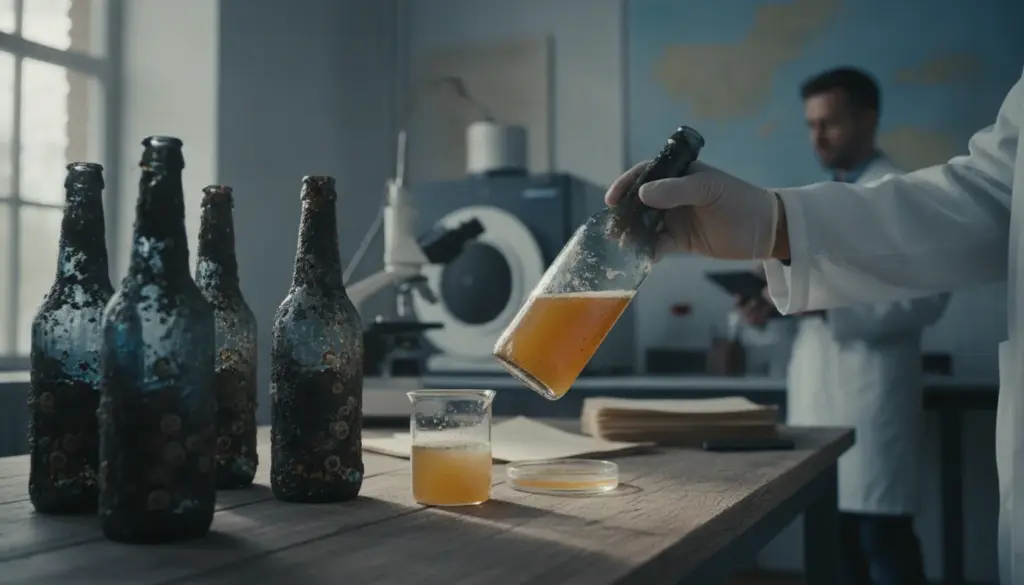
Discovering the Taste of a 19th-Century Brew
Have you ever caught yourself daydreaming about what a nearly two-century-old beverage might actually taste like? Rather than leaving it to our imaginations, experts recently tested the liquid trapped inside historical bottles salvaged from the dark ocean floor. Their meticulous chemical breakdowns revealed the truly distinct flavor notes of an authentic 19th-century brew.
Through this extraordinary underwater discovery, we finally understand how decades of aging in frigid seawater altered ingredients once considered the absolute height of luxury.
Surviving the Depths of the Sea
Divers recovered exactly two surviving beer bottles from the ruins of a sunken vessel off the coast of Finland’s Åland Islands. This incredible haul granted researchers an unprecedented opportunity to evaluate a beverage originally crafted in the 1840s.
Even though the glass containers rested in a harsh saltwater environment for well over a century, their liquid contents remained remarkably intact for rigorous laboratory scrutiny. Honestly, it is nothing short of a miracle that those antique corks maintained their seals well enough to lock in the historical chemical signatures.
A Forgotten Voyage of High-End Luxury
To this very day, maritime historians remain puzzled about the true identity of the doomed ship and the merchant who commissioned its precious cargo. That lingering historical blind spot wraps the entire narrative in a fascinating layer of mystery, captivating both nautical archaeologists and vintage recipe enthusiasts alike.
When the mysterious vessel went down over 170 years ago, its holds were packed tightly with premium goods meant to showcase supreme social status. Alongside the fascinating ales, salvage crews also discovered crates of vintage champagne. This high-end inventory strongly suggests the ill-fated shipment was destined for incredibly affluent buyers.
What Science Reveals About Antique Brewing
Expert Insight: When evaluating incredibly old spirits, speed is absolutely critical the moment a seal is broken. Introducing sudden oxygen to a liquid that has been dormant for 170 years will permanently destroy its delicate chemical makeup within mere minutes. To prevent this rapid degradation, specialists must always conduct their extractions inside strictly controlled chambers filled with inert gases.
Modern scientific analyses demonstrate that historical brewmasters utilized surprisingly sophisticated production techniques during the mid-19th century. While contemporary palates would certainly find the current state of this centuries-old ale unpleasantly sour and overwhelmingly cloudy, the surviving organic compounds are an absolute goldmine for historical research.
It is truly mind-bending to picture holding a tangible piece of liquid history that peacefully waited beneath the waves while the entire modern world evolved above it.