Experiencing that familiar disappointment of a moss-covered yard after winter is completely avoidable if you adopt a classic gardening ritual. Rather than holding off until your grass is entirely smothered, prepping the soil early in the year will drastically transform the health of your turf.
Why Moss Easily Defeats Your Grass in Spring
Following a damp winter season, the earth typically remains waterlogged and heavily compacted for extended periods. Heavy rain, frost, and snow compress the upper soil layer, making proper drainage nearly impossible. Unfortunately, this creates the exact habitat where invasive ground cover thrives.
Moss naturally flourishes in conditions featuring:
- Prolonged cold and heavily saturated earth
- Limited sunlight, particularly near fences or beneath tree canopies
- Highly acidic soil profiles lacking adequate calcium
- Heavily trafficked, flattened, and severely compacted ground
Under these circumstances, standard turfgrass immediately operates at a severe disadvantage. Root systems are starved of oxygen, forcing them to grow too close to the surface, which leads to rapid decline when weather patterns shift. Meanwhile, moss swiftly establishes a dense, spongy blanket that effectively suffocates delicate grass blades.
Cutting your lawn too low exacerbates the issue. Many homeowners practically scalp their yards, aiming for a perfectly manicured look. In reality, this significantly weakens the grass plants. Maintaining a cutting height of approximately two to two and a half inches gives the turf more resilience and leaves far less room for invasive growth. Keeping this height year-round drastically reduces the chances of an invasion compared to maintaining an ultra-short, cropped appearance.
The Classic Remedy: Iron Sulfate Followed by River Sand
Passed down through generations of avid gardeners, this traditional method involves a two-step process executed right at the tail end of winter. By utilizing a strategic combination of river sand and iron sulfate, you can tackle the problem from two distinct angles: directly weakening the existing growth while simultaneously making the ground highly unappealing for future flare-ups.
Step 1: Dehydrating Spores with Iron Sulfate
Lawn care enthusiasts have long relied on iron sulfate as a trusted ally. By dissolving this specialized powder into water and applying it via a pressure sprayer or watering can on a dry, overcast day, the solution coats the unwanted patches. Within a matter of days, the treated areas will darken considerably and begin to shrivel.
Crucial application tips for success:
- Perform this treatment during late winter or early spring while temperatures remain cool
- Opt for a dry, cloudy day to prevent the liquid from evaporating too rapidly
- Avoid walking across the freshly treated turf to minimize spreading
- Immediately rinse off any concrete or patio tiles to prevent permanent rust stains
Beyond simply drying out the unwanted patches, iron sulfate offers a distinct secondary benefit by promoting chlorophyll production within the grass itself. As a result, your yard will likely develop a rich, dark green hue and feel noticeably more robust. Once the affected areas turn dark brown or black after a few days, take a sturdy rake and gently pull the dead material out of the sod. This immediately introduces essential airflow back to the root systems. A targeted application just before spring actively prevents the issue from escalating, rather than waiting to fight a losing battle once the yard is overrun.
Step 2: Spreading River Sand for Superior Drainage
While many yard owners finish their maintenance after raking, the true secret behind this old-fashioned technique lies in the crucial second phase: distributing a very thin layer of river sand across the entire lawn.
It is best to use clean, sharp river sand, ideally blended with a small amount of rock dust or volcanic rock meal. Adding roughly 10 to 15 percent of this mineral powder to the sand is perfectly sufficient. You only need to apply a microscopic layer, merely a tenth of an inch thick, across the total surface area.
Though it seems minimal, the impact is substantial:
- Surface water drains much faster, preventing the topsoil from remaining soggy
- The overall soil structure becomes highly aerated, directly stimulating healthy root development
- Invasive species struggle to anchor themselves in this newly modified, well-draining environment
Using a stiff broom or the flat back of a garden rake, lightly sweep the sand so it settles nicely between the individual grass blades and integrates into the topsoil. After just a few spring showers, the sandy layer will virtually disappear from sight, yet the structural soil improvements will persist for months.
How to Maintain a Moss-Free Yard Long-Term
The real maintenance journey begins immediately following this late-winter ritual. Falling back into poor landscaping habits will simply invite the spongy green menace right back into your yard.
Mow Higher and Less Frequently
Aiming for a cutting height between two and two and a half inches remains an excellent benchmark for most residential lawns. Grass permitted to grow slightly longer naturally develops much deeper root systems and forms a denser canopy, leaving practically zero real estate for weeds to establish themselves.
Essential mowing best practices:
- Never remove more than one-third of the total grass blade length during a single session
- Prioritize mowing slightly higher and more frequently, rather than opting for rare, extreme cuts
- Always ensure your mower blades are razor-sharp to avoid tearing and fraying the grass tips
Scarifying and Aerating: A Workout for Your Soil
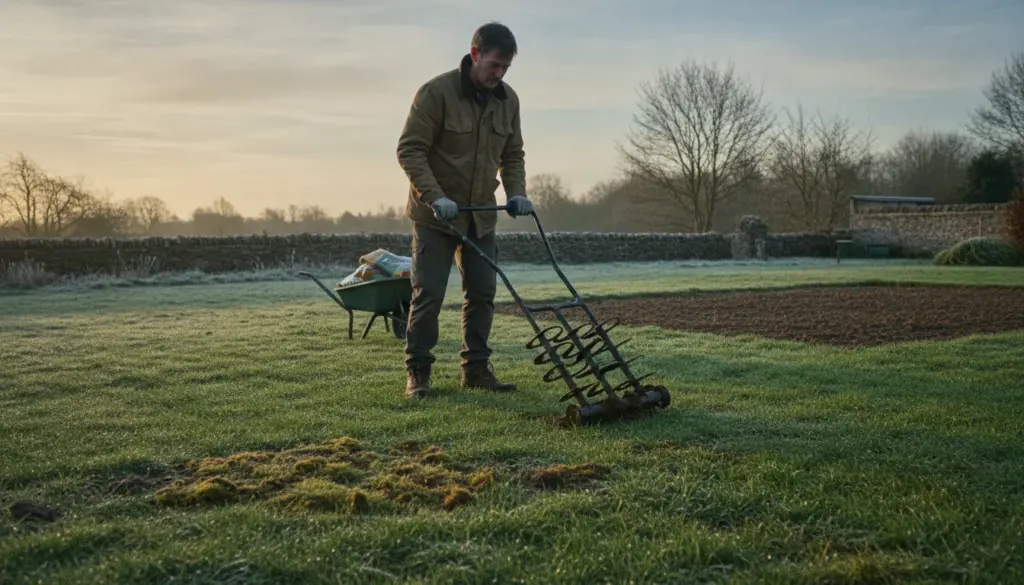
By actively scarifying or dethatching once or twice annually, you effectively strip away dead plant matter and accumulated thatch from the upper soil crust. This vital process opens the ground back up, with early spring and early autumn serving as optimal timing windows. Following this, utilizing a hollow tine aerator or spiking roller can deeply aerate the earth, which is especially critical in high-traffic zones.
Grass recovers remarkably fast the moment its root system receives adequate oxygen. Because unwanted growth prefers highly compacted, poorly ventilated ground, this basic aeration routine gives your turf a massive competitive advantage.
Nutrients, Soil pH, and Household Spot Treatments
While a vibrant lawn undeniably requires nutrients, excessive fertilization is unnecessary. Providing a modest dose of organic fertilizer during the spring months, perhaps followed by a very light summer feeding, keeps the turf exceptionally strong.
To combat localized soil acidification, some seasoned gardeners scatter trace amounts of untreated wood ash over highly susceptible spots. Wood ash provides essential minerals and acts as a mild liming agent, though it must be used very sparingly to prevent accidental over-fertilization.
For incredibly stubborn, isolated patches, a tiny dusting of baking soda can sometimes halt local spread. While this household trick certainly does not replace a comprehensive iron sulfate treatment, it serves as a handy tool for micro-managing small problem areas.
When to Consult a Landscaping Expert
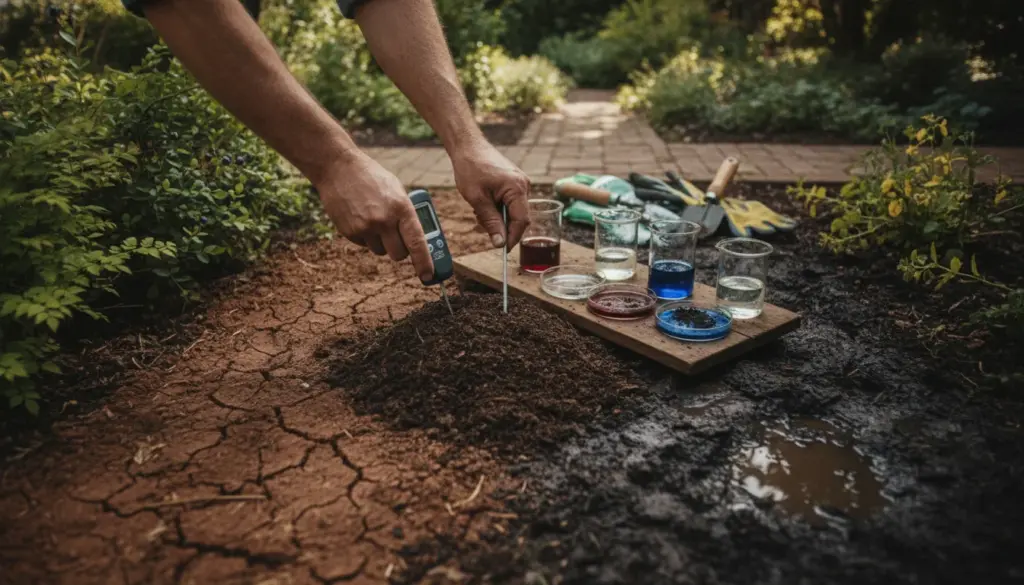
Every yard possesses a completely unique microclimate. If your property features extreme heavy clay soil or sits in permanent, dense shade, moisture-loving weeds will relentlessly attempt a comeback regardless of your meticulous efforts. Under these challenging conditions, bringing in a soil specialist or professional landscaper to accurately test organic matter levels and precise pH balances is highly recommended.
Armed with accurate diagnostic data, you can make informed decisions regarding targeted lime applications, extensive sand topdressing, or completely reseeding with highly shade-tolerant grass varieties. In severe cases, installing physical drainage solutions, such as gravel trenches along fences or subterranean perforated pipes, might be the only permanent fix.
Advanced Strategies for Long-Term Turf Resilience
Homeowners looking to absolutely guarantee a flawless yard often repeat the proven iron sulfate and river sand combination as summer transitions into autumn. This proactive measure suppresses any dormant spores well before the heavy seasonal rains arrive.
Incorporate these supplementary habits to fortify your turf:
- Place decorative stepping stones along heavy foot-traffic pathways to prevent chronic soil compaction
- Allow the grass to grow slightly taller and reduce mowing frequency during intense drought periods
- Water the yard deeply and infrequently, which is vastly superior to daily, shallow sprinklings
Anyone who implements this comprehensive strategy quickly discovers that their spring lawn looks significantly less like a damp sponge. By combining targeted chemical disruption, enhanced structural drainage, and disciplined mowing heights, you actively force the grass to establish dominance, resulting in a noticeably revitalized outdoor space.
Armed with just a few bags of sharp river sand, a standard bucket of iron sulfate, and a little strategic patience, elevating a mediocre yard to professional-grade standards is entirely achievable. Success relies not on complicated chemical schedules or ridiculously expensive machinery, but simply on providing the ground with the precise ecological push it needs at the exact right moment in the season.