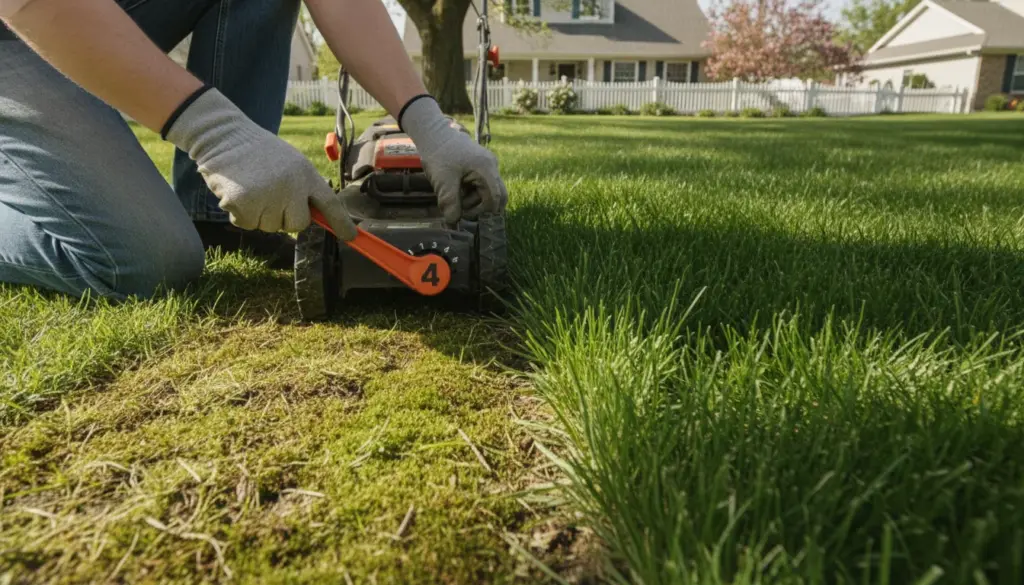
The Hidden Culprit Behind Mossy Lawns
Skip the pricey fertilizer packages. The real secret to a lush, vibrant yard lies in a surprisingly simple mechanical setting. It all comes down to where you position your lawnmower blade. Just a fraction of a centimeter off, and moss easily takes over while your healthy turf struggles to survive.
The Biology of Blade Height
Turf is not just an outdoor carpet; it is a living, breathing crop. Every single grass plant relies on its blades to capture sunlight, driving the photosynthesis process that stores energy and feeds the root system. Slicing those leaves too close to the ground completely exhausts the plant.
When left a bit taller, grass develops a much larger leaf surface area. This extra surface encourages the roots to plunge deeper into the earth. Deeper root systems unlock access to essential moisture and nutrients, acting as a natural defense mechanism against scorching heat and prolonged droughts.
Finding the Delicate Balance
Your mower settings dictate whether your yard flourishes or eventually surrenders to moss. Scalp the lawn, and the grass is forced to drain its internal reserves. Roots become shallow, while the exposed soil quickly overheats and dries out. Soon, the blades turn a sickly yellow, creating bare patches that act as a welcome mat for weeds and moss spores.
Conversely, letting the grass grow exceptionally tall all the time creates a suffocating thatch layer of dead organic matter and old clippings. This dense blanket traps moisture and blocks airflow. Ultimately, moss thrives perfectly in this damp, poorly ventilated environment.
Ideal Heights for Different Zones
There is no single universal cutting height for an entire property. Everything depends on location and foot traffic. Sun exposure, shade levels, and how you use the space all demand specific settings.
Sunny, Active Areas: 4 to 5 Centimeters
For a standard family yard that handles barbecues, running pets, and playtime, aiming for a height around 4 to 5 centimeters is usually your best bet. The turf stays neat and compact but retains enough foliage to remain robust.
- Under 3 cm: High risk of severe sun damage and dehydration.
- Around 4–5 cm: The perfect sweet spot between aesthetic appeal and plant durability.
- Over 6 cm in full sun: Increased chance of thatch buildup and moss during rainy weeks.
Shady and Damp Spots: 6 to 8 Centimeters
Grass growing under large trees or along north-facing brick walls struggles for sunlight. A taller blade helps capture whatever ambient light is available to store sufficient energy. Setting your deck between 6 and 8 centimeters works wonders in these darker zones.
These extra centimeters compensate for the lack of sun, prevent the topsoil from drying out rapidly, and naturally suppress moss. Chopping shade grass too short almost always guarantees a frail, yellowish patch that moss will quickly conquer.
Fine Ornamental Turf
High-end ornamental turf, featuring delicate grass species with minimal foot traffic, can tolerate shorter cuts. Heights hovering around 2 to 2.5 centimeters are sometimes used for those pristine, bowling-green aesthetic yards.
However, this demands intense professional-level maintenance: highly frequent mowing, precise feeding schedules, regular watering, and consistent aeration. For the average homeowner, sticking to the 4 to 5-centimeter range is a far more forgiving and practical choice.
The Golden Rule of One-Third
Landscaping professionals widely follow a crucial guideline: never remove more than one-third of the grass blade in a single session. If your yard has grown to 9 centimeters, do not chop it down to 3 centimeters immediately. Bring it down to 6 centimeters first, let it recover, and lower it again a few days later.
Sticking to this maximum one-third reduction prevents severe plant shock and drastically cuts down on moss outbreaks. Naturally, this requires mowing more often during the explosive spring growth phase. However, your reward is a deeply green yard with robust roots and zero bare patches.
Step-by-Step Mower Adjustment
Many homeowners leave their mower decks permanently slammed to the lowest setting out of pure habit. With a few clicks of the adjustment lever, you can easily reverse this damaging trend.
- Start high: Begin your post-winter season on the mower’s highest possible setting.
- Refresh gently: Complete your first one or two cuts at this maximum height to clear away winter debris without stressing the dormant roots.
- Lower gradually: Step down the deck height over several sessions until you hit that sweet spot (4–5 cm for sun, 6–8 cm for shade).
- Verify your work: Actually measure the remaining grass with a ruler after your first pass to confirm the setting is accurate.
- Stay dry: Only cut when the yard is fully dry to stop clippings from clumping and tearing the grass blades.
Taking a few moments to dial in your equipment saves endless hours of battling moss infestations later in the year.
Beyond the Blade: Extra Moss Prevention
Proper cutting heights do the heavy lifting, but moss removal is easiest when soil conditions are optimal. Moss absolutely loves dense, wet, and slightly acidic ground.
Aerating and Thatch Removal
Heavily walked-on lawns quickly develop a tightly compacted top layer. This hard crust traps water and suffocates delicate roots. Puncturing the ground with a garden fork or a specialized aeration roller allows crucial oxygen and moisture to sink deep into the earth.
If you have a thick thatch layer of old grass clippings, use a scarifying machine or rake to pull out the dead material. It might look a bit dramatic initially, but the turf bounces back beautifully if maintained at the correct height afterward.
Balancing Soil pH and Nutrients
Highly acidic soil acts as a moss incubator. Many residential properties benefit from occasional lime applications, particularly those situated on sandy soils. This gently shifts the acidity back to a level where turf naturally thrives.
Following up with targeted lawn food encourages thicker, denser growth. A tightly woven sward simply leaves zero physical space for weeds and moss to take root. Just be cautious with your measurements, as over-fertilizing triggers weak, floppy growth that is highly susceptible to disease.
Adapting to Your Unique Garden
A minimalist urban courtyard demands different maintenance choices than a sprawling suburban backyard. Yet, every healthy yard starts with that same foundational rule: cutting height.
If you manage a tiny, heavily shaded city garden, it is often best to just accept slightly longer grass. A taller, thicker mat looks infinitely better than a closely shaved, patchy dirt square.
For households with active kids and pets, never drop below the 4-centimeter mark in high-traffic zones. Taller grass physically cushions impacts better and recovers much faster from heavy weekend use.
If you rely on an automated robot mower, you are already at an advantage. These devices shave off tiny increments daily, which perfectly aligns with the one-third rule. Just double-check that the baseline height has not been programmed too low.
Weather Variations
When a prolonged heatwave hits, click your mower deck up a notch. Taller blades cast tiny shadows over the soil, slashing evaporation rates and keeping the yard from turning brown and dormant.
Alternatively, after weeks of relentless rain, moss quickly gains an edge. As soon as the weather breaks and the yard dries out, maintain your optimal height and consider a quick aeration session. Adapting your routine to the weather puts the brakes on moss before it ever takes over.
By tweaking your cutting deck based on the season and rigorously following the one-third rule, you will drastically reduce your reliance on harsh chemical moss killers. A simple mechanical adjustment builds the foundation for a resilient, vibrant lawn that feels incredible underfoot all year long.