
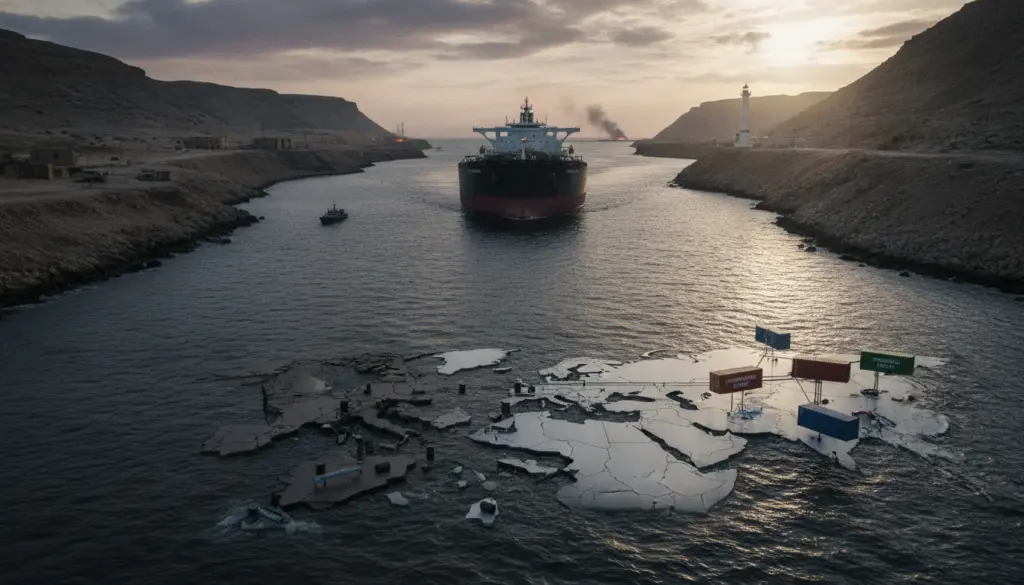
A Critical Bottleneck Strangling Global Energy
The ongoing Iranian blockade of the Strait of Hormuz is severely straining global oil and gas routes, yet the economic shockwaves are not rippling through Europe equally. While several nations are watching billions in vital energy imports from the Gulf states grind to a halt, others remain shielded thanks to highly diversified trade strategies. Recent supply chain data highlights exactly which economies are most exposed to a prolonged shutdown.
The Strait of Hormuz, a narrow maritime bottleneck between Iran and Oman, serves as one of the most critical energy corridors on Earth. A massive volume of the world’s crude oil and liquefied natural gas (LNG) originating from Qatar, the United Arab Emirates, and neighboring Gulf nations flows through this exact route.
Since the conflict escalated in late February, commercial shipping in the region has essentially frozen. The deployment of naval mines, coupled with relentless drone and missile strikes by Iranian forces, has terrified global shipping companies, forcing many to abandon the area entirely.
Supply chain experts are issuing stark warnings: if this severe disruption extends beyond a four-week window, the global logistical network will face catastrophic delays. A prolonged closure will inevitably trigger a domino effect, leading to breached delivery contracts, massive shipping detours, and aggressively volatile energy markets.
The Danger Zone: The UK, Italy, and Belgium
Recent analytical models reveal that the economic hazards within Europe are heavily concentrated. Each nation’s reliance on Gulf state exports varies drastically, leaving a select few highly vulnerable to the blockade.
The United Kingdom Takes the Heaviest Blow
Across the entire European landscape, the United Kingdom stands out as the most exposed. Trade analysts calculate an annual exposure of approximately $12.9 billion (around €11.2 billion) tied directly to goods from the impacted Gulf territories.
A staggering $5.9 billion (roughly €5.1 billion) of that total consists of Qatari gas products, with LNG taking center stage. British energy providers rely heavily on these massive, long-term contracts to satisfy domestic heating demands, particularly during the harsh winter months.
Italy’s Extreme Reliance on Qatari Gas
Within the eurozone, Italy faces the most brutal economic threat. According to recent trade data, the Mediterranean nation imports roughly $9.8 billion (about €8.5 billion) worth of products from the affected Gulf states every single year.
This massive import portfolio includes:
- Nearly $4.4 billion dedicated to Qatari LNG
- Roughly $3.2 billion allocated for propane
- Various other essential petrochemical imports
This dangerous combination threatens much more than just domestic heating and electrical grids. Italy’s robust chemical industry, which produces essential plastics and packaging materials, is directly in the crosshairs. Italian manufacturers will be forced to secure alternative resources rapidly, almost certainly at a premium price.
Belgium Faces Dual Threats: Gas and Diamonds
Belgium also finds itself in a highly precarious position. Through its advanced Zeebrugge terminal, the country operates as a crucial European distribution hub for Qatari liquid gas. Estimates suggest Belgium imports nearly $5.8 billion (around €5 billion) in LNG from Qatar annually.
Furthermore, the bustling Port of Antwerp is a global epicenter for diamond trading, relying heavily on shipments from the United Arab Emirates. As cargo flows from Abu Dhabi and Dubai stall, the high-value, fast-paced Antwerp diamond sector is taking an immediate and costly hit.
How Germany and France Protected Themselves
Conversely, Germany and France find themselves in a much safer position, largely because they proactively expanded their import networks over the past several years.
Germany currently brings in about $5.7 billion (around €4.9 billion) in goods from the impacted Gulf states, while France imports approximately $8.1 billion (roughly €7 billion). Although these figures appear substantial, they represent a much smaller fraction of their overall trade and energy portfolios compared to the UK or Italy.
For both of these nations, the United Arab Emirates remains a key trading partner, accounting for roughly $4.2 billion (about €3.6 billion) in imports. These shipments primarily consist of:
- Luxury yachts and commercial vessels
- Heavy machinery and industrial equipment
- Premium technical components
Qatar supplies Germany with merely $0.6 billion (€0.52 billion) in goods, mostly specialized gases and propane. While this creates a frustrating logistical hurdle for German factories, it is far from an economic disaster. The country can easily replace these missing resources with imports from Norway, the United States, or local LNG reserves, even if it requires paying slightly higher market rates.
Ultimately, casting a wider net for energy and trade drastically improves national resilience. Minimizing dependence on a single geopolitical chokepoint significantly lowers the risk of facing a sudden, crippling crisis.
International Outrage and Diplomatic Action
These looming economic threats are rapidly accelerating international diplomacy. A coalition including Germany, France, Italy, the Netherlands, the United Kingdom, and Japan has formally demanded that Iran immediately lift the maritime blockade. Their joint declaration highlights a “de facto closure” of the crucial strait, driven by severe military intimidation, active sea mines, and aerial bombardments.
These allied nations strongly condemn the aggressive tactics and have declared their readiness to actively defend commercial shipping lanes. They have openly discussed contributing to coordinated maritime operations designed to guarantee safe passage through the volatile waters, placing an international naval intervention firmly on the table.
Strategic Reserves and Market Stabilization
Interestingly, the joint statement completely avoids naming the United States or Israel, despite their earlier regional strikes contributing to the current Gulf escalation. Instead, the participating nations are strictly demanding an absolute halt to all attacks on civilian infrastructure, specifically targeting vital oil and gas facilities.
Relying on fundamental international law and the critical need for global economic stability, these countries fully support the coordinated release of strategic petroleum reserves. This aggressive market intervention is specifically designed to suppress skyrocketing prices and prevent immediate shortages across vulnerable sectors.
Global policymakers are also exploring additional stabilization tactics, such as negotiating temporary oil and gas production hikes with friendly energy producers located far outside the troubled Gulf region.
The Global Ripple Effect of a Regional Crisis
You don’t need a direct energy contract flowing through the Strait of Hormuz to feel the financial sting of this blockade. The sudden disruption is driving up global freight rates, spiking maritime insurance premiums, and causing chaos across international energy markets. Nations that barely import a single drop of Gulf oil will still be slapped with exorbitant energy bills and drastically inflated raw material costs.
For modern businesses, this bottleneck destroys delivery predictability. Strict, date-bound contracts are now in jeopardy, factory production schedules require massive overhauls, and warehouse inventory suddenly holds far more strategic value. Industries relying on precise, just-in-time logistics face the terrifying prospect of entirely paralyzed assembly lines.
Navigating the Crisis: Next Steps for Leaders
During intense geopolitical standoffs, European energy conglomerates and industrial giants immediately pivot to emergency scenarios. They actively hunt for alternative shipping routes across different oceans or secure resources from nations completely detached from the Strait of Hormuz. Sourcing LNG from the United States, importing Norwegian gas, or expanding Mediterranean supply lines are all prime examples of this strategy.
On a governmental level, leaders can temporarily slash fuel taxes, tap into emergency stockpiles, or offer financial guarantees to terrified shipping and insurance firms. These safety nets drastically reduce the chances of global trade freezing simply due to maritime risk aversion.
For the everyday consumer, this geopolitical clash will inevitably appear on monthly utility bills and at the local gas pump. While a portion of these price hikes stems directly from soaring oil and gas valuations, the rest trickles down through wildly expensive logistics and raw material scarcity. Ultimately, this inflates the cost of everyday consumer products and essential groceries.
This severe blockade serves as a glaring reminder of exactly how fragile our deeply interconnected global supply chains truly are when faced with geopolitical conflict at a single, narrow chokepoint. Nations that wisely diversified their trading partners and energy routes, like Germany, are weathering the storm far better than those tethered to a select few Gulf suppliers. For European leadership, this escalating crisis provides a brutal reality check regarding energy security, the necessity of robust strategic reserves, and the devastating true cost of over-reliance.