Rising from the Arctic Circle
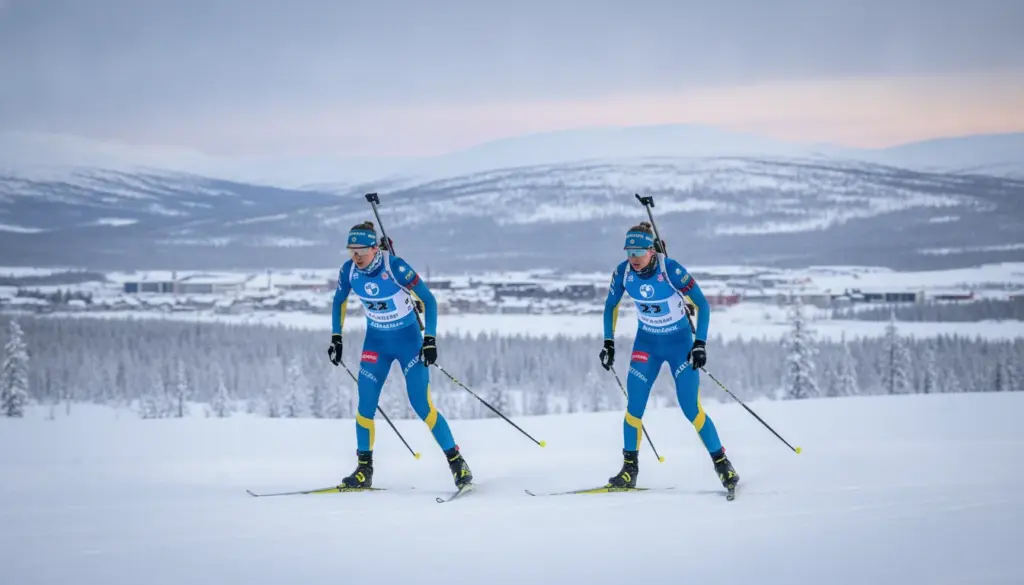
Coming from a tiny mining settlement located high above the Arctic Circle, two siblings transformed into global icons of their sport. But who exactly are these two remarkable athletes? For several years now, the Swedish duo has provided a virtually guaranteed medal presence at both World Championships and the Winter Games.
Emerging from the remote northern reaches of Kiruna, they skyrocketed straight to the pinnacle of international winter sports. Their shared journey highlights phenomenal natural ability, relentless training, fierce sibling rivalry, and a truly unique connection within one of the most grueling athletic disciplines imaginable.
From Kiruna to the Olympic Podium
The older sibling was welcomed into the world on November 2, 1995, in a city where endless winters and heavy snowfall dictate daily life. These natural conditions provided the perfect training grounds for cross-country skiing and marksmanship, which form the core pillars of the sport. Despite this background, almost nobody considered her a serious favorite heading into the 2018 PyeongChang Olympics.
Having never secured a World Cup podium finish before, she completely shocked the international field in South Korea. During the demanding 15-kilometer individual event, she combined flawless shooting with powerful strides on the snow. She captured a stunning gold medal, permanently altering her career trajectory in a single afternoon.
That initial triumph was far from a lucky break. At those same Winter Games, she played a crucial role in securing a silver medal for the Swedish women’s relay squad. Exactly four years down the line, she claimed another Olympic championship, definitively cementing her status among the absolute elite.
Building a Legendary Resume
Within just a few seasons, she evolved from a relatively unknown underdog to an undeniable favorite at every major tournament. Following her breakthrough in Asia, she steadily expanded her impressive list of achievements:
- Gold in the individual distance at the 2019 Östersund World Championships
- Several global titles throughout 2023, specifically in the individual and mass start events
- More than a dozen individual victories on the World Cup circuit
- Various small crystal globes recognizing her discipline-specific dominance
She is widely celebrated for her ice-cold composure on the shooting range. While her competitors frequently crumble under pressure, she consistently delivers perfectly steady series. That profound mental toughness serves as the undeniable foundation of her extensive trophy collection.
A Younger Sister Claims the Spotlight
Exactly four years later, on February 26, 1999, the younger sibling was born in that same snowy municipality. While she grew up watching her older sister climb the international ranks, she confidently decided to pursue the exact same athletic path. As a junior competitor, she quickly began racking up impressive finishes of her own.
By 2018, she had already swept three junior world titles, sending a clear message that Sweden was nurturing a second generational talent. Her official World Cup debut eventually took place in late 2019 on the tracks of Östersund.
During the 2021-2022 winter campaign, the younger sister truly found her footing at the senior level. She secured her initial individual World Cup victories and demonstrated her lethal closing speed with a phenomenal mass start performance in Annecy-Le Grand-Bornand.
Stepping Out of the Shadows in Beijing
The 2022 Beijing Games served as her ultimate introduction to the globe. She absolutely commanded the stage by securing:
- Relay gold alongside the Swedish national squad
- A silver medal in the fast-paced sprint competition
- Another silver during the high-stakes pursuit event
These phenomenal results allowed her to step firmly out of her older sibling’s shadow. She rapidly developed into one of the most explosive skiers on the entire circuit, utilizing her raw pace to compensate for any occasional inaccuracies with her rifle.
By 2025, she reached yet another massive career milestone. At the World Championships hosted in Lenzerheide, she captured her maiden senior global title in the mass start. This chaotic format, featuring simultaneous departures and immense psychological pressure, perfectly suited her highly aggressive racing tactics. This tremendous victory proved she isn’t merely the future of women’s competition, but a dominant force in the present.
Fueling Each Other to Greatness
Having two elite competitors in the same discipline naturally breeds intense friendly rivalry. The duo frequently battles for identical podium spots, lining up shoulder-to-shoulder and pushing each other to the absolute limit during those exhausting final laps. Interestingly, this dynamic usually works to their mutual advantage.
The most vivid illustrations of this teamwork happen during relay events. In Beijing, the siblings formed the foundational core of the victorious Swedish women’s team. That triumphant moment highlighted how seamlessly their individual strengths blend into a flawless collective effort.
Early in 2026, they experienced another deeply emotional shared celebration in Oberhof. The younger sister dominated the mass start to take the win, while the older sibling powered across the line in third place. The atmosphere around the track was purely familial: one household securing two podium positions, each executing a completely distinct race strategy.
Raised on the Snowy Trails
Both athletes fiercely protect their privacy and prefer to keep their personal lives tightly under wraps. However, it is no secret that they hail from a household completely devoted to winter athletics. Their hometown, characterized by dark polar nights and endless groomed trails, effectively functioned as an organic training academy.
Their parents spent countless hours standing beside freezing tracks and alpine resorts. Through various interviews, the siblings occasionally mention that while their family encouraged serious athletic dedication from a young age, pure enjoyment always remained the highest priority. This delicate balance of strict discipline and playful passion remains clearly visible in their modern racing styles.
The Grueling Mechanics of the Sport
Anyone looking at their spectacular results merely sees statistics and hardware. Hidden behind those numbers is a remarkably demanding physical and psychological endeavor. Competitors must rapidly alternate between sky-high heart rates on the snowy trails and moments of absolute, motionless tranquility while aiming their rifles.
Here is a brief breakdown of the primary competitive formats:
- Individual (15 km for women) – Features four shooting stages, where every missed target generally adds a full minute of penalty time.
- Sprint – A much shorter course with only two range visits, punishing mistakes with a penalty loop.
- Pursuit – Starting times and intervals are directly dictated by the previous sprint results.
- Mass start – Every qualifier begins simultaneously, creating massive tension during the final shots.
- Relay – A collective event where four teammates each complete a specific loop and two range sessions.
For elite contenders, absolute success depends entirely on discovering the perfect equilibrium. They must ski aggressively enough to challenge for medals, yet stay controlled enough to execute precise shots. A single microsecond of hesitation pulling the trigger can easily dictate the difference between a championship and finishing completely off the podium.
Managing Exhaustion and Future Expectations
Whenever major tournaments approach, fans and analysts immediately scrutinize the siblings’ current physical form. Can they genuinely sustain such an elite level throughout an entire grueling winter? With competitive calendars constantly expanding, the threat of physical exhaustion continues to grow.
Muscle fatigue is a constant danger, particularly for a highly explosive racer, whereas veteran athletes rely heavily on their vast experience to meticulously map out their performance peaks. They must constantly evaluate which World Cup stops to skip, how many high-altitude training camps to schedule, and when to intentionally rest. National programs utilize specialized sports psychologists and advanced data analysts to map out these individualized pathways.
Fortunately, the sisters share a distinct tactical advantage: they instinctively recognize each other’s physical warning signs, frequently noticing when the other is pushing their body slightly too far before anyone else does.
For aspiring young athletes watching them, their ongoing journey provides several valuable takeaways. Growing up in a winter-friendly environment certainly helps, but it hardly guarantees lasting success. True greatness requires unwavering perseverance, consistent long-term coaching, and the grace to weather disappointing seasons. How an athlete navigates those inevitable dark patches reveals far more about their character than a single, unexpected golden afternoon.
One thing remains absolutely certain: as long as these two remain active, the Swedish squad will instantly be considered a heavy favorite in any major international relay. And whenever they line up individually, the entire athletic community instinctively searches for two specific names on the starting board.