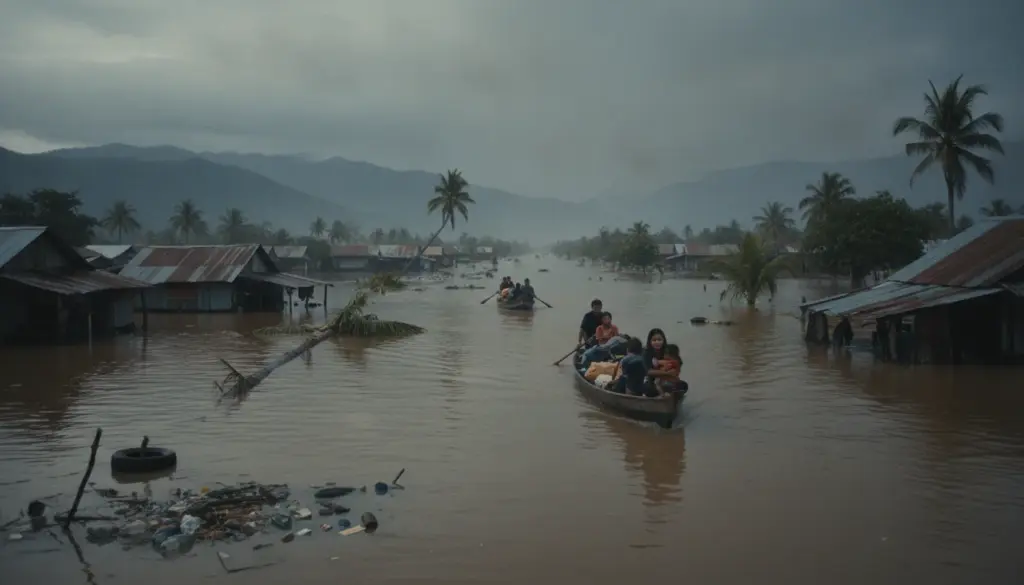
Global temperatures are steadily climbing, yet the resulting downpours won’t impact our planet equally. Fresh climate projections reveal exactly which regions will eventually drown under suffocating precipitation. While certain areas across Europe might dodge the most dramatic weather shifts, different parts of the globe are hurtling toward dangerously soggy, virtually uninhabitable environments by the turn of the next century. The widening chasm between severe droughts and relentless floods is pushing entire communities to the brink.
More Heat Means More Moisture: The Science of Extreme Rain
Climatologists universally agree on a fundamental meteorological rule: a hotter atmosphere inherently holds a larger volume of water vapor. For every single degree our planet warms, airborne moisture capacity surges by roughly seven percent. While that figure might sound insignificant, it delivers a massive payload of extra liquid during thunderstorms.
Whenever highly unstable weather patterns cause warm, muggy air to rise rapidly, this surplus moisture suddenly releases. Consequently, we experience:
- Incredibly intense, albeit brief, torrential downpours
- A significantly elevated danger of sudden flash floods
- Devastating urban destruction, especially where drainage is poor
- Severe disruptions to farming systems and vital infrastructure
We aren’t simply looking at an increase in everyday drizzle. Instead, the absolute extremes—those truly monstrous storms—are growing far more aggressive and frequent.
By merging multiple advanced climate simulations, experts can pinpoint exactly where these weather anomalies will intensify the fastest. The resulting picture is genuinely alarming. Specific nations will endure severe storms with such relentless frequency that massive swathes of land could eventually become overwhelmingly difficult to inhabit.
Regional Divides: Which Areas Will Suffer the Most?
Recent analytical data relies on five distinct climate frameworks to calculate heavy precipitation frequencies, comparing current rates to expected patterns around 2100 under various global warming scenarios. Mapped out, the projections shift from calming blues, indicating minimal changes, to blazing reds that signal surging hazards.
Europe: Escaping the Worst, Yet Facing Local Hotspots
The forecast for the European continent presents a highly fractured reality. Across numerous territories, the overall annual volume of precipitation won’t fluctuate drastically. Instead, the most severe transformations will manifest in storm intensity and seasonal timing.
Vast stretches of Western and Northern Europe, alongside a significant portion of France, fall into categories projecting only mild bumps in extreme rainfall. However, notable danger zones exist:
- The southeastern French Mediterranean coastline
- Specific sectors across Italy and the Balkan Peninsula
- The Alpine region, where towering peaks naturally funnel and trap rain
Throughout these specific environments, blistering heatwaves and violent thunderstorms will increasingly collide. Infamous Mediterranean hurricanes—often dubbed “medicanes”—and stalled storm fronts possess the frightening potential to unleash a whole month’s worth of rainfall in just a few terrifying hours. While the broader European risk remains somewhat manageable, surviving along the Mediterranean coast might soon depend on weathering a single, catastrophic 24-hour deluge.
North America and Alaska: Rapid Atmospheric Shifts
Looking further north, regions like Alaska serve as prime examples of hyper-accelerated climate shifts. High-latitude zones are currently heating up much faster than the global average. The combination of vanishing sea ice and unusually warm ocean currents thoroughly disrupts traditional wind patterns, aggressively driving heavy precipitation into vulnerable communities.
Meanwhile, massive expanses of North America will increasingly battle sudden inundations triggered by “atmospheric rivers.” These narrow, sky-high corridors transport mind-boggling quantities of water vapor. Wherever these airborne currents finally make landfall, rapid flooding instantly follows, particularly battering coastal communities and mountainous terrains.
When Regions Slip Toward Uninhabitability
Labeling a territory as “uninhabitable” might initially sound apocalyptic, but in this context, it strictly refers to the basic, practical mechanics of society breaking down. A community becomes functionally paralyzed when:
- Vital bridges, railways, and road networks suffer constant, repetitive destruction
- Secure housing transforms into an unaffordable luxury due to escalating building codes
- Crop yields turn completely unpredictable following severe soil erosion and flooding
- Insurance premiums skyrocket to astronomical levels or vanish entirely
Densely populated shorelines, low-lying river basins, and tropical deltas are particularly susceptible to this perfect storm of vulnerabilities. Rapidly expanding Asian megacities and flat island nations stand right on the front lines. Ultimately, recurring floods can exhaust a region’s resources just as thoroughly as endless droughts, especially where civil engineering remains subpar.
The Root Causes of Unequal Vulnerability
Two neighboring countries might experience the exact same surge in extreme weather, yet face radically different aftermaths. A nation’s ultimate resilience heavily depends on several critical societal pillars.
Urban planning plays a massive role; endless seas of asphalt and concrete guarantee immediate surface flooding by preventing natural drainage. Conversely, robust water management strategies—featuring strategically placed levees, retention basins, and spongy green spaces—can significantly absorb peak flows. Furthermore, advanced early warning systems utilizing radar and mobile alerts grant residents precious minutes to seek safety.
Socioeconomic factors carry equal weight. Impoverished neighborhoods inevitably sit in the lowest, most flood-prone geographical pockets. Additionally, the sheer speed at which financial relief and insurance payouts reach victims dictates how swiftly a town recovers. Predictive models highlight an absolute explosion of danger in rapidly urbanizing tropical zones where population growth outpaces the construction of modern, resilient sewer systems.
The Tangible Impact on Daily Life
For individuals residing in these increasingly soaked territories, everyday routines will gradually deteriorate. Neighborhood streets will submerge more frequently, residential basements will rot from repeated water damage, and local businesses will endure weeks of forced closures following every major squall. These relentless disruptions compound over time.
As flooding becomes routine, financial institutions will scrutinize mortgage applications in vulnerable zip codes with extreme prejudice. Insurance providers will inevitably hike their rates or mandate rigorous structural upgrades for any new construction. Consequently, those lacking sufficient financial buffers will find themselves trapped in depreciating, high-risk properties.
Over the coming decades, this dynamic is poised to trigger a silent, gradual migration. Wealthier households will quietly relocate to elevated, arid ground, leaving the most economically disadvantaged populations stranded in the most perilous environments.
Fortifying Societies Against the Coming Deluge
Fortunately, facing heavier rainfall doesn’t automatically mean a region is doomed. Smart, proactive governance and clever engineering adaptations can prevent unfathomable amounts of destruction.
Restoring natural wetlands offers a brilliant ecological mechanism for temporarily hoarding excess water. Modernizing urban landscapes to include expansive parks, living green roofs, and absorbent water plazas dramatically slows runoff. In recognized flood zones, elevating homes on sturdy pilings or raising ground-level floors provides immediate residential protection. Upgrading subterranean drainage networks with vastly larger pipes, combined with hyper-local smartphone weather alerts, adds crucial layers of defense. Ultimately, every single dollar invested in preventative infrastructure today will save a fortune in disaster recovery tomorrow.
The agricultural sector must also pivot. Forward-thinking farmers are already switching to resilient crop varieties capable of surviving temporary submersion. By redesigning drainage ditches, constructing controlled storage basins, and artificially contouring flat fields, agricultural workers can prevent surface water from stagnating and destroying entire harvests.
Navigating an Era of Unpredictable Weather
Current meteorological projections paint a stark picture of our trajectory if global emissions remain unchecked. Conversely, aggressively curbing greenhouse gases noticeably flattens the curve of severe storms. Limiting global temperature spikes doesn’t just keep the air cooler; it directly starves the atmosphere of the excess moisture that fuels catastrophic rain.
Nevertheless, even under highly optimistic, moderate warming scenarios, precipitation will grow increasingly erratic. This unpredictable nature demands dual-purpose legislation that simultaneously addresses both paralyzing droughts and devastating flash floods. A localized river system suffering from chronic water shortages could easily transform into a raging, levee-crushing torrent overnight.
While academic terms like “retention basins” and “hundred-year storms” can feel detached from reality, the core issue for everyday citizens is highly personal. People simply want to know if their living rooms will stay dry, if their daily commute is secure, and whether they will retain access to essential utilities and healthcare during a crisis.
For civic planners and corporate developers, the ultimate takeaway is crystal clear: relying on historical weather data to draft tomorrow’s blueprints is a recipe for disaster. The railway lines, power grids, and housing developments being greenlit today must endure whatever the skies unleash in 2100. Embracing a wetter, wildly unpredictable climate isn’t some luxurious afterthought—it is the absolute baseline of modern survival logic.