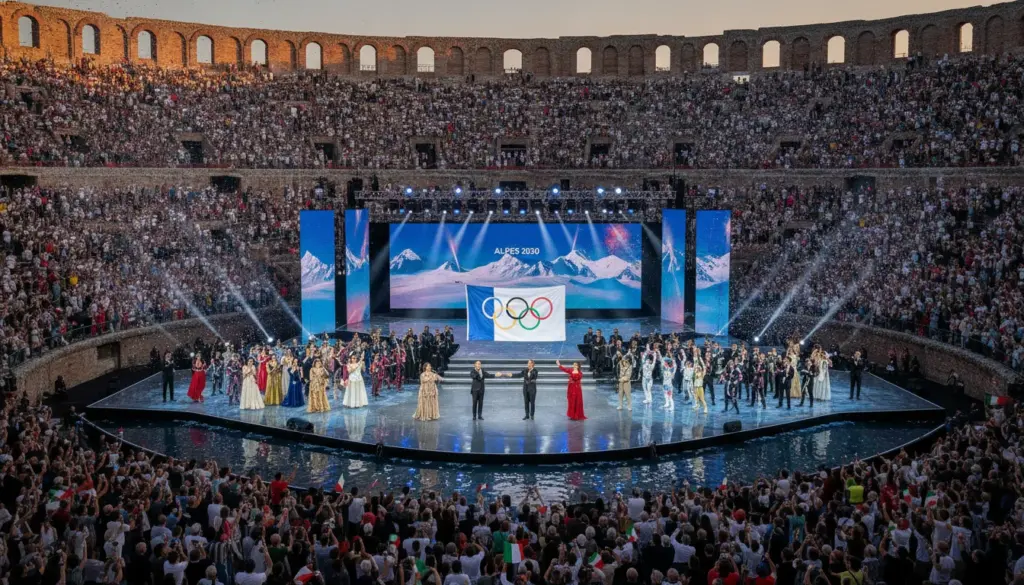
A Grand Finale in Verona: Opera, Water, and One Last Ovation
Inside a breathtakingly packed Roman amphitheater, Italy officially said goodbye to the 2026 Winter Games while the French Alps confidently stepped into the spotlight as the next host. The historic Verona Arena hosted an unforgettable closing ceremony that blended grand opera, stunning light displays, and energetic pop performances. The absolute pinnacle of the evening arrived when the Olympic flag was officially handed over to France, setting the stage for the 2030 Winter Games.
Following two intense weeks of top-tier winter sports across Milan and Cortina, the massive event came to a peaceful halt in a setting that felt almost magical. Usually reserved for warm summer opera nights, the ancient Verona Arena provided a meticulously crafted backdrop for bidding farewell to the athletes. Organizers deliberately created a beautiful tribute to Italian heritage, seamlessly weaving together famous arias, theatrical stage designs, and subtle nods to masterpieces like Rigoletto.
Water emerged as a powerful, recurring visual theme throughout the spectacle. Through massive digital projections and breathtaking acrobatics, performers illustrated the natural cycle of snow, ice, and meltwater, perfectly honoring the mountainous environments where the athletes competed just days prior.
This spectacular closing ceremony highlighted the dual nature of the Games: showcasing raw, unscripted emotion in the stands alongside a perfectly executed theatrical performance on stage. While the crowd soaked in the mesmerizing choreography, the athletes flooded the arena floor in a much more relaxed state. Intense competitive rivalries melted away, replaced by the relatable modern ritual of taking selfies, waving national flags, and posing for joyful group photos.
Passing the Olympic Flag: The French Alps Prepare for 2030
The evening’s most pivotal transition occurred when the iconic Olympic flag officially changed hands. Following a brief protocol involving the mayors of Milan and Cortina alongside IOC executive Kirsty Coventry, the symbolic banner was passed directly to French leadership. Renaud Muselier, president of the Provence-Alpes-Côte d’Azur region, and Fabrice Pannekoucke, president of the Auvergne-Rhône-Alpes region, proudly accepted the honor.
This profound gesture officially marks the beginning of the road to the 2030 Winter Games in the French Alps. These upcoming events will be spread across several legendary winter sports hubs, specifically utilizing majestic locations in Savoie and the Southern Alps. Almost immediately following the ceremony, the flag travels to Albertville, the historic host of the 1992 Winter Games, where a 1,400-day countdown to the opening ceremony officially begins.
A Glimpse into 2030: Showcasing the French Mountains
Right after the flag transition, both the live audience in Verona and millions watching at home were treated to a comprehensive teaser video of what to expect in four years. Sweeping cinematic shots revealed snow-capped mountain ridges, modern athletic facilities, and world-renowned ski resorts. The visual presentation heavily emphasized three core pillars:
- Uncompromising sustainability focused entirely on repurposing existing winter infrastructure.
- Seamless mountain accessibility utilizing expansive train networks and reliable public transit.
- A vibrant cultural blend of elite sports, regional heritage, and responsible tourism.
With this future edition, France aims to prove that hosting massive winter sports spectacles requires far fewer brand-new construction projects. By strategically upgrading existing ski slopes, ice rinks, and bobsleigh tracks, organizers plan to deliver a world-class experience without building controversial new venues from scratch.
French Athletes Shine: Celebrating 23 Medals and a Golden Send-off
For the French delegation, this final evening felt like an incredible double celebration. Sportingly, France wrapped up their 2026 Winter Games campaign with an impressive 23 medals, including eight prestigious golds. Biathlete Lou Jeanmonnot and track athlete Mathis Desloges shared the distinct honor of carrying the French flag as the athletes paraded into the Verona venue.
Marching to a specialized, uplifting rendition of the French national anthem, the victorious squad entered the arena together. Prominent names like Jeanmonnot, figure skater Guillaume Cizeron, ice dancer Laurence Fournier Beaudry, freestyle skier Emily Harrop, and ski mountaineer Thibault Anselmet were prominently celebrated on the stadium’s massive digital screens.
Armed with 23 podium finishes and a starring role in the closing ceremony, France clearly positioned itself as a highly ambitious upcoming host. The athletes took center stage during a dedicated segment that beautifully blended their recent sporting triumphs with breathtaking footage from the Alps. The underlying message was unmistakable: this talented squad is heading home to compete on their own snow, ready to inspire a brand-new generation of local talent.
Official Closing Protocol: Praising Italy, Inviting the World
During the formal portion of the broadcast, International Olympic Committee executive Kirsty Coventry and organizing committee head Giovanni Malagò addressed the global audience. Both leaders highly praised the Italian hosts for brilliantly combining historic cultural venues, spectacular mountain panoramas, and an incredibly competitive field of athletes.
Coventry specifically spoke directly to the competitors and countless volunteers, commending their relentless dedication and exceptional sportsmanship. She then delivered the traditional, time-honored declaration that officially brings the Winter Games to a close. Without missing a beat, she warmly invited the youth of the world to gather in the French Alps four years from now for the 26th edition of the global event.
Extinguishing the Flame and Igniting the Afterparty
Set to the hauntingly beautiful melodies of composer Ludovico Einaudi, performed live by pianist Gloria Campaner, the Olympic flames in Milan and Cortina slowly faded into the night. Broadcast cameras captured the very last flicker of the fire, a deeply poignant visual that always symbolizes the definitive end of the global gathering.
Once the solemn protocols concluded, a remarkably vibrant party atmosphere instantly took over the Verona Arena. For the massive international crowd, the final hours shifted into a much louder, informal celebration. Global DJ powerhouse Major Lazer commanded the stage, dropping a string of massive international hits.
Their iconic track “Lean On,” which has become an undeniable staple at major sporting events, had athletes and volunteers jumping joyously in the historic stands. Live feeds captured competitors from wildly different nations draping flags over their shoulders and dancing together in pure celebration.
The very final musical note belonged to Achille Lauro, a celebrated artist native to Verona. Performing his popular hit “Incoscienti Giovani,” he provided the grand ceremony with one last, authentic local touch. Italian fans deeply appreciated this recognizable moment, while global viewers experienced a host nation proudly showcasing its unique cultural flair until the very last second.
What Lies Ahead for France on the Road to 2030
With the official flag safely in French hands, all organizational focus now permanently shifts to the Alps. The upcoming years will require making incredibly concrete decisions regarding which mountain valleys will host specific disciplines. Organizers must determine exactly how much existing infrastructure can be successfully renovated, all while keeping the event highly attractive despite the looming threats of milder winters and ongoing climate concerns.
France is paying very close attention to the logistical lessons learned during the 2026 events. They are prioritizing highly compact competition zones, maximizing the use of legacy sports venues, and relying heavily on robust public transportation between host cities and remote ski areas. Finding a sustainable balance between elite winter sports and everyday tourism will be absolutely crucial to their long-term success.
For dedicated winter sports enthusiasts, this upcoming four-year stretch promises to be incredibly fascinating. Fans can eagerly anticipate a series of upcoming test events across French resorts, with major World Cup competitions serving as essential dress rehearsals. Anyone planning to experience the Alpine games in person should closely monitor ongoing developments regarding high-speed transit connections and local accommodation policies.
Meanwhile, elite competitors and national sports federations will begin intensely studying the distinct characteristics of French snow and ice. Competing at relatively high altitudes, navigating rapidly changing weather conditions, and managing bustling tourist seasons will require highly specialized preparation. Whichever national team manages to master these specific local Alpine conditions first could easily emerge as the dominant force when the Winter Games return in 2030.