A New Era in Decoding Animal Communication
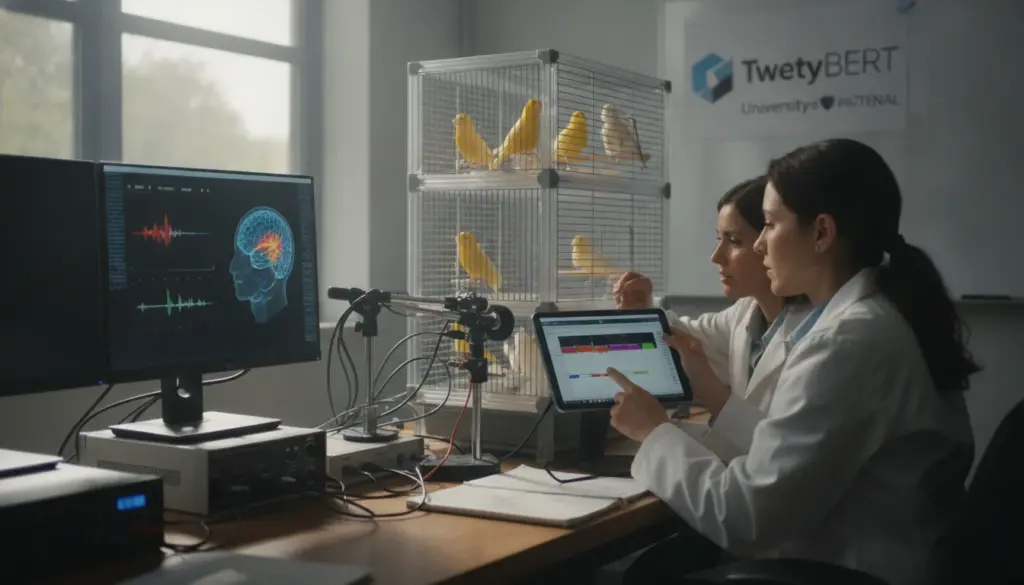
Researchers from the University of Oregon have introduced TweetyBERT, an innovative machine learning model designed to automatically categorize and segment the vocalizations of canaries. This technological leap offers a robust foundation for neurobiology, allowing scientists to investigate how the brain manages language production and continuous learning. Detailed findings regarding this system recently appeared in the scientific journal Patterns.
Overcoming the Manual Labeling Bottleneck
In the past, analyzing animal sounds required researchers to painstakingly annotate training data by hand. This grueling, time-consuming task created massive bottlenecks in bioacoustics research. Fortunately, the newly developed system eliminates this frustrating hurdle entirely.
According to Tim Gardner, an associate professor of bioengineering at the University of Oregon’s Knight Campus, the solution lies in a self-supervised neural network. Instead of relying on human input, the model rapidly ingests raw, unlabeled avian audio files. From there, it effortlessly identifies distinct communication units and maps out intricate sound sequences all on its own.
Why Songbirds Hold the Key to Speech
For decades, neurobiologists have looked to songbirds to better understand complex neurological behaviors. Canaries are particularly fascinating because they possess the rare ability to memorize and master complex melodies throughout their entire lifespan. Studying these creatures yields remarkable insights into how neural pathways support learned vocal habits.
George Vengrovski, a doctoral candidate working within Gardner’s lab, spearheaded the creation of this specific tool to map canary melodies automatically. Because a typical canary song contains a sequence of 30 to 40 unique syllables, analyzing these patterns could fundamentally shift our understanding of how the human brain generates speech.
Adapting Advanced Language Models for Acoustics
The architecture powering this tool borrows heavily from BERT, the foundational language model that paved the way for modern text-based systems like ChatGPT. However, scientists meticulously recalibrated the framework to process the unique acoustic properties of avian singing rather than written words.
Operating as a self-supervised transformer network, the software trains by predicting deliberately hidden audio segments. It achieves this without any manual guidance, organically learning to identify phrases, individual notes, and syllables. Impressively, the machine matches the accuracy of highly experienced human researchers.
By rapidly categorizing these songs, tracking vocal shifts over time, and spotting subtle differences between individual birds, the technology gives neurobiologists a powerful lens into language acquisition.
Tracking Wild Flocks and Environmental Stress
The implications of this breakthrough stretch far beyond traditional brain research. With minor adjustments, scientists plan to deploy the software to monitor wild bird populations in their natural habitats. Shifting vocal patterns can reveal exactly how wildlife responds to various external pressures.
- Human infrastructure expansion and urban development.
- Shifting weather patterns and climate change impacts.
- Rising levels of anthropogenic noise pollution.
- General ecological stress within their native territories.
Gardner emphasizes that while the initial focus remained on canaries, the underlying framework is remarkably versatile. Thousands of bird species currently lack proper vocal monitoring, and this adaptable technology could easily bridge that massive research gap.
Expanding to Marine Life and Beyond
The core mechanisms driving this software are already finding applications in the study of majestic marine mammals, including whales and dolphins. This rapid expansion strongly suggests that similar analytical models will soon decode a wide variety of animal communications across the globe.
Ultimately, these advancements promise to deepen our grasp of how different species share vital information. As scientists continue to untangle the evolution of animal dialects, we move one step closer to understanding how the brain interprets complex acoustic signals.