The foundation of a rustic Italian masterpiece
Too many home cooks end up with a watery, pale, or underwhelming chicken stew despite using quality ingredients. By mastering a slow-simmered vegetable base—known as soffritto—and following the precise cooking sequence, you can transform an ordinary weeknight dinner into a meal rivaling a traditional Italian trattoria. The deep, rich aroma that fills your kitchen as this dish gently bubbles is enough to make anyone instantly hungry.
Creating this magic isn’t just about inheriting a secret family recipe. It relies on a few fundamental culinary techniques that make a massive difference.
Three pillars of robust flavor
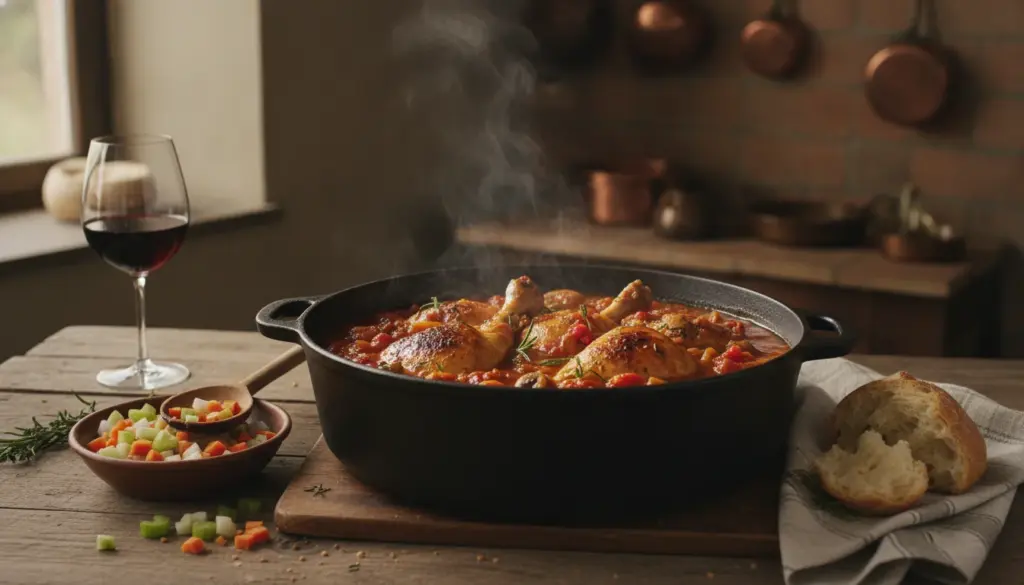
Chicken cacciatore is essentially a rustic hunter’s stew featuring deeply seared meat braised in a robust blend of vegetables, wine, and tomatoes. Its signature character is built on three crucial factors:
- Achieving the Maillard reaction through aggressive pan-searing of the skin.
- Patience during the long, gentle cooking of the soffritto.
- Proper liquid reduction to intensely concentrate the flavors.
Rushing the process is the most common pitfall, leading to flabby skin, harsh alcohol notes, and a thin sauce. This method ensures you bypass those errors for flawless results every single time.
Selecting your ingredients
Keep your grocery list simple, but choose your components carefully. To serve four people, you will need:
- 1 free-range chicken (about 1.2–1.4 kg), broken down into parts (thighs, drumsticks, wings, and halved breasts).
- 1 medium carrot, 1 celery stalk, and 1 yellow onion.
- 1 garlic clove, a sprig of fresh rosemary, 1-2 bay leaves, and a few sage leaves.
- 150 ml dry red wine (Sangiovese or Montepulciano work beautifully).
- 300–350 g crushed tomatoes or a high-quality thick puree.
- 8–10 black olives (highly recommended, though optional).
- 1 tablespoon tomato paste (a fantastic trick for building savory depth).
- Extra virgin olive oil, kosher salt, and freshly cracked black pepper.
Opting for a high-quality, pasture-raised bird means the meat can handle extended braising without turning stringy or dry.
The crucial temperature trick
Before you even turn on the stove, always let your poultry sit at room temperature for at least 30 minutes. Taking the chill off ensures the meat sears evenly and prevents the pan’s temperature from dropping rapidly. This straightforward step is absolutely essential for developing a delightfully crispy, golden crust.
The magic of a slow soffritto
Many home cooks toss their raw vegetables and poultry into the pot simultaneously. In professional kitchens, we know this is a massive missed opportunity for flavor development. The true magic happens when you treat your aromatic base as an entirely separate, dedicated phase.
Finely dice your onion, celery, and carrot. Heat a glug of olive oil in a heavy-bottomed Dutch oven or cast-iron pot, then add the diced vegetables along with a pinch of salt. Sweat them over very low heat for 12 to 15 minutes, stirring frequently.
You want them yielding, glossy, and tinged with a golden-amber hue, but never scorched. Once your base reaches this sweet spot, toss in the smashed garlic and your herbs (tied together with butcher’s twine). Sauté for two more minutes to build a powerful flavor enhancer that acts as the savory foundation for the entire meal.
Searing for color and texture
Your next critical maneuver is browning the bird in a completely separate skillet. Dropping raw poultry directly into a simmering sauce yields boiled, uninspiring meat rather than a rich braise. Thoroughly pat every piece dry with paper towels before seasoning generously with salt and pepper.
Get some olive oil shimmering hot in a wide pan and sear the pieces in batches to avoid overcrowding. You are looking for a vigorous sizzle and a deeply caramelized, golden-brown exterior on all sides. This crust locks in the natural juices and imparts a distinctive roasted complexity. Only after achieving this crust should the meat join the waiting aromatics.
Balancing wine and tomatoes
Once the golden pieces are nestled in the Dutch oven with your soffritto, crank up the heat and pour in the red wine. Let it bubble away uncovered until the harsh smell of alcohol dissipates and the liquid volume drops by half.
Now, stir in your crushed tomatoes along with the tomato paste (thinned out with two tablespoons of warm water). If your canned tomatoes lean toward the acidic side, a tiny pinch of sugar balances things out, though a prolonged simmer naturally sweetens the pot. The sauce should ideally come halfway up the sides of the chicken rather than submerging it entirely, allowing the liquid to beautifully thicken.
The art of the slow braise
From this point forward, patience is your best friend. Drop the burner to its lowest setting, partially cover the pot with a lid slightly ajar, and maintain a lazy simmer for 40 to 50 minutes. Give the pieces a gentle turn every now and then, keeping an eye on the moisture level.
If the braise looks too dry, simply splash in a little hot water or chicken stock. Toss in your rinsed olives right around the halfway mark. You will know it is ready when the meat pulls away from the bone with zero resistance but remains intact. The surrounding sauce should appear rich, glossy, and perfectly emulsified with the rendered chicken fat. If it still seems a bit loose, remove the lid for the final few minutes and raise the heat slightly.
Trattoria secrets from Italian grandmothers
Generations of traditional cooks rely on a few time-tested tricks to elevate this dish:
- The Marinade: If time allows, bathe the raw pieces in wine, garlic, and rosemary for an hour in the fridge. Just remember to pat them bone-dry before hitting the hot pan to deepen the aroma.
- Strategic Timing: White meat cooks considerably faster than dark meat. Consider holding the breast pieces back and dropping them in halfway through the braise so they remain incredibly juicy.
- The Finishing Touch: Right before serving, drizzle the platter with a vibrant extra virgin olive oil and a final crack of black pepper to instantly wake up the cooked herbs.
Serve this rustic masterpiece alongside crispy roasted potatoes, buttery mashed potatoes, or simply a thick slice of rustic sourdough to mop up every last drop of the glorious sauce.
Fascinating regional variations
Across different Italian provinces, you might encounter a cacciatore prepared “in bianco”—completely omitting the tomatoes. This style utilizes the same aromatic base but leans heavily on white or light red wine, often folding in capers and anchovies that melt away to deliver a massive punch of umami. Other local spins introduce fiery peperoncino flakes or swap a portion of the wine for high-quality vinegar, resulting in a punchier, more aggressive flavor profile.
Transforming leftovers into a second feast
Like all great stews, this is a meal that tastes exponentially better the following day once the robust flavors have had time to mingle and mature. When reheating leftovers, skip the microwave entirely. Place everything back into a skillet with a tiny splash of water, cover tightly, and warm gently over low heat.
Got leftover sauce but no meat? Never throw it away! Pick any remaining meat from the bones, shred it, and toss it with short pasta shapes like fusilli or penne, finishing with a generous snowfall of freshly grated Parmesan. Remember, time is the ultimate ingredient here. That slow, deliberate cooking process is exactly what turns a simple bird into a spectacular Sunday feast.