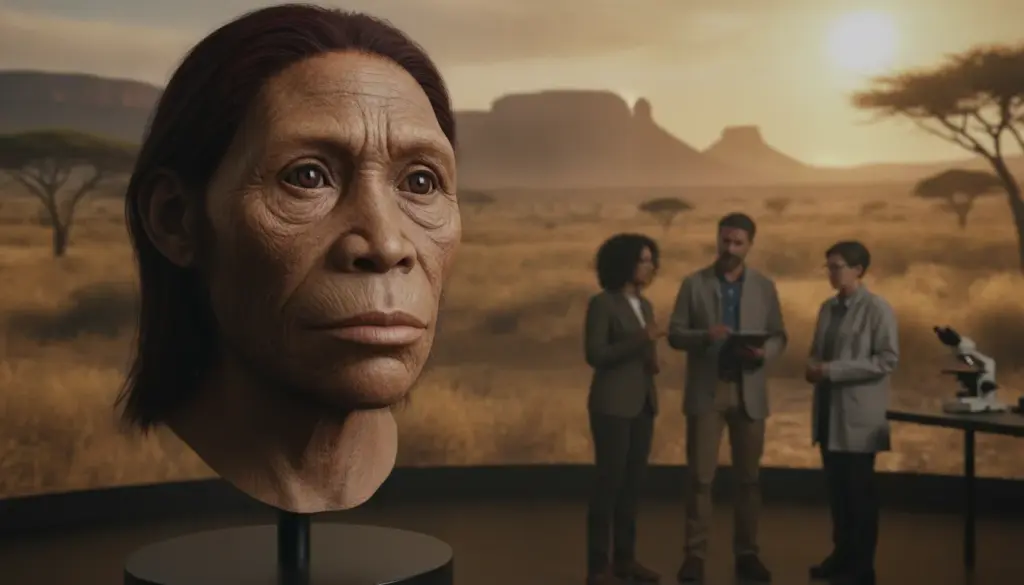
Have you ever tried to picture the actual faces of humanity’s earliest relatives? Historically, anthropologists have been forced to work with heavily distorted bone fragments, making it nearly impossible to visualize our ancient past. Today, thanks to incredible advancements in digital modeling, we can finally meet the gaze of the famous “Little Foot” specimen and better understand our distant origins.
An international team of experts based in the UK recently unveiled the very first digital facial reconstruction of this female Australopithecus. She roamed the landscapes of modern-day South Africa a staggering 3.67 million years ago. This monumental project required decades of painstaking effort to virtually uncrush remains that had been flattened by immense geological pressure over the millennia. Ultimately, it gives us an unparalleled glimpse into one of the oldest and most intact skeletons on the human family tree.
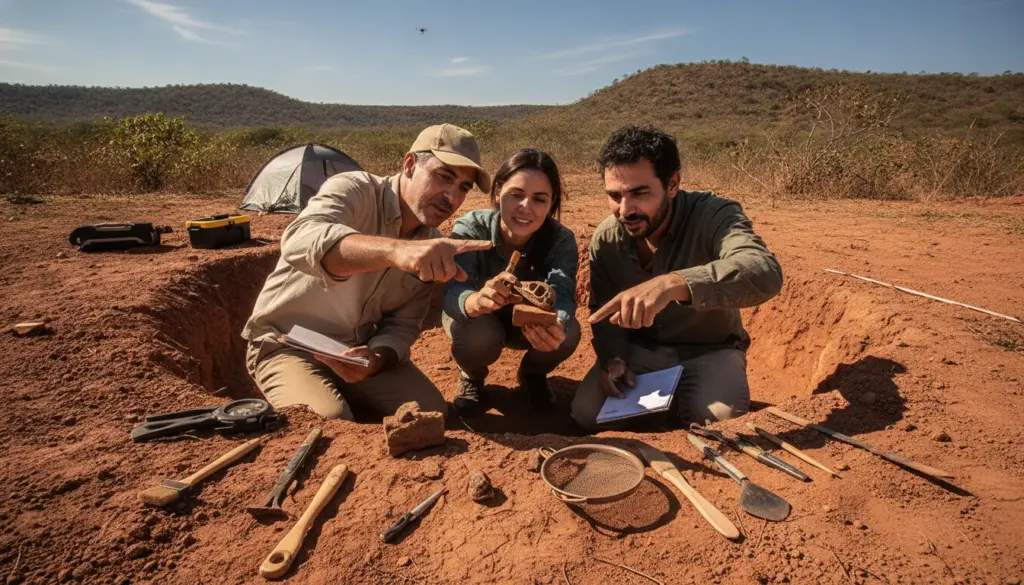
Discovered back in 1994 deep within the Sterkfontein caves, the skeleton was remarkably well-preserved overall, though the skull had suffered severe fracturing. Conventional restoration techniques simply couldn’t handle the damage. The breakthrough came when researchers utilized high-powered synchrotron scanning technology. By capturing details down to an incredible 21 microns, scientists could digitally reverse the prehistoric deformations and rebuild her facial features with a level of accuracy we once thought impossible.
Expert Insight: If you are fascinated by physical anthropology, keep an eye out for open-access fossil data online. Institutions frequently publish these highly detailed 3D reconstructions, allowing anyone to rotate and inspect early hominin anatomy right from a web browser.
Unlocking New Evolutionary Hypotheses
This remarkable virtual restoration relied on massive computational power, allowing specialists to perfectly align each shattered bone fragment on a screen without ever risking the fragile physical fossil. Lead researcher Amélie Beaudet noted that this non-destructive method provides an opportunity to evaluate the structure of the face and eye sockets with flawless precision. Ultimately, these measurements offer fresh perspectives on how our earliest hominin ancestors evolved.
Fascinatingly, the anatomical similarities between “Little Foot” and older fossils found much further north in East Africa hint that our predecessors might have migrated over vast geographic distances much earlier than previously assumed. The specific arrangement of her facial bones and orbits provides far more than just a visual portrait. These physical traits act as crucial biological clues, hinting at what she ate and how she adapted to a changing environment. This is exactly why sharing open-access digital models is so vital for the global scientific community.
In reality, this digital assembly is merely the first step. The pristine virtual skull paves the way for intense investigations into early jaw mechanics and primitive brain development. Scientists are already planning to digitally reconstruct her entire dental profile, which will reveal exact details regarding early hominin diets and prehistoric survival strategies.
A Milestone for Paleoanthropology
By shattering the technical limitations that kept this ancient specimen shrouded in mystery for so long, this project has redefined modern anthropological research. The resulting 3D model serves as a foundational tool for mapping out the diversity and geographic spread of early bipedal apes. We are truly entering a golden age of historical study, where cutting-edge technology directly intersects with ancient history.
Of course, experts always advise a careful approach when interpreting singular discoveries. Because so few completely intact skulls exist from this ancient epoch, broad theories about continent-wide migrations still require extensive cross-checking. Even so, the meticulous precision achieved with the “Little Foot” specimen establishes a brand-new standard in the scientific community. Imagine being able to share this profound level of evolutionary data instantly across the globe.
Combining pure scientific passion with advanced imaging has completely transformed our understanding of human origins. It proves that, even after millions of years buried in darkness, our planet still holds incredible answers about the history of our species.