Rainfall doesn’t automatically mean a watered garden
Many gardening enthusiasts simply assume a passing shower serves as a free irrigation session. However, the exact way precipitation falls, runs off the surface, and gets intercepted significantly impacts the root systems in your yard. Unbeknownst to you, your greenery might be suffering from severe thirst.
When dark springtime clouds gather, it’s tempting to turn off the garden hose and relax. We naturally assume nature is taking care of the hydration. Unfortunately, this assumption is often completely incorrect.
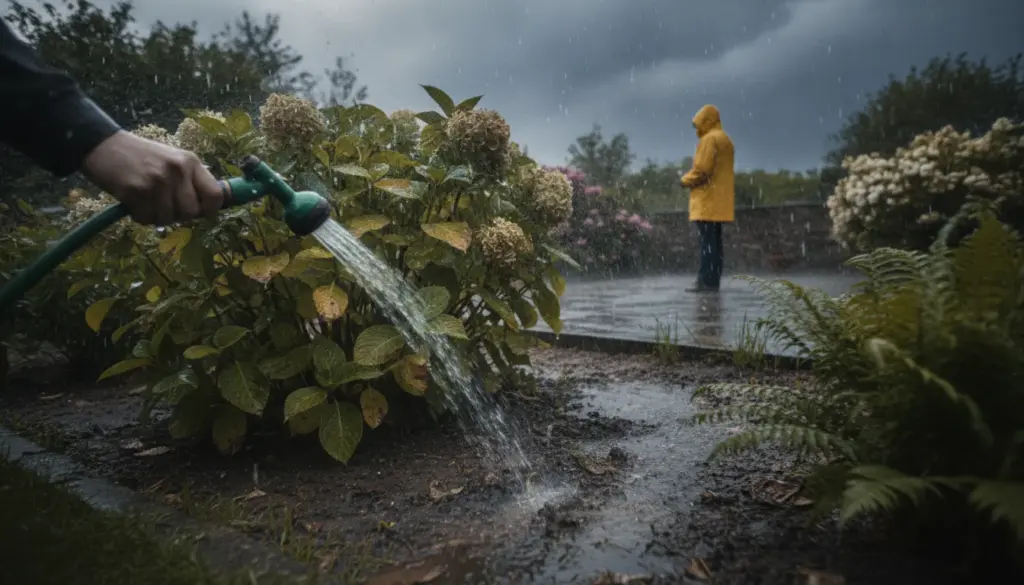
During a torrential downpour, heavy droplets strike the earth with such force that the topsoil quickly saturates. Instead of sinking in, moisture simply glides over the surface. You’re left with dripping foliage and shiny patio tiles, but the root systems beneath remain completely parched.
A fierce storm might only penetrate the top few millimeters of dirt. Meanwhile, vital plant roots typically sit ten to thirty centimeters below ground level. For healthy hydration, it isn’t about the volume of water falling from the sky, but rather what actually penetrates the root zone. A steady, gentle drizzle ultimately provides far better soil moisture than a dramatic ten-minute thunderstorm.
- Torrential storms: Deliver massive volumes rapidly, causing high runoff and virtually no deep penetration.
- Gentle, prolonged rain: Results in minimal runoff, allowing moisture to deeply infiltrate the earth.
- Wind interference: Accelerates surface evaporation, drying out the topsoil even when everything appears soaked.
The misleading picture of a shiny garden
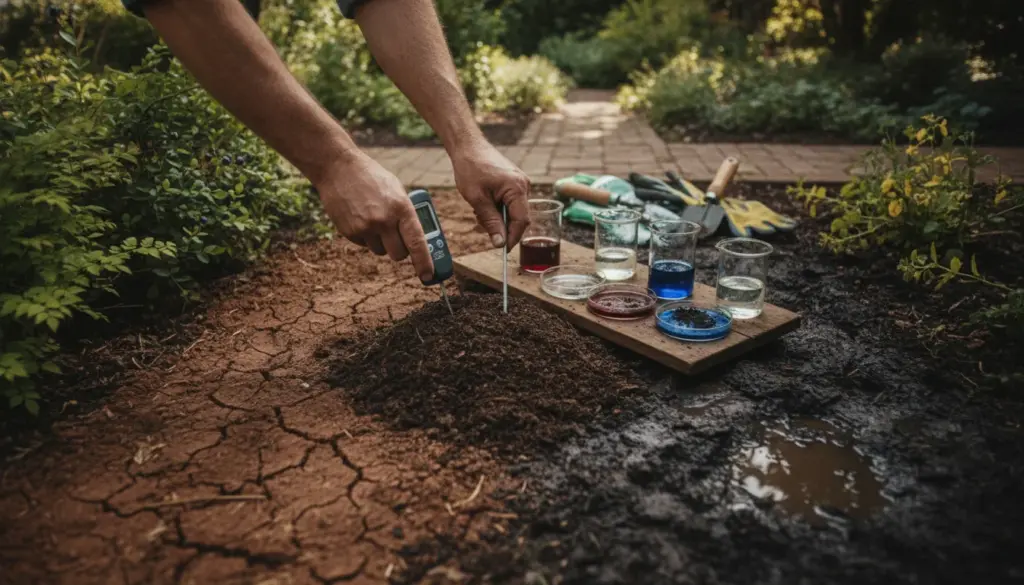
Wet sidewalks, saturated foliage, and overflowing plant saucers scream that the garden has had plenty to drink. Yet, a quick physical check with your fingers or a small trowel might reveal that just two inches below the surface, the earth is bone dry.
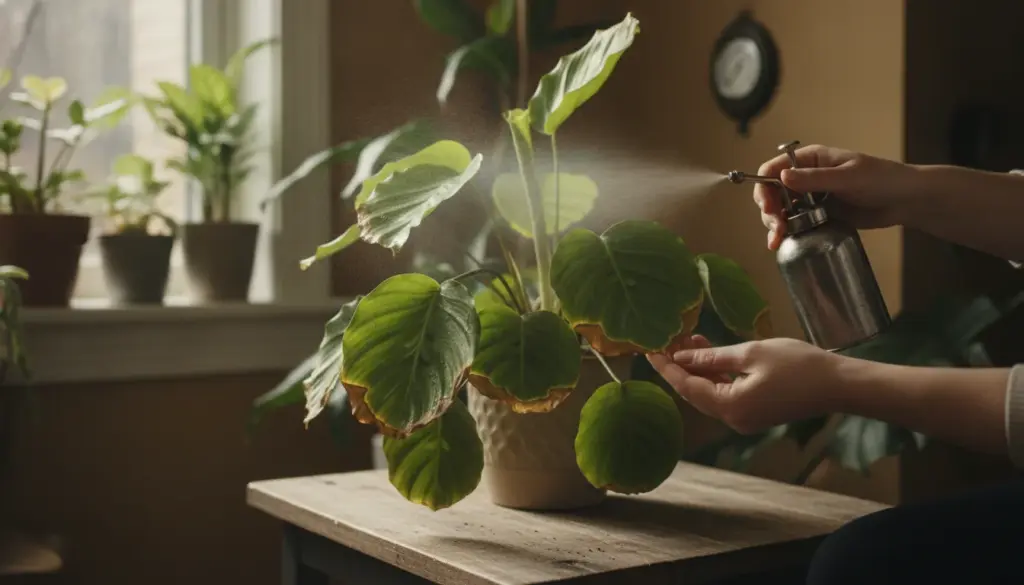
This phenomenon is especially common in compacted or heavy clay soils, where light showers barely breach the surface. The moisture creates a temporary crust on top, trapping dry, dusty dirt underneath. Consequently, vegetation begins showing signs of drought stress, such as drooping foliage or crispy brown edges.
The canopy’s umbrella effect
A lush, dense leaf canopy looks beautiful, but it hides a structural challenge many people miss. Broad-leaf varieties—like hostas, rhododendrons, hydrangeas, and zucchini—function exactly like giant green umbrellas.
Droplets hit the top foliage, cascade down the outer edges, and land far away from the plant’s center. Right in the middle, directly above the main root mass, the dirt stays shockingly arid. You can inspect the base of a dense shrub after days of continuous storms and still find a layer of dusty earth.
This shielding effect intensifies during vigorous spring growth. Shrubs push out as much foliage as possible to capture sunlight. Ironically, this very same leaf mass blocks the life-saving precipitation they desperately require.
Hidden drought around large garden focal points
Mature hedges, packed perennial borders, and established shrubs generate their own distinct microclimates. They appear vibrant and hydrated on top, while suffering from severe moisture deficits below. If you only evaluate the visible canopy, you might mistakenly conclude the area is thoroughly drenched.
A quick tactile inspection clears up any confusion:
- Get down on one knee and physically feel the earth right against the main stems.
- Use a hand trowel to scrape away the top layer of dirt.
- Observe if the soil below is crumbly and pale, or appropriately dark and damp.
Even notoriously tough, low-maintenance species can experience significant dehydration in these blocked zones. If you notice leaves suddenly wilting while it’s actively raining outside, that is a glaring distress signal.
Why balcony and potted plants stay dry in the rain
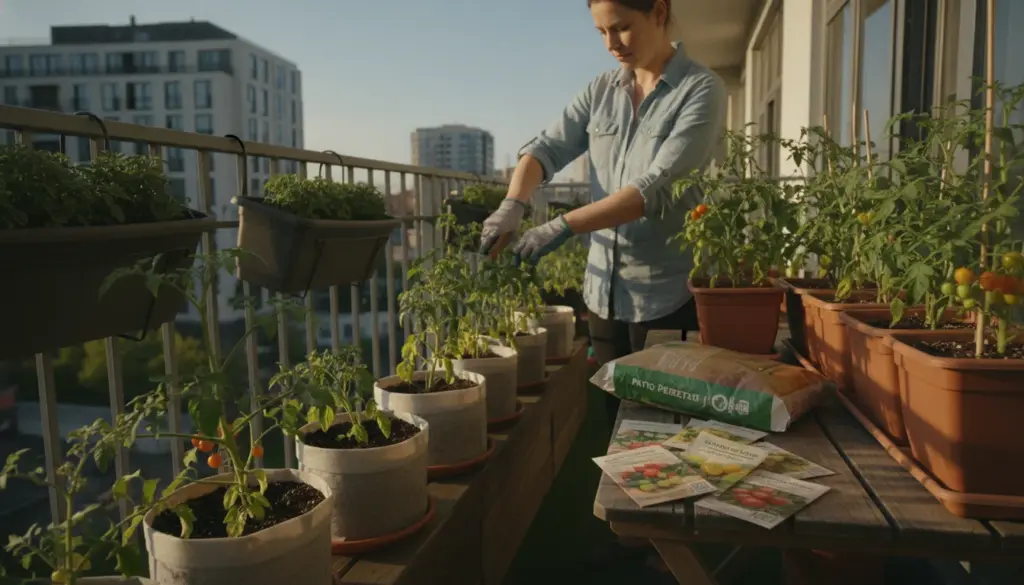
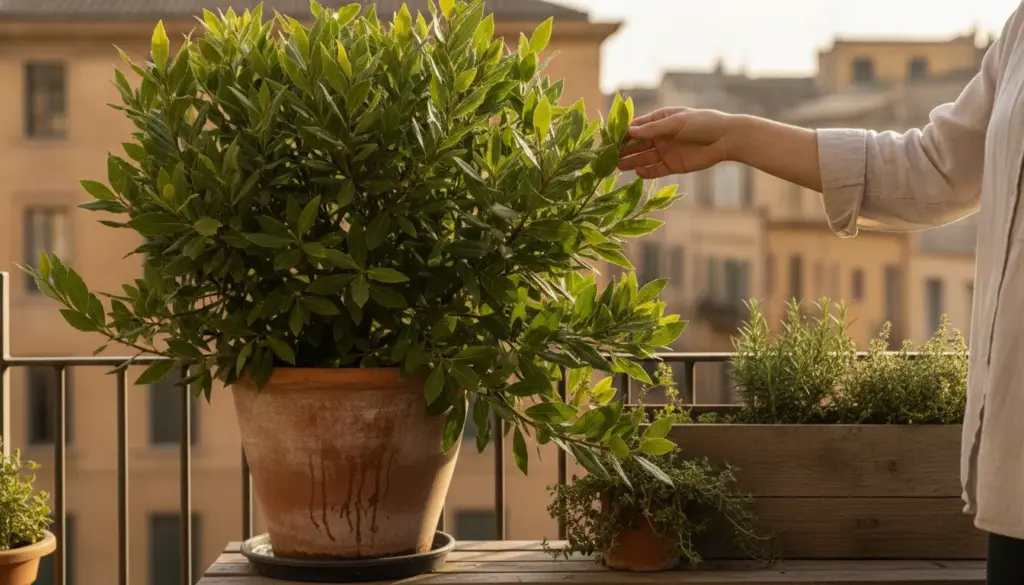
Urban gardeners face an entirely different, frequently underestimated hurdle: architectural barriers. Deep loggias, balconies situated directly above you, wide roof overhangs, and awnings intercept massive amounts of incoming precipitation.
Furthermore, storms rarely drop moisture straight down. Gusts push the weather sideways. You might be getting soaked standing by an open window, while the terra cotta pots pushed against your exterior walls haven’t seen a single drop.
You can spot this hidden drought by looking for:
- Container rims that remain perfectly clean and untouched by moisture.
- Collection saucers completely devoid of standing water.
- Plant foliage lacking any visible droplets after the storm passes.
Why potting soil dries out rapidly
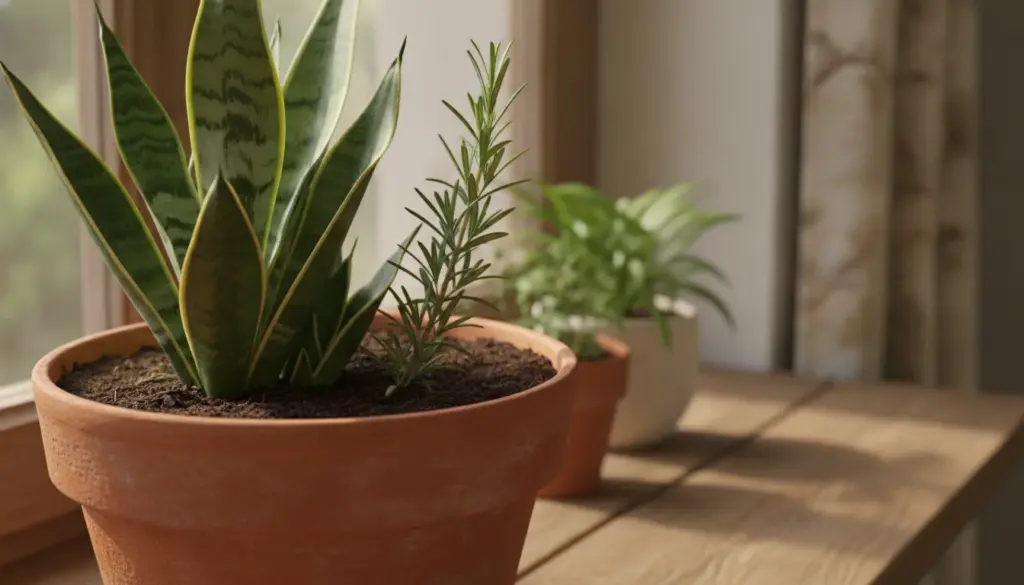
Container gardening involves a very restricted root ball, usually confined to just a few liters of substrate. This provides absolutely no moisture buffer. While ground-planted varieties can send roots deeper to hunt for hydration, balcony specimens are entirely reliant on whatever you or the weather directly provides.
If precipitation physically misses the container, manual watering is almost always required—no matter how dreary and damp the afternoon feels.
Wind dramatically increases this necessity. Roof terraces and elevated balconies generally experience stronger breezes than sheltered backyard corners. This airflow rapidly accelerates evaporation from the potting mix, especially when the sun peeks out between storm clouds.
Simple yet highly effective moisture checks
You absolutely do not need an expensive digital moisture meter to monitor your greenery. The most reliable assessment method takes merely seconds per container: the classic finger test.
Press your fingers into the dirt to feel for hidden dampness. This physical approach quickly trains you to notice subtle differences across your landscape. You will soon discover that a climbing vine near a solid wooden fence remains much drier than the exact same species planted out in the open border, despite receiving identical weather conditions.
Weighing pots for a quick indication
For hanging baskets, smaller planters, and houseplants enjoying a temporary vacation outside, the lift test is incredibly practical. Simply pick up the container with one hand immediately after a thorough soaking and memorize that heavy feeling. During future inspections, gauge the current weight against that memory.
A surprisingly light container almost universally indicates a parched root system, regardless of how heavily it is pouring outside. By practicing this technique regularly, your hands develop a specialized muscle memory. Within a few weeks, a single lift will tell you whether it’s time to fetch the watering can or if the roots are perfectly content.
Using damp weather to revive dry soil
Hauling out the watering can while it’s actively storming feels highly counterintuitive. Nevertheless, overcast, drizzly days offer a massive advantage: ambient humidity is peaking, and surface evaporation has stalled. This is the exact environment required to help hardened, compacted potting mix absorb moisture again.
Severely dehydrated substrate often becomes hydrophobic, actively repelling liquids. When this happens, moisture simply channels down the interior sides of the pot, leaving the central root mass completely untouched. By slowly pouring lukewarm water during a humid afternoon, the organic matter actually has time to gently soak up the liquid.
Experienced gardeners frequently collect runoff in rain barrels specifically to hydrate their containers during or immediately after a storm. Combining naturally soft rainwater with a high-humidity environment minimizes runoff waste and helps structurally repair the degraded potting medium.
Targeted hydration for skipped zones
While the majority of your lawn looks wonderfully soaked, grab your watering can and inspect the known trouble spots. Check beneath dense shrubbery, under roof eaves, along building facades, against deep balcony walls, and beneath large tree canopies.
Aim your spout as close to the foundational stem or the plant’s center as possible—exactly where the foliage acts as an umbrella. Deliver the liquid slowly in two or three separate passes. This patience allows the earth to actively pull the moisture downward, rather than letting it immediately wash away.
Extra strategies for smarter water management
Exceptionally wet seasons provide the perfect opportunity to re-evaluate your outdoor layout. Observe exactly where puddles form and where runoff channels away. Recognizing these natural flow patterns allows you to strategically relocate struggling specimens, or perhaps swap them for drought-tolerant varieties—like hardy herbs—that thrive under dry roof overhangs.
Applying a generous layer of organic mulch, such as shredded wood chips, dried leaves, or grass clippings, makes a phenomenal difference. This protective blanket drastically slows runoff, maintains a loose surface structure, and halts rapid evaporation. Paired with deliberate, targeted hydration during drizzly afternoons, you will systematically build a far more resilient, drought-proof micro-ecosystem across both your garden beds and container displays.