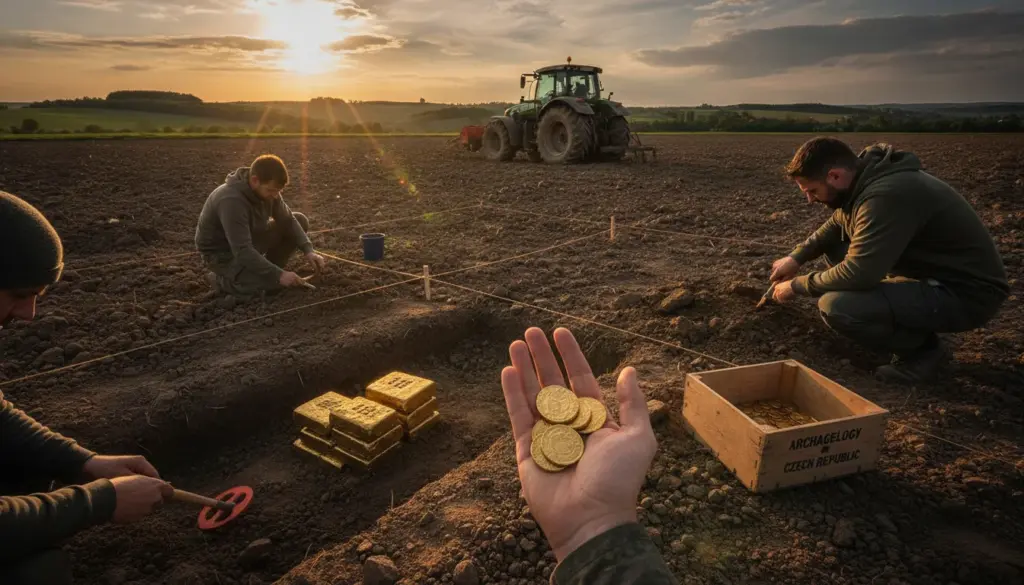
Have you ever considered that a mundane farming field, constantly plowed by heavy machinery, could conceal artifacts capable of rewriting regional history? While agricultural work frequently destroys these fragile hidden caches, researchers operating near Pilsen successfully rescued an extraordinary hoard of Celtic gold. This remarkable find dramatically shifts our understanding of ancient European societies, while also highlighting why precious metals—even those buried two millennia ago—continue to stir up intense fascination on today’s financial markets.
Specialists focusing on European antiquity pinpointed an ancient stockpile of precious metal goods buried in the rural landscapes of the Czech Republic’s Pilsen district. This exceptional assembly featured coins and miniature ingots that had rested undisturbed beneath the soil for centuries. As noted by heritage experts overseeing the collection, these recovered artifacts offer irreplaceable evidence regarding the widespread influence and economic power of Celtic tribes in this specific area.
What truly astonishes archaeological professionals is the immaculate preservation of these ancient pieces. Forthcoming isotope testing will prove critical, allowing scientists to determine if the raw materials were mined locally or transported from distant territories via intricate ancient trading routes.
How Was This Czech Gold Discovered?
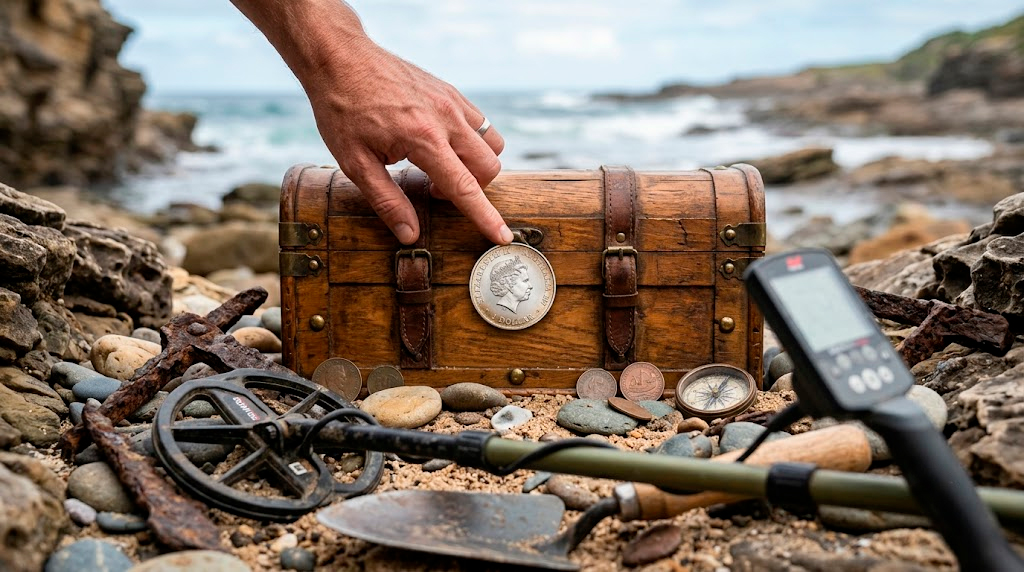
This incredible narrative actually began quite modestly, long before capturing major media attention. Back in 2021, a hobbyist sweeping the area with a metal detector stumbled upon a solitary coin fragment tracing back to the second century BCE. That single, monumental clue prompted authorities to place the active farmland under rigorous archaeological protection.
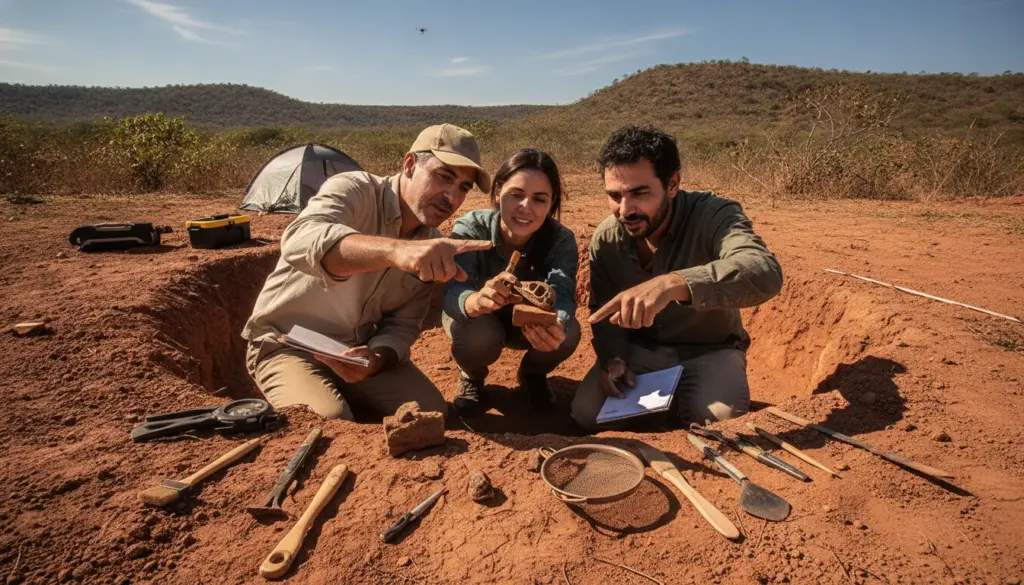
Navigating the logistics proved rather tricky, as the excavation teams had to meticulously synchronize their digging schedules around the farmer’s seasonal planting and harvesting cycles.
Historians propose that these currencies were either deposited in the earth during commercial transactions or intentionally buried as part of sacred rituals. Excavators also unearthed horse remains and metal tools at the site. These additional discoveries strongly suggest the location functioned as a seasonal gathering hub or a spiritual sanctuary, where regional communities met to trade goods and perform ceremonial offerings.
What Unique Treasures Emerged in Pilsen?
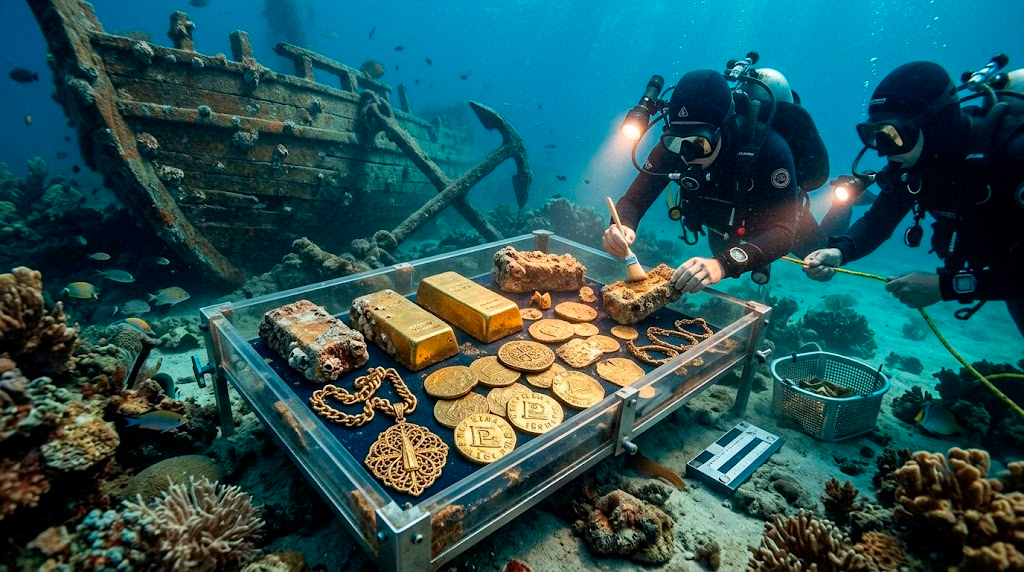
Museum directors overseeing the project, including Pavel Kodera, emphasized that while the individual artifacts are quite small in scale, their historical significance is absolutely monumental. The recovered hoard boasts more than 500 gold and silver coins, alongside ingots, raw precious metal flakes, earrings, and fragmented bracelets.
Incredibly, the vast majority of these intricate ancient masterpieces measure anywhere from a mere 7 millimeters to just 1.5 centimeters in diameter.
The coinage displays classic iconography tied to Celtic civilization, including depictions of horses, wild boars, solar patterns, and ancient deities. Most fascinating to researchers, however, is the clear presence of Hellenistic influences within the designs. This indicates that Celtic metalworkers were actively drawing inspiration from Greek cultural motifs, proving that ancient Europe possessed a vastly more interconnected and complex trade network than we often assume.
Why Global Conflicts Impact Ancient Gold
Interestingly, this monumental archaeological triumph in Pilsen coincides with escalating international geopolitical tensions, fundamentally altering how we view precious metals as strategic assets today. While this Celtic stockpile holds immeasurable historical worth, global market dynamics remain relentless.
Clashes in the Middle East consistently drive modern investors to seek refuge in bullion, simultaneously driving up its valuation and capturing the intense focus of both historical collectors and major financial markets.
In light of this, Czech President Petr Pavel recently cautioned that overseas situations, particularly those involving Iran, will yield both direct and indirect economic ripples throughout the country, though he stressed there is no immediate cause for public alarm. Regardless, whenever geopolitical crises emerge, gold rapidly transforms into a vital defensive asset for central banking institutions worldwide. Even at over two millennia old, the Pilsen cache serves as a poignant reminder that during periods of profound global uncertainty, this glittering resource always reclaims the spotlight—serving equally as treasured national heritage and an unshakeable currency of security.