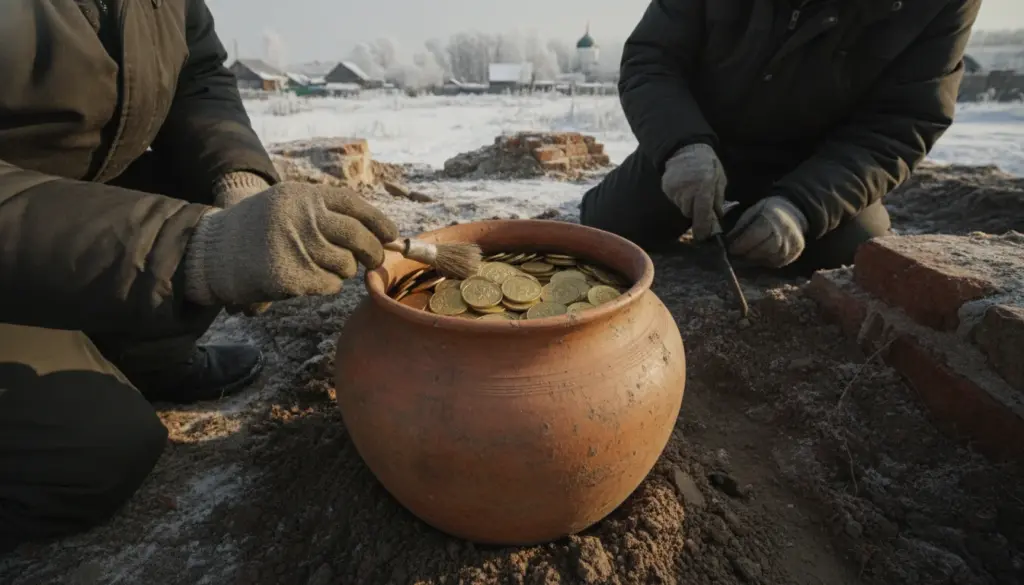
The looming threat of Bolshevik bayonets back in 1917 pushed someone to make a frantic choice—a secret that remained hidden for over a century in the freezing Russian soil. Beneath the ancient foundations of a house in Torzhok, a town situated roughly 420 kilometers from St. Petersburg, excavators recently unearthed an absolutely staggering treasure. It consists of 409 gold coins, all concealed inside an ordinary kitchen vessel that sat untouched for decades.
A terrified family, or perhaps a lone individual, crammed an absolute fortune into a traditional clay container known as a candyushka. Struck between the years 1848 and 1911, these historical pieces currently hold an estimated market value approaching half a million euros. They were stashed so expertly within the building’s base that they outlasted bloody revolutions, multiple wars, and massive political shifts, simply biding their time underground.
A Staggering Fortune Crammed Into Kitchenware
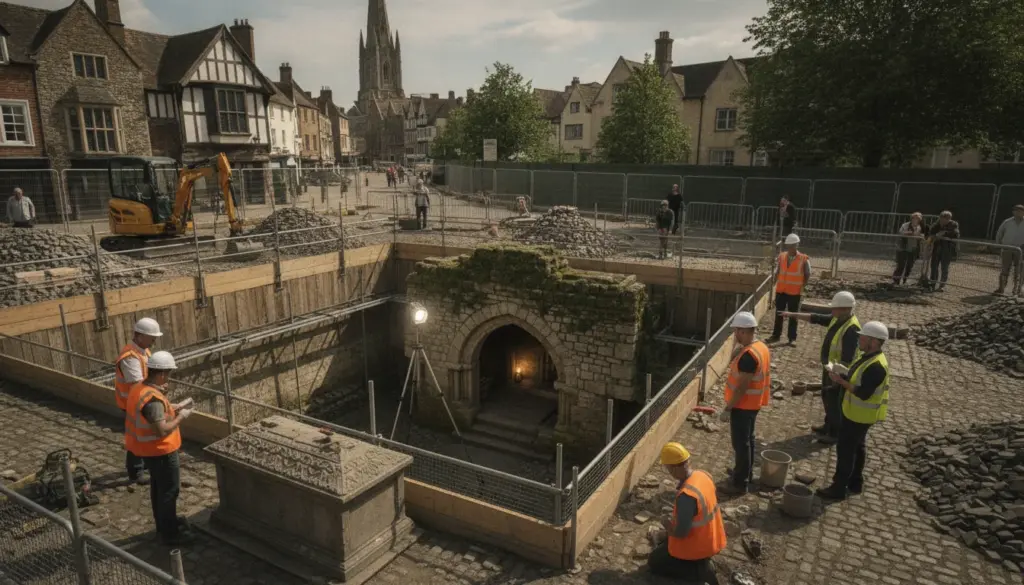
Experts from the Russian Academy of Sciences began investigating the historic property right before a scheduled modernization project. While digging, the team exposed a curious pit hiding immense wealth: 387 golden ten-ruble pieces, alongside five-ruble, fifteen-ruble, and incredibly rare 7.5-ruble coins. The vast majority of these stunning artifacts date back to the reign of Nicholas II, Russia’s final tsar.
In the world of archaeology, physical evidence tells the real story, and the context here speaks volumes. Specialists are completely convinced the original owner intended to retrieve their riches, though the chaos of the revolution clearly derailed those plans. Archival records indicate that 24 families occupied this specific neighborhood at the turn of the century. The catch? Modern street numbering doesn’t align at all with historical property lines.
Surviving a Soviet Explosion
Excavations took place along the left bank of the Tvertsa River, specifically at a plot on 10 Sadovaya Street. This location sits a mere 60 meters from where the Church of St. Demetrius once stood before communist forces obliterated it with explosives in the 1930s. Fortunately, that catastrophic blast never disturbed the secret cache buried deep below the surface.
While human activity on this site traces back to the 12th century, the specific house sheltering the treasure met its end during the revolution. Subsequent residents eventually constructed a new wooden home directly over the original stone foundations. In a fascinating twist of fate, later remodeling efforts actually resulted in someone accidentally shattering the vessel—completely unaware of the immense riches resting inside.
The gold spilled out, scattering loosely in the dirt beneath the floorboards until modern experts finally arrived. Tracking down the rightful owner from the 1914–1921 era is incredibly tricky, as the list of neighborhood residents spans nearly every social class of the time:
- Priests from the nearby church
- Two wealthy merchants and a treasurer
- An accountant and the local shoemaker
- A secretary alongside a mechanic
- A tailor and a judicial commission member
- A foreman and a standard laborer
Every single one of these individuals had ample reason to fear for their life savings during the turbulent events of 1917. Would you have possessed the sheer nerve to bury a fortune of this size in the dirt and flee into the unknown? Let us know what you think in the comments!